_thumb.jpg)
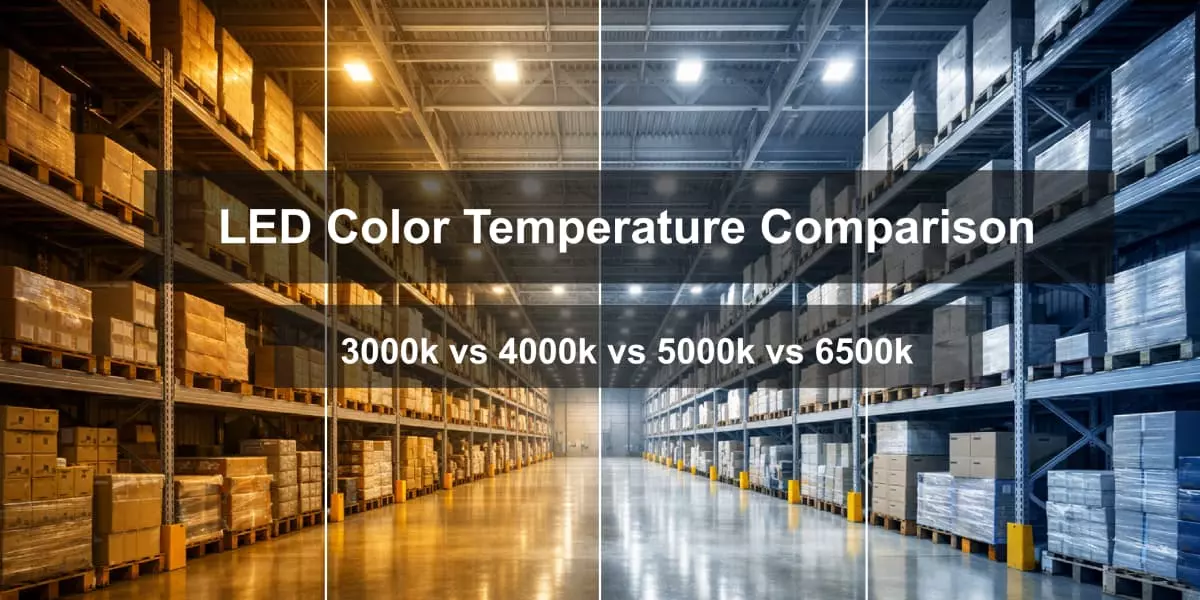
Vergleich der LED-Farbtemperaturen: 3000 K vs. 4000 K vs. 5000 K vs. 6500 K
Inhaltsverzeichnis
Die ultimative Farbtemperatur-Vergleichstabelle
Detaillierte Farbtemperaturvergleiche nach Anwendungsbereich
3000K vs 4000K (Gewerbe- und Bürobeleuchtung)
4000K vs 5000K (Lager- und Industriebeleuchtung)
5000K vs 6500K (Sport- und Hochpräzisionsanwendungen)
5700K vs 6500K (Außensicherheit und -überwachung)
Warum ist die Stabilität der Farbtemperatur im realen Einsatz wichtig?
Einleitung
Die Wahl der falschen LED-Farbtemperatur ist kein unbedeutendes technisches Detail – sie kann sich direkt auf den täglichen Betrieb und die langfristige Kapitalrendite auswirken.
In Büros und Lagerhallen führt eine falsche Farbtemperatur oft zu geringerer Produktivität, schnellerer Augenermüdung und häufigeren Beschwerden der Mitarbeiter. In Industrie- oder Außenbereichen kann sie durch reduzierten Kontrast und eingeschränkte Sichtbarkeit Sicherheitsrisiken bergen. Bei Sportveranstaltungen kann eine ungeeignete Farbtemperatur sogar Übertragungsprobleme verursachen, wie beispielsweise unnatürliche Hauttöne oder überbelichtete Bilder im Bild.
Deshalb sollte die Farbtemperatur niemals allein nach dem Kriterium „was am hellsten aussieht“ ausgewählt werden.
Dieser Leitfaden richtet sich an Entscheidungsträger in den Bereichen Gewerbe-, Industrie-, Sport- und Außenbeleuchtung, die klare und praxisnahe Antworten benötigen. Anstelle von Definitionen konzentriert er sich auf Vergleiche aus der realen Anwendung und zeigt, wie sich unterschiedliche Farbtemperaturen in konkreten Anwendungsfällen bewähren.
Mit einer entscheidungsorientierten Vergleichstabelle und szenariobasierten Aufschlüsselungen hilft Ihnen dieser Artikel, schnell die zuverlässigste Farbtemperatur für Ihre Umgebung zu ermitteln – nicht nur am ersten Tag, sondern über Jahre hinweg.
Die ultimative Farbtemperatur-Vergleichstabelle
Die untenstehende Tabelle soll nicht erklären, was Kelvin-Werte sind – sie soll Ihnen helfen, schnellere und sicherere Beleuchtungsentscheidungen zu treffen .
Anstatt die Farbtemperatur isoliert zu vergleichen, stellt diese Grafik den Zusammenhang zwischen den einzelnen Kelvin-Bereichen und der tatsächlichen Lichtwahrnehmung und -nutzung in realen Räumen her. Sie verdeutlicht nicht nur Vorteile, sondern auch potenzielle Risiken bei falscher Anwendung der Farbtemperatur .
Um dieses Diagramm effektiv zu nutzen, sollten Sie sich nicht nur auf die „K“-Zahl konzentrieren. Betrachten Sie, wie visuelle Wahrnehmung, typische Anwendungen und langfristige Benutzerfreundlichkeit mit Ihren Projektzielen übereinstimmen.
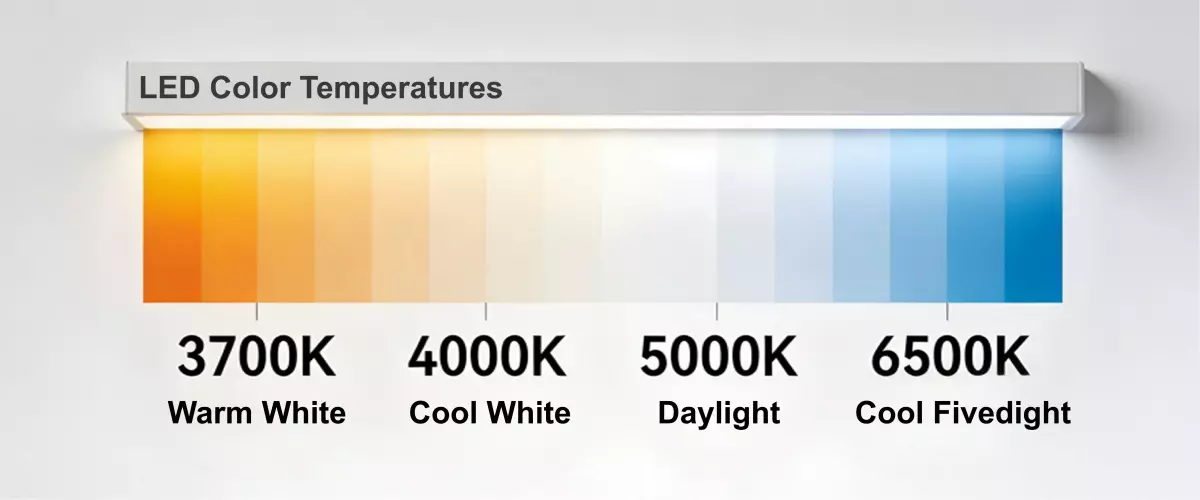
Die Vergleichstabelle enthält:
l Farbtemperatur (K)
l Visuelle Wahrnehmung
l Typische Anwendungen
l Vorteile
l Cons
l Risiko bei Missbrauch
Diese Struktur stellt sicher, dass Sie nicht nur eine Farbtemperatur auswählen, sondern die richtige für Ihre spezifische Umgebung.
Farbtemperatur (K) | Visuelle Wahrnehmung | Typische Anwendungen | Vorteile | Nachteile | Risiko bei Missbrauch |
3000K (Warmweiß) | Warmes, sanftes, gelbliches Licht | Gastronomiebereiche, Restaurants, Lounges, Wohnzonen, dekorative Außenbereiche | Sorgt für Komfort und Entspannung; reduziert Blendung; optisch ansprechend für längere Aufenthalte | Geringe Aufmerksamkeit; schlechter Kontrast für detaillierte Aufgaben | Verminderte Produktivität an Arbeitsplätzen; unzureichende Sichtbarkeit in sicherheitskritischen Bereichen |
4000K (Neutralweiß) | Ausgewogenes Weiß, natürlicher Ton | Büros, Klassenzimmer, Einzelhandelsflächen, Gewerbegebiete | Hoher Sehkomfort; ermöglicht ermüdungsfreies Konzentrieren; weithin anerkannter Standard | Weniger anregend als höhere CCT-Werte; nicht ideal für Aufgaben, die hohe Präzision erfordern. | Kann in Umgebungen mit hoher Aktivität oder bei Inspektionen eintönig wirken. |
5000K (Tageslichtweiß) | Klar, hell, tageslichtähnlich | Lagerhallen, Fabriken, Sportanlagen, große Gewerbeflächen | Verbessert Kontrast und Sichtbarkeit; steigert die Genauigkeit bei Aufgaben; fördert die Aufmerksamkeit | Kann in Bereichen mit längerem Aufenthalt als unangenehm empfunden werden; erhöhtes Blendrisiko | Visuelle Ermüdung bei übermäßiger Nutzung in Innenräumen; Beschwerden |
65.000 K (Kaltes Tageslicht) | Sehr kühl, bläulich-weiß | Sicherheitsbereiche im Freien, Häfen, Hochmastbeleuchtung, auf Fernsehübertragungen ausgerichtete Sportstätten | Maximale Sichtbarkeit; starker Kontrast; kamerafreundliche Beleuchtung | Am wenigsten angenehm für das menschliche Auge; unnatürliches Aussehen | Augenbelastung; Beschwerden; ungeeignet für Büros oder Einzelhandel; Probleme mit zu starker Beleuchtung |
Weiterlesen : Wenn Sie mehr darüber erfahren möchten, bietet dieser Blog eine detaillierte Erklärung zur LED-Farbtemperatur.Die
Detaillierte Farbtemperaturvergleiche nach Anwendungsbereich
Entscheidungen zur Farbtemperatur sollten niemals isoliert getroffen werden. Derselbe Kelvin-Wert kann je nach Einsatzort und -art eine ganz andere Wirkung haben.
In den folgenden Abschnitten vergleichen wir gängige LED-Farbtemperaturen anhand realer Anwendungsszenarien , nicht anhand abstrakter Definitionen. Jeder Vergleich beginnt mit dem praktischen Entscheidungskontext – wie lange sich Personen im Raum aufhalten, welche Aufgaben sie ausführen und welche visuellen Risiken im Laufe der Zeit auftreten können.
Anstatt Farbtemperaturen als „gut“ oder „schlecht“ einzustufen, erklären diese Vergleiche, warum eine Option in bestimmten Umgebungen besser geeignet ist als eine andere . Dieser Ansatz hilft Lichtplanern und Entscheidungsträgern, eine Lösung zu wählen, die Produktivität, Komfort, Sicherheit und langfristige Nutzbarkeit unterstützt – anstatt sich allein auf Helligkeit oder Aussehen zu verlassen.
3000K vs 4000K (Gewerbe- und Bürobeleuchtung)
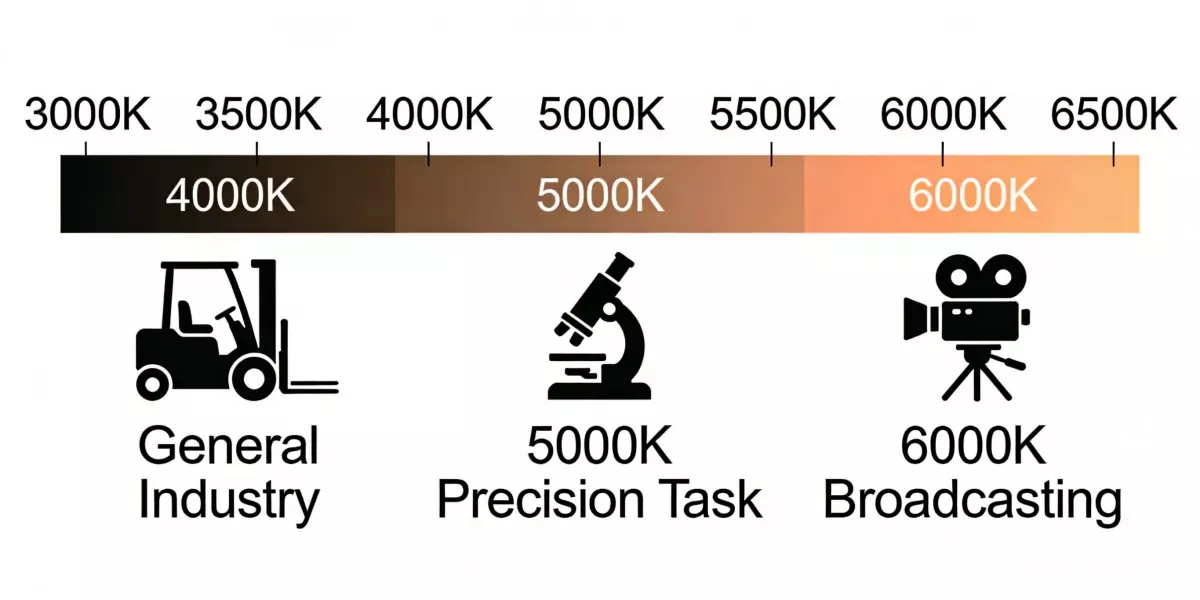
In Geschäfts- und Büroumgebungen sollte die Entscheidung über die Farbtemperatur mit einer Frage beginnen: Wie lange halten sich die Personen dort auf und was müssen sie währenddessen tun ?
In Arbeitsbereichen, in denen Mitarbeiter lange Stunden vor Bildschirmen verbringen oder detaillierte Aufgaben erledigen, sind klare Sicht und gute Konzentrationsfähigkeit entscheidend. Neutralweißes Licht mit 4000 K sorgt hier für ein ausgewogenes Erscheinungsbild, das die Konzentration fördert, ohne zu grell zu wirken. Es unterstützt nachhaltige Produktivität, insbesondere in Büros, Coworking-Spaces und Besprechungsräumen mit langer täglicher Nutzung.
Im Gegensatz dazu erzeugt warmweißes Licht mit 3000 K eine weichere, entspanntere Atmosphäre. Dies kann zwar den Sehkomfort und das Wohlbefinden steigern, aber die wahrgenommene Sehschärfe bei längeren Arbeitszeiten verringern. Dieser sanftere Lichtton eignet sich jedoch gut für Empfangsbereiche, Lounges und kundenorientierte Räume, in denen Komfort und Ambiente wichtiger sind als die reine Arbeitsleistung.
In der Praxis werden viele kommerzielle Projekte beides kombinieren.
4000K wird häufig in primären Arbeitsbereichen eingesetzt, während 3000K Bereiche unterstützt, die auf Gastfreundschaft oder Kurzzeitaufenthalte ausgerichtet sind und bei denen die Kundenwahrnehmung eine größere Rolle spielt als die anhaltende Wachsamkeit.
4000K vs 5000K (Lager- und Industriebeleuchtung)
In Lagerhallen und Industrieanlagen verursacht die Wahl der falschen Farbtemperatur mitunter die höchsten Betriebskosten . Die Beleuchtung beeinflusst hier Sicherheit, Genauigkeit und die Ausdauer der Mitarbeiter bei langen Schichten.
Die 4000K-Beleuchtung sorgt für ein neutrales Lichtumfeld und reduziert die Augenbelastung bei längeren Arbeitszeiten. Mitarbeiter können Gänge, Geräte und Bodenmarkierungen ohne übermäßige Blendung klar erkennen. In Betrieben mit Mehrschichtbetrieb oder Nachtschichtbetrieb verbessert diese Lichtbalance häufig den Komfort und die Kontinuität der Arbeitsabläufe.
5000K-Beleuchtung hingegen bietet einen höheren wahrgenommenen Kontrast und schärfere Details. Dies kann in Bereichen von Vorteil sein, in denen Inspektionsgenauigkeit, Beschriftung und Präzisionsarbeiten entscheidend sind. Bei Verwendung in großen Räumen oder über längere Zeiträume kann sie jedoch, sofern sie nicht entsprechend ausgelegt ist, die visuelle Ermüdung verstärken.
Viele Betreiber verfolgen einen zonalen Ansatz – sie nutzen 4000K für allgemeine Verkehrswege und Arbeitsbereiche, während sie 5000K gezielt in Inspektionslinien oder Qualitätskontrollzonen einsetzen.
Für eine detailliertere technische Aufschlüsselung siehe unsere Fallstudie zur Lagerbeleuchtung mit 4000K vs. 5000K .
5000K vs 6500K (Sport- und Hochpräzisionsanwendungen)
In Sportstätten und Umgebungen mit hohen Präzisionsanforderungen beeinflusst die Farbtemperatur nicht nur die Sichtbarkeit, sondern auch, wie der Raum auf der Kamera erscheint .
5000K-Beleuchtung , die oft dem natürlichen Tageslicht sehr nahe kommt, sorgt für eine ausgewogene Ausleuchtung, die optimal mit Kamerasensoren harmoniert. Sie erhält Hauttöne, reduziert Überbelichtung und liefert konsistente Bilder für Live-Übertragungen und Wiederholungen. Aus diesem Grund arbeiten viele professionelle Sportstätten mit einer Beleuchtungsstärke im Bereich von 5000K bis 5700K.
6500K-Beleuchtung wirkt für das menschliche Auge heller, erzeugt aber einen kühleren, bläulicheren Farbton. Dies kann zwar die wahrgenommene Schärfe erhöhen, aber auch zu Blendeffekten und Farbverzerrungen auf Kamerabildern führen. Im Broadcast-Bereich resultiert dies häufig in einem schärferen Bild und einem höheren Aufwand für die Nachbearbeitung.
In Umgebungen, in denen sowohl Athleten als auch Kameras eine Rolle spielen, ist ein ausgewogener Tageslichtbereich in der Regel zuverlässiger als die alleinige Erhöhung der Helligkeit.
5700K vs 6500K (Außensicherheit und -überwachung)
Bei Sicherheitsanwendungen im Außenbereich führt hellere Beleuchtung nicht immer zu besseren Überwachungsergebnissen. Entscheidend ist die langfristige visuelle Leistungsfähigkeit .
Die 5700K-Beleuchtung bietet ein tageslichtähnliches Erscheinungsbild, das die Gesichtserkennung und Objektidentifizierung ohne übermäßige Blendung verbessert. Sie unterstützt Sicherheitspersonal, das Bereiche über längere Zeiträume überwachen muss, und trägt dazu bei, die visuelle Ermüdung während langer Schichten zu reduzieren.
Beleuchtung mit einer Farbtemperatur von 6500 K wirkt zwar heller, kann aber starke Kontraste und Blendeffekte auf Fahrbahnen oder Fahrzeugen erzeugen. Dies kann mit der Zeit die Überwachungsgenauigkeit beeinträchtigen und die Augenbelastung erhöhen, insbesondere auf Parkplätzen und in Randbereichen, die eine ständige Beobachtung erfordern.
Bei den meisten sicherheitsorientierten Projekten liefert ein ausgewogener Tageslichtbereich konsistentere Ergebnisse als die maximale scheinbare Helligkeit.
Warum ist die Farbtemperaturstabilität im praktischen Einsatz wichtig ?
Die meisten Farbtemperaturvergleiche konzentrieren sich lediglich darauf, wie das Licht am ersten Tag aussieht. In realen Projekten ist dieser Ansatz oft unzureichend.
Ein häufiges Problem in der Branche ist die Farbtemperaturdrift . Da LED-Leuchten unter hoher Leistung und Hitze arbeiten, zersetzen sich herkömmliche Leuchtstoffe – typischerweise Leuchtstoffpulver gemischt mit Silikon – mit der Zeit. Dies führt zu Farbtemperaturverschiebungen, Helligkeitsverlust und ungleichmäßiger Lichtwiedergabe. Eine 5000K-Leuchte kann mit der Zeit kühler oder ungleichmäßig erscheinen, was die ursprüngliche Lichtplanung beeinträchtigt und jeden ersten Vergleich sinnlos macht.
Die Ursache liegt in den Einschränkungen der Wärmeableitung und des Materials . Eine geringe Wärmeleitfähigkeit führt zu Wärmestau um die Lichtquelle, was die Alterung des Leuchtstoffs beschleunigt und die interne Quanteneffizienz verringert. Im Dauerbetrieb, insbesondere in industriellen Anwendungen, im Außenbereich und bei hohen Leistungsanforderungen, ist diese Instabilität unvermeidbar.
CeramicLite begegnet dieser Herausforderung mit fluoreszierenden transparenten Keramik-LED-Chips (FTC).FTC-Materialien stellen eine zukunftsweisende Alternative zu herkömmlichen Leuchtstoffsystemen dar. Sie zeichnen sich durch außergewöhnliche thermische Stabilität, hohe Lichtdurchlässigkeit und starke Beständigkeit gegen Korrosion und Alterung aus. Mit einer internen Quanteneffizienz von über 98 %, einer Wärmeleitfähigkeit von bis zu 10 W/m·K und einer Lichtdämpfung von unter 5 % über 100.000 Stunden (LM-80-zertifiziert) bleibt die Farbtemperatur selbst unter extremen thermischen Belastungen konstant.
Diese Stabilität gewährleistet, dass Farbtemperaturvergleiche nicht nur bei der Installation, sondern während der gesamten Lebensdauer der Leuchte gültig bleiben.
Abschluss
Es gibt keine universell „beste“ Farbtemperatur. Was im Büro funktioniert, kann in einer Lagerhalle ungeeignet sein, und was im Freien hell wirkt, kann mit der Zeit zu Ermüdung oder Blendung führen.
Die Wahl der richtigen Farbtemperatur hängt von den Anwendungsanforderungen, den Betriebsstunden, den visuellen Aufgaben und der Langzeitstabilität ab – nicht nur vom anfänglichen Erscheinungsbild. Ein Vergleich ist nur dann sinnvoll, wenn die Lichtquelle ihre Leistung über Jahre hinweg konstant hält.
Durch die Auswahl von Farbtemperaturen auf Basis realer Anwendungsfälle und deren Kombination mit stabiler LED-Technologie in Industriequalität können Entscheidungsträger mehr Komfort, Sicherheit und eine höhere Kapitalrendite erzielen.
Wenn Sie Hilfe bei der Auswahl der richtigen Farbtemperatur oder bei der Entwicklung einer Beleuchtungslösung für Ihre spezifische Anwendung benötigen, kann eine professionelle Beratung und photometrische Planung den Unterschied zwischen einer guten und einer zuverlässigen Installation ausmachen.