_thumb.jpg)
Professional LED Sports Lighting
What Defines Professional LED Sports Lighting?
Professional LED sports lighting plays a critical role in ensuring visibility, athlete performance, spectator comfort, and broadcast-quality imaging. It is a precisely engineered system designed to balance illuminance, uniformity, glare control, and color accuracy in accordance with international standards. Below are the five fundamental parameters that define professional sports lighting performance.
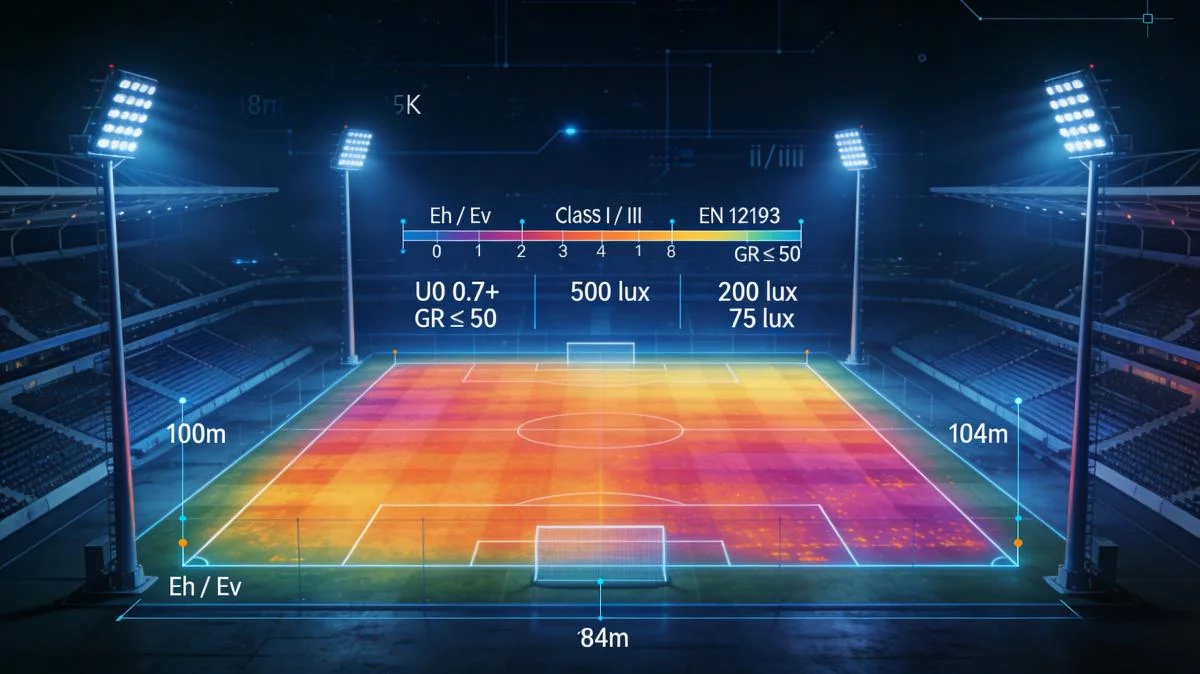
1️⃣ Horizontal Illuminance (Eh)
Horizontal illuminance (Eh) refers to the amount of light distributed across the playing surface. It ensures that field markings, player movements, and fast-moving objects such as balls remain clearly visible under all playing conditions.
Typical Horizontal Illuminance Requirements
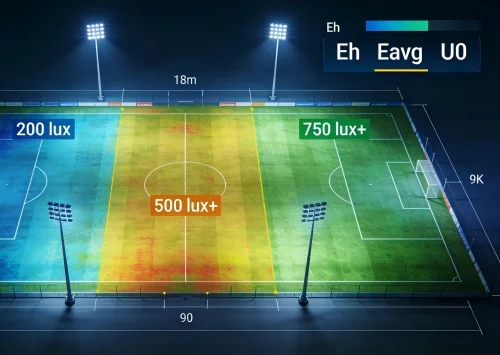
1). Recreational level: 50–200 lux
Suitable for training sessions, school playgrounds, and community sports facilities.
2). Regional competitions: 300–500 lux
Required for structured competitions at local and regional levels.
3). Professional level: 750 lux and above
Used for national and international competitions, where precision and performance are critical.
2️⃣ Vertical Illuminance (Ev)
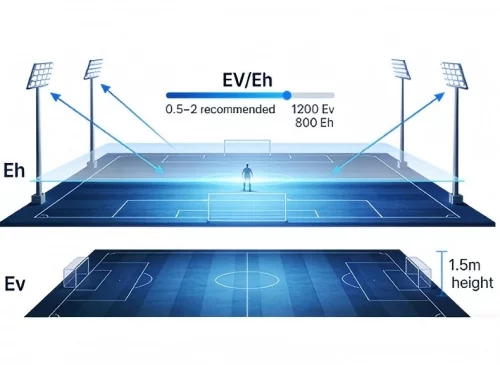
While horizontal illuminance defines visibility on the playing surface, vertical illuminance (Ev) determines how well players, referees, and objects are visible from different viewing angles — particularly for spectators and television cameras.
Vertical illuminance is measured at approximately 1.5 meters above the pitch, corresponding to the average height of a player’s face.
This parameter becomes especially critical for televised matches, slow-motion replay capture, player facial recognition and accurate ball tracking.
Typical Vertical Illuminance Requirements:
1). Measured at 1.5 m above field level
2). Broadcasting events: typically 1,000–2,000 lux
3). Balanced Ev/Eh ratio (0.5–2 recommended)
3️⃣ Lighting Uniformity (U0)
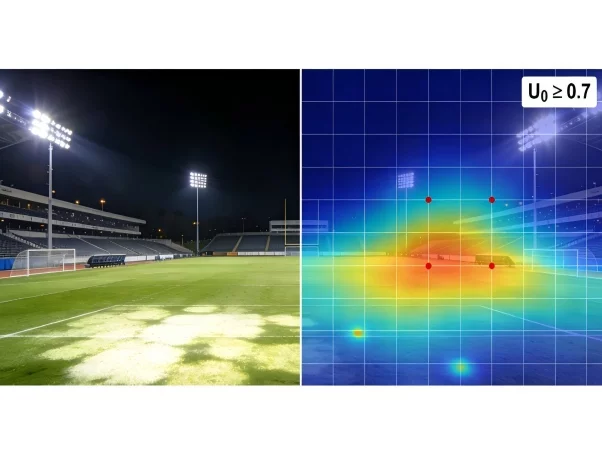
Uniformity (U0), defined as Emin/Eavg, measures how evenly light is distributed across the playing area.
Poor uniformity can result in:
a. Bright and dark patches
b. Eye adaptation strain
c. Reduced visibility in certain zones
d. Player discomfort and safety concerns
Uniform lighting ensures smooth visual transitions and consistent brightness levels throughout the field.
Typical Uniformity Requirements:
Class I: ≥ 0.7
Class II: ≥ 0.7
Class III: ≥ 0.5–0.6
For broadcast-level competitions, even higher uniformity values may be required to maintain consistent television image quality. By the way, Ceramiclite lighting simulations are designed to optimize pole height, optic selection, and beam angles to achieve superior uniformity.
4️⃣ Glare Reduction (GR)
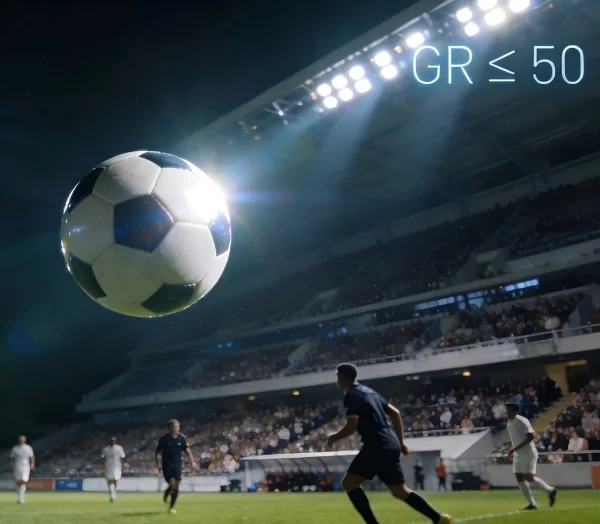
Glare can negatively impact both athletes and spectators by reducing visibility and causing discomfort.
In sports lighting applications, the Glare Rating (GR) should generally not exceed:
GR ≤ 50
Excessive glare can:
1). Impair player concentration
2). Affect ball tracking
3). Cause spectator discomfort
4). Reduce broadcast image clarity
Ceramiclite LED sports lighting systems incorporate precision optical lenses, controlled beam angles, asymmetrical optics and anti-glare shielding. These technologies minimize light spill and direct illumination precisely where it is needed
5️⃣ Color Rendering & Temperature
Accurate color perception is essential in most sports disciplines.
Color Rendering Index (CRI)
CRI ≥ 70: Standard competitions
CRI ≥ 80: Broadcast-level events
Higher CRI values ensure:
1). Natural skin tones
2). Accurate team jersey colors
3). Realistic field appearance
4). Enhanced spectator experience
Correlated Colour Temperature (CCT)
Recommended range: 4000K–6500K
4000K–5000K: Balanced neutral white
5700K–6500K: Crisp daylight effect, preferred for high-definition broadcasting
For televised events, high CRI combined with stable colour temperature ensures consistent and realistic image reproduction across cameras and replay systems.
.webp)
LED Sports Lighting for Outdoor Facilities
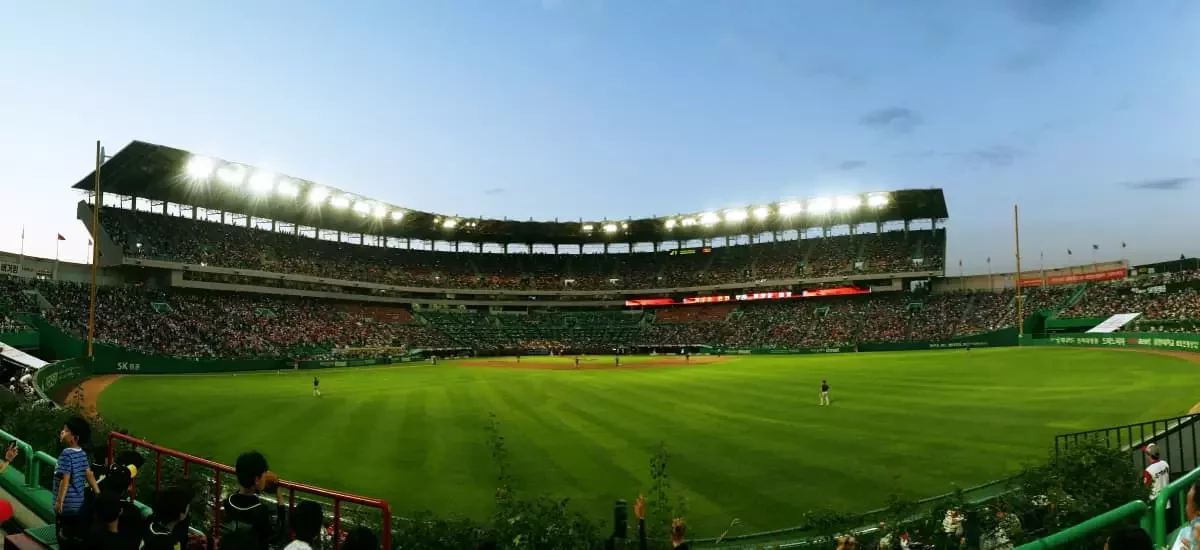
Outdoor LED sports lighting systems must withstand extreme environmental conditions while delivering stable photometric performance over long operational cycles.
Unlike indoor facilities, outdoor stadium lighting is exposed to wind load, humidity, temperature fluctuation, corrosion, and electrical instability. Therefore, system reliability and structural engineering become as critical as illuminance performance.
Key Requirements for Outdoor Sports Lighting(1)
1️⃣ High Environmental Protection Rating
IP66 / IP67 for dust-tight and water-jet protection
Full gasket sealing and pressure-balanced design
Long-term resistance to heavy rain and coastal humidity
2️⃣ Impact & Mechanical Strength
IK09–IK10 impact resistance
Reinforced die-cast aluminum housing
Tempered glass lens with anti-shatter protection
This is particularly important for football stadiums where stray balls may strike fixtures.
3️⃣ Wind Load & Structural Stability
Large-area stadium lighting poles (18–45 meters) are subject to high wind pressure. Fixtures must:
Minimize wind resistance profile
Maintain stable beam direction under vibration
Ensure structural safety under high wind speeds
.webp)
Key Requirements for Outdoor Sports Lighting (2)
4️⃣ Corrosion Resistance
Marine-grade powder coating
Stainless steel fasteners
Anti-oxidation surface treatment
Essential for coastal stadiums and high-humidity regions.
5️⃣ Asymmetric Optical Control
Professional LED sports lighting requires:
Long-throw optics
Narrow beam angles (10°–30°) for high-mast installations
Asymmetric distribution to minimize light spill
Compliance with light pollution regulations
Ceramiclite modular stadium floodlights are engineered for elite-level applications, delivering up to 2000W and over 200,000 lumens. They feature precision beam angles from 10° to 90°, including asymmetric optics, advanced thermal management, and flicker-free drivers for broadcast compliance. The system is designed to meet international standards such as EN 12193 for professional sports facilities.
_1.webp)
LED Sports Lighting for Indoor Facilities
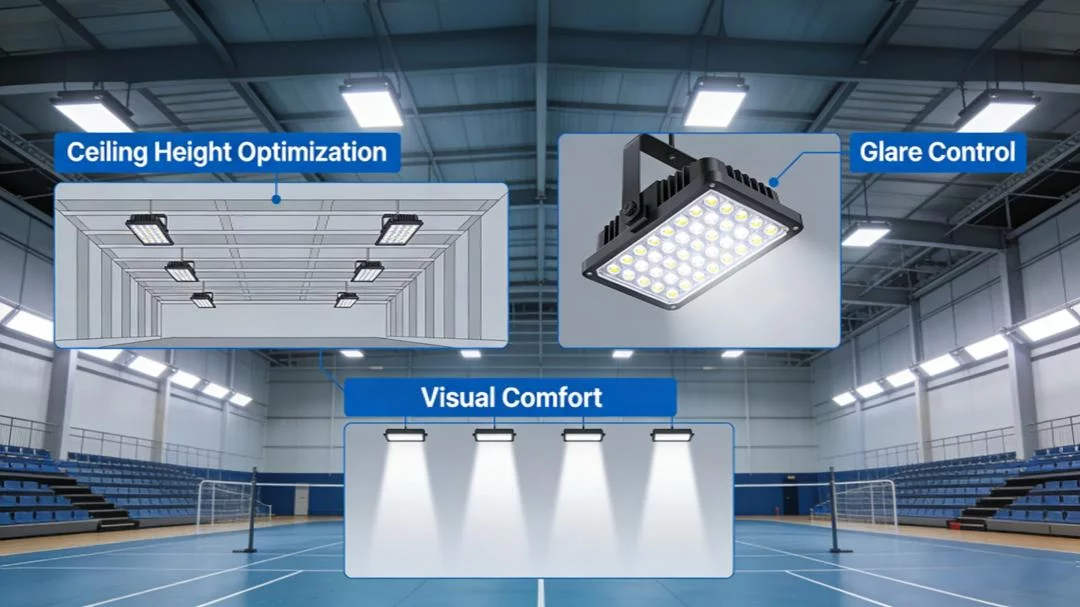
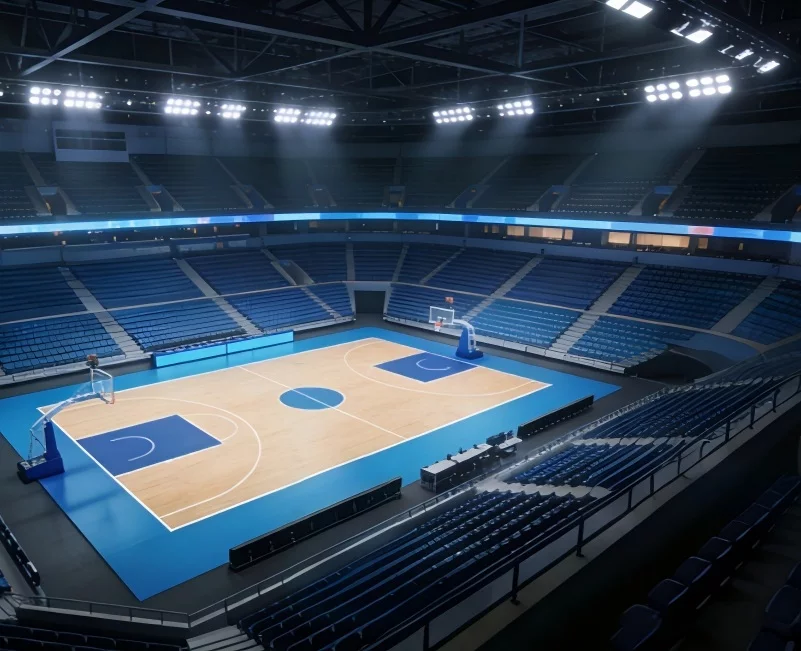
Indoor LED sports lighting for sports halls and multi-purpose arenas requires a specialized engineering approach focused on visual comfort, glare control, and adaptive performance. Unlike outdoor systems that rely on long-throw optics, indoor environments demand precise beam distribution, optimized mounting strategies, and intelligent lighting management to ensure safety, performance, and energy efficiency.
Key Design Considerations
To achieve optimal results, several critical design factors must be considered.
1️⃣ Mounting Height & Beam Angle Matching
Ceiling heights in sports halls range from 6m to 18m.
Improper beam selection may result in:
Overlapping hotspots
Insufficient vertical illuminance
Player discomfort
Correct optical distribution ensures uniform light coverage.
2️⃣ Glare Control
Indoor glare is more noticeable due to lower mounting heights.
Professional indoor LED sports lighting must:
Maintain UGR control
Prevent direct line-of-sight glare
Ensure GR compliance for competition levels
3️⃣ Impact Resistance
In sports such as basketball, volleyball, or indoor football:
IK-rated protection is mandatory
Protective mesh grid optional
Reinforced lens system required
4️⃣ Intelligent Zoning & Energy Management
Multi-use arenas require flexible lighting modes:
Training mode
School events
Official competitions
Broadcast mode
Intelligent LED Sports Lighting Control Systems
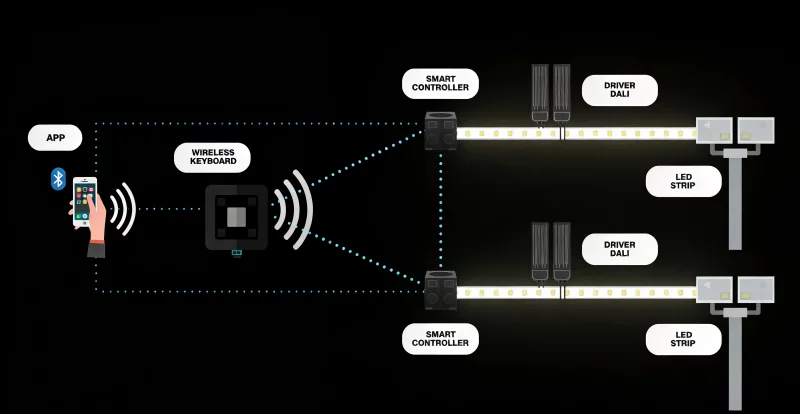
Modern sports venues require more than static illumination; they demand dynamic and adaptive lighting control. Ceramiclite intelligent systems enable instant switching between training, match, and broadcast modes, as well as zoned control for partial field operation to improve energy efficiency. The system supports DALI, DMX, and wireless integration, provides real-time energy monitoring and daylight harvesting, and ensures flicker-free dimming for broadcast-compliant performance.
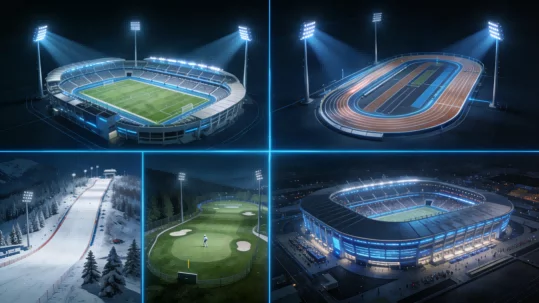
Typical Applications of Professional LED Sports Lighting
Ceramiclite Professional LED Sports Lighting Solution
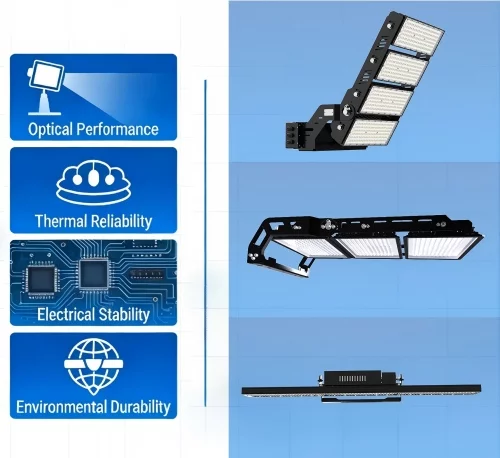
Ceramiclite professional LED sports lighting delivers elite-grade lighting designed for stadiums, training fields, arenas, and multi-sport facilities. Engineered for precision optics, uniform light distribution, low glare, and broadcast-ready performance, our LED lighting systems with control system meet international sports lighting standards while enhancing visibility for athletes, spectators, and cameras alike. Built with rugged outdoor durability, advanced control options, and long-life LED technology, Ceramiclite lights ensure reliable, energy-efficient performance under any condition — from evening matches to professional competitions.
Thanks for your enquiry, we will contact ASAP.
Something went wrong...