_thumb.jpg)
Outdoor Basketball Court Lighting: Complete Questions Answered
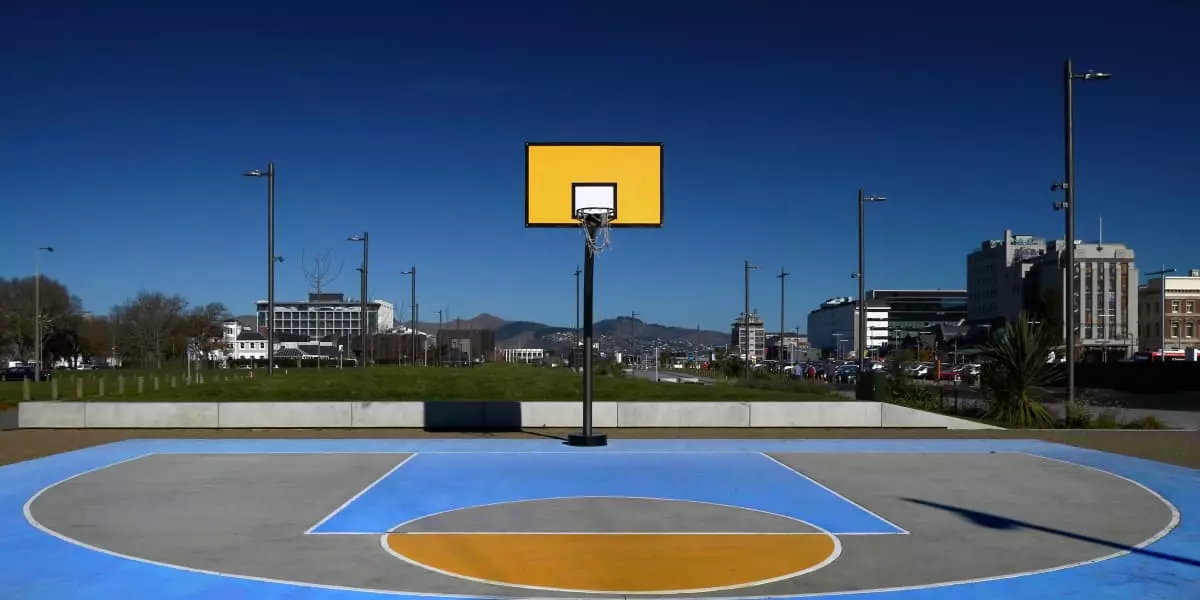
Table of Contents
What Is Outdoor Basketball Court Lighting?
Outdoor Basketball Court Lighting Standards
LED vs. Traditional Lights: Which is Better?
Why Choose LED for Outdoor Basketball Courts?
How to Design and Install a Professional Lighting Layout?
Cost of Outdoor Basketball Court Lights (Budget Guide)
Frequently Asked Questions (FAQ)
What Is Outdoor Basketball Court Lighting?
Outdoor basketball court lighting refers to a lighting system designed to make outdoor courts safe, bright, and playable after sunset. Its job is simple: deliver even, glare-free, and regulation-level illumination so players can see clearly and react quickly.
You’ll find these lighting setups in parks, schools, community centers, residential neighborhoods, and commercial sports facilities.
No matter the location, the goal is the same — stable visibility, minimal shadows, and lighting that works in all weather conditions.
Today, most courts use LED fixtures instead of metal halide or HPS. LEDs run cooler, use far less energy, and last for years without major maintenance.
They also turn on instantly, keep their brightness over time, and offer better control over beam angles and light spill — all key advantages for outdoor sports environments.
If you're planning a new court or upgrading an older one, understanding the basics of outdoor basketball lighting is the first step.
The sections that follow will walk you through standards, fixture options, design tips, and budget considerations to help you choose the most suitable sports lighting solutions.
Outdoor Basketball Court Lighting Standards
Outdoor basketball court lighting standards exist for one reason: safety and visibility.
Players need to see the ball, the court lines, and each other — without glare or dark spots. Good lighting also ensures fair competition and supports basic recording or livestreaming when needed.
Most standards focus on three key metrics: illuminance, uniformity, and visual comfort.
(1) Illuminance Levels (Lux / Foot-candles)
Illuminance measures how much light reaches the court surface.
It’s usually expressed in lux (lx) or foot-candles (fc) — and you only need to remember: 1 fc ≈ 10.76 lux.
Below is a simple reference range used by parks, schools, and sports designers:
• Recreational play:
100–200 lux (≈ 9–18 fc)
• Training-level courts (schools & communities):
200–300 lux (≈ 18–28 fc)
• Competition-level or semi-pro courts:
300–500 lux (≈ 28–46 fc)
Recreational courts focus on comfort and safety.
Higher levels support quick ball movement, long passes, and better tracking during competitive games.
(2) Uniformity (How Even the Light Looks)
Uniformity matters as much as brightness.
Even if a court meets the lux target, uneven lighting will still create shadows and blind spots.
For outdoor basketball, most designers aim for a uniformity ratio (max/min) of 2.0–2.5:1.
Lower numbers = better consistency across the full court.
A well-designed LED layout should eliminate harsh transitions between bright and dark areas.
(3) Glare Control & CRI
Glare reduces reaction time and causes eye fatigue.
Modern LED sports lights use asymmetric optics and precise beam control to keep the light on the court — not in players’ eyes.
CRI (Color Rendering Index) helps players distinguish the ball, jerseys, and lines.
A CRI of 70–80 works well for most outdoor basketball applications.
How to Convert Lux Standards Into Total Lumens
Once you know your target lux level, estimating total lumens is simple:
Lumens needed = Target lux × Court area (m²)
A standard full court is about 420 m².
A half court is roughly 210 m².
Full court examples:
• 200 lux → ~84,000 lumens total
• 300 lux → ~126,000 lumens total
• 500 lux → ~210,000 lumens total
Half court examples:
• 200 lux → ~42,000 lumens
• 300 lux → ~63,000 lumens
These numbers help you choose fixture wattages and quantities before working on pole height and placement.
Clear lighting standards make the design process easier — and they set the foundation for a court that feels professional, safe, and enjoyable for every player.
LED vs. Traditional Lights: Which is Better?
When choosing basketball court lights, most people compare LED fixtures with traditional metal halide (MH) lamps.
Both can illuminate a court, but their long-term performance is very different.
1. Light Quality and Performance
LED
Instant on. No warm-up time.
High lumen maintenance — brightness stays stable for years.
Better glare control with asymmetric optics.
No flicker, ideal for fast action and clear visibility.
Metal Halide
Needs several minutes to warm up.
Light drops 20%–40% within the first year.
Harder to control glare; older optics spill light outside the court.
Flicker may appear as the lamp ages.
2. Energy Efficiency
LED fixtures convert more electricity into usable light.
That means fewer watts are needed to hit the same illuminance standard.
Metal Halide lamps waste more energy as heat, making them far less efficient.
To reach the same brightness, MH fixtures often run at 2–3× the power.
3. Lifespan and Reliability
LED
Typical lifespan: 50,000–100,000 hours
No fragile bulbs or ballasts
Slow, predictable light decay
Metal Halide
Typical lifespan: 6,000–15,000 hours
Bulbs and ballasts fail separately, causing unpredictable outages
Higher risk of color shift and rapid brightness loss
For an outdoor light for basketball courts that runs many hours each week, this gap becomes significant.
4. Maintenance Requirements
LED
Minimal maintenance
No lamp replacements
Stable even in cold or wet weather
Metal Halide
Frequent bulb replacements
Ballast failures require full fixture servicing
Downtime is longer, especially for community or municipal courts
This makes LED the easier option for parks, schools, and clubs that cannot afford constant maintenance.
5. Beam Control and Light Spill
LED sports lights use engineered optics to push light precisely onto the court.
This improves uniformity and reduces glare for players and neighbors.
Metal Halide typically uses broad reflectors that scatter light.
More spill light means more wasted brightness — and potential complaints from surrounding homes.
6. Overall Decision
LED outdoor basketball court lights provide stronger performance, better efficiency, and dramatically lower maintenance over time.
Even if the upfront cost is higher, the long-term savings and consistent lighting make LEDs the more reliable, future-proof choice.
For any public or recreational court, LED is the clear upgrade.
Why Choose LED for Outdoor Basketball Courts?
LED lighting has become the standard for outdoor basketball courts — and for good reason. It delivers brighter, cleaner, and more reliable light while cutting long-term operating costs.
LED fixtures produce high, consistent brightness that makes every line and movement easier to see.
They also use up to 70% less energy than metal halide or HPS, which is a major advantage for parks, schools, and private facilities with long operating hours.
Durability is another reason LEDs dominate outdoor sports lighting.
Most fixtures last 50,000–100,000 hours, meaning years of operation with almost zero maintenance.
They resist rain, snow, wind, and temperature swings, keeping performance stable season after season.
Unlike traditional lamps, LEDs turn on instantly.
There’s no warm-up time, no flicker, and no risk of light dropping in the middle of a game.
The slow light decay also keeps the court bright throughout the fixture’s lifespan.
LEDs offer excellent color rendering, which helps players track the ball, read backboard movement, and see jersey colors clearly.
The high efficiency (lumens per watt) means more usable light from each fixture — and lower electricity bills.
Modern LED systems also integrate easily with light sensors, timers, and smart controls.
You can adjust brightness for casual play, training sessions, or full games, all while avoiding wasted energy.
For anyone designing or upgrading an outdoor court, LEDs deliver the best mix of performance, reliability, and long-term savings — making them the clear choice for modern basketball lighting.
How to Design and Install a Professional Lighting Layout?
Designing outdoor basketball court lighting is not just about adding bright fixtures. A proper layout ensures clear visibility, safe play, and minimal glare — and it starts with choosing the right mounting strategy and equipment.
1. Choose the Right Pole Layout
Most courts use one of two layouts: side lighting or four-corner lighting.
• Side lighting (recommended)
Fixtures are placed along the two long sides of the court.
This creates even coverage with fewer shadows and is ideal for parks, schools, and training courts.
Pole spacing stays consistent, and glare control is easier to manage.
• Four-corner lighting (alternative)
Poles sit near the corners and aim inward.
This works for tight sites where side poles aren’t possible, but it requires precise aiming to avoid cross-glare.
Light uniformity is usually harder to optimize.
2. Set the Correct Pole Height and Spacing
Good visibility depends heavily on mounting height.
For most outdoor basketball courts, 8–12 meters (26–40 ft) is the standard range.
Lower poles create glare and uneven light.
Higher poles allow wider light distribution but may require stronger fixtures.
Pole spacing usually follows the court’s length, keeping fixtures away from the playing area while maintaining balance between both sides.
3. Choose Fixtures Designed for Outdoor Sports
Not all outdoor lights work well for sports.
For basketball courts, look for:
IP65 or higher for rain, dust, and snow protection
Asymmetric beam optics to push light onto the court without spill
High efficiency (lm/W) for lower power usage
Flicker-free drivers for clean visual performance
These features ensure stable output and comfortable visibility for fast-moving play.
4. Control Light Trespass — Critical for Community Courts
If your court is near houses, apartments, or streets, light trespass becomes a major issue. It’s also a common reason for neighborhood complaints.
To minimize spill light:
Use full cut-off or well-shielded sports fixtures
Choose optics that direct light downward and inward
Avoid low pole heights that throw light horizontally
Correct aiming angles during installation
Run a photometric check before final mounting
Good lighting should illuminate the court — not someone’s bedroom window.
4. Avoid Guesswork — Use a Lighting Simulation
Even if the court size is standard, every installation environment is different.
Surrounding buildings, pole locations, and fixture angles all affect the final result.
A professional lighting simulation (Dialux, AGi32, etc.) shows:
Expected lux levels
Uniformity ratio
Glare zones
Best pole height and aiming angles
This step prevents uneven brightness and ensures the court meets your target standard.
A well-designed layout does more than light up the space — it creates a safe, professional playing experience.
Careful planning and the right fixtures make all the difference, especially for outdoor environments exposed to weather and long operating hours.
Cost of Outdoor Basketball Court Lights (Budget Guide)
When planning outdoor basketball court lighting, most users want one thing first: a clear and honest budget.
This section breaks down every cost so you know exactly where your money goes — no surprises.
1. What Makes Up the Total Cost?
Lighting a court involves several parts. Each contributes to the final budget.
1) LED Fixtures
The biggest cost. Higher wattage and better optics mean higher price, but better performance.
2) Light Poles
Height, thickness, and wind-rating affect the cost.
Outdoor courts typically use 20–40 ft (6–12 m) poles.
3) Installation Labor
Includes pole foundation work, fixture mounting, aiming, and electrical wiring.
4) Cables & Accessories
Cables, connectors, junction boxes, and waterproof hardware.
5) Control System
Simple timers cost little.
Smart systems with sensors or app control cost more but save electricity long-term.
2. Realistic Cost Ranges (U.S. Market)
These estimates help you benchmark your project:
Community / Public Park Court: $2,500–$6,000
School or Training Court: $6,000–$12,000
Commercial or Competition-Level: $12,000–$25,000
The price depends on brightness requirements, number of poles, and whether the site needs new foundations or wiring.
3. Typical Component Costs
Here’s how budgets usually break down:
LED Fixtures:
$300–$900 per light for basic systems
$1,000–$2,000 per light for high-end sports models
Poles:
$500–$2,000 each depending on height and wind rating
Installation Labor:
$1,000–$5,000 depending on foundation work and electrical distance
Cables & Hardware:
$200–$1,000
Controls:
$50 for timers
$200–$800 for smart control systems
4. Example Budgets
Outdoor Half Court (2 poles, 2–4 fixtures):
$3,000–$8,000 total depending on brightness and pole height.
Full Court (4 poles, 4–8 fixtures):
$6,000–$18,000 total for typical community or school-level setups.
5. How Much Can LEDs Save?
LED fixtures use 60–70% less energy than metal halide.
For a court used several nights a week, this can save hundreds of dollars per year, paying back the upgrade faster than most expect.
Frequently Asked Questions (FAQ)
Q1: Can I find outdoor basketball courts with lights near me?
Yes. The fastest way is to check your local parks and recreation website or search in Google Maps with terms like “basketball court with lights.”
If your community doesn’t have one, this guide gives you the knowledge to propose a new lighting setup to your school, HOA, or city.
Q2: What about light pollution for nearby houses?
Light spill can be minimized with full cut-off fixtures, tight beam angles, and proper aiming.
A good design keeps the light on the court—not in someone’s window.
Responsible lighting protects your community and avoids complaints.
Q3: Can I use solar lights for a basketball court?
Possible, but only for low-brightness recreational play.
Solar systems struggle to deliver the 200–500 lux required for standard basketball lighting.
For reliable performance and long hours, wired LED fixtures are still the better choice.
Q4: Can two poles light a half court?
Yes. A typical half court uses 2 poles with 2–4 LED fixtures depending on brightness goals.
Pole height and beam angles matter more than the pole count itself.
Q5: How many lights do I need for a full court vs. a half court?
Half court: 2 poles, 2–4 fixtures
Full court: 4 poles, 4–8 fixtures
These numbers vary based on fixture wattage, beam spread, and your target lux level.
Q6: How can I reduce light pollution while keeping the court bright?
Use fixtures with cut-off optics, choose narrow beams, mount lights higher, and angle them carefully.
A lighting simulation can help you verify performance before installing anything.
Q7: How many lumens do I need for a backyard half court?
Most backyard half courts need 40,000–80,000 total lumens depending on height, layout, and brightness preference.
This usually means two 150–300W LED sports lights.
For higher-level play, aim for the upper range.
Conclusion
Outdoor basketball court lighting works best when three things come together: the right brightness, the right layout, and reliable LED fixtures.
When the court meets proper lighting standards, players see clearly, move confidently, and enjoy safer games at night.
A smart pole layout and high-quality outdoor LED flood lights make the biggest difference. Add proper installation and a simple control system, and you get a court that performs well for years with minimal maintenance.
CeramicLite is here to provide you a customized lighting plan based on your court size, pole height, and budget!