_thumb.jpg)
Pickleball Court Lighting Layout: 2-Pole vs 4-Pole Guide
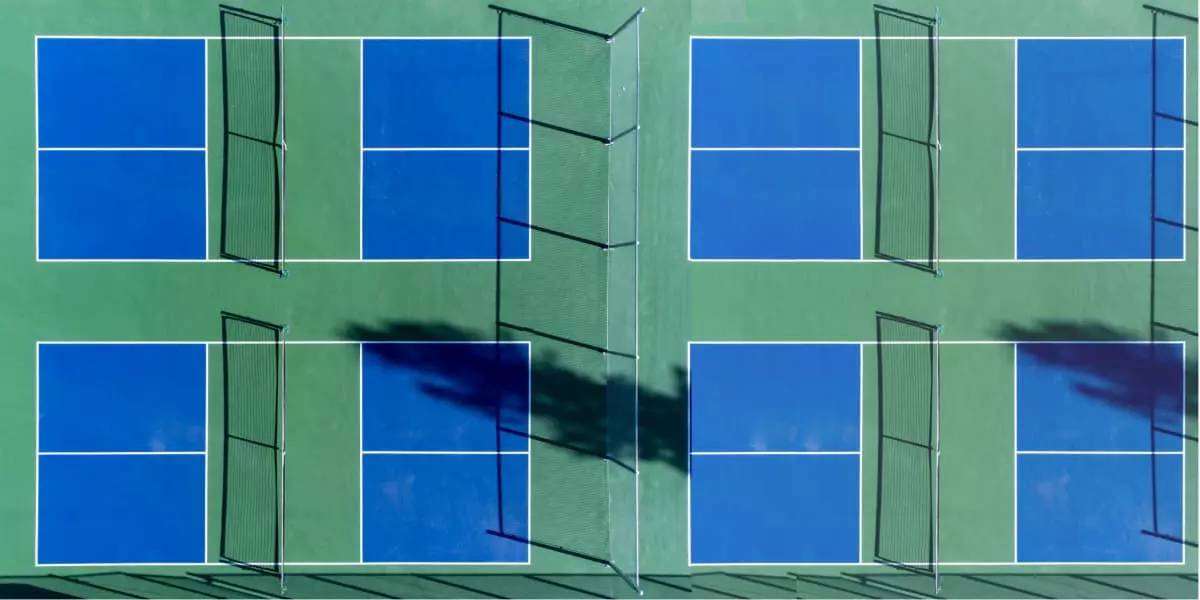
Table of Contents
Why Lighting Layout Matters for Pickleball Playability?
What Are the Golden Rules of Pole Placement?
Top Layout Configurations: 2-Pole vs. 4-Pole Setups
Commercial Solutions: "Shared Pole" Layout Strategy
Technical Cheat Sheet: Lumens, Height, and Color
How Do You Prevent Light Trespass and Neighbor Complaints?
Beyond the Layout: Fixture Durability and Smart Controls
Get a Free Photometric Lighting Plan
Why Lighting Layout Matters for Pickleball Playability?
Picture this: It’s match point. Your opponent sends a high lob into the night sky. You step back, look up to smash it, and—bam. You’re blinded by a poorly placed floodlight. The ball drops untouched, and the game is lost. This frustration highlights exactly why a professional pickleball court lighting layout is not just a technical detail; it is the difference between a court people love and one they avoid.
Pickleball combines lightning-fast reaction times with frequent vertical lobs, requiring players to look directly upward more often. This means the margin for error in your lighting design is razor-thin. If your poles are placed incorrectly, you create "blind spots" or dangerous glare that ruins the game.
Whether you are a homeowner planning a backyard dream court or a facility manager optimizing for tournaments, this guide will break down everything from budget-friendly residential setups to pro-level configurations to help you make the perfect choice.
What Are the Golden Rules of Pole Placement?
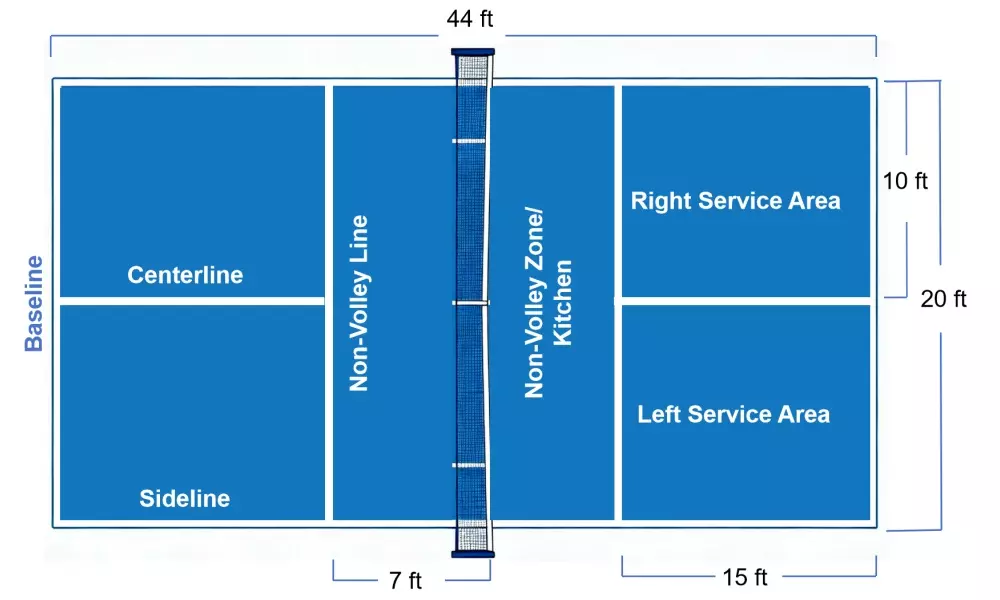
Before you decide on the number of poles, you must understand the geometry of light. A pickleball court is smaller than a tennis court (20’ x 44’), but the lighting requirements are actually stricter due to the speed of play. To ensure the safety and visibility of sports lighting solutions, every layout must adhere to three non-negotiable rules.
1. The Magic Height: 20ft – 25ft
The most common mistake DIY builders make is using poles that are too short. For pickleball, the standard mounting height should be between 20 feet and 25 feet.
Below 20ft: The angle of the light becomes too flat. This forces the fixture to aim almost horizontally to reach the center of the court, shining directly into players' eyes and creating blinding glare.
Above 30ft: While tall poles reduce glare, they significantly increase equipment and installation costs. For most residential and club courts, 25 feet is the sweet spot that balances performance with budget.
2. The "Side-Lighting" Mandate
Never, under any circumstances, place light poles behind the baseline (the back fence). Placing lights behind the server creates a "strobing" effect for the receiver and makes it impossible to track the ball against the light source. Always position your poles along the long sidelines of the court. This ensures the light comes from the side, keeping the ball visible regardless of which direction the player is facing.
3. Controlling the "Glare Zone"
Your fixtures should be aimed to throw light across the court centerline, overlapping with light from the opposite side. This technique fills in shadows and ensures that when a player looks up for a lob, their line of sight is perpendicular to the light source, not directed straight at it.
Top Layout Configurations: 2-Pole vs. 4-Pole Setups
Now that we’ve established the golden rules, let's look at the two most common lighting layouts.
When planning your layout, remember that you are not just lighting the 20' x 44' playing lines; you must illuminate the Total Play Area (typically 30' x 60' or 34' x 64') to ensure players can safely track deep serves and run outside the lines without stepping into darkness.
Option A: The 2-Pole Layout (The "Residential Budget" Choice)
This is the most common setup for backyard courts where cost and ease of installation are the top priorities.
The Setup: One pole is placed on each side of the court, aligned directly with the net line.
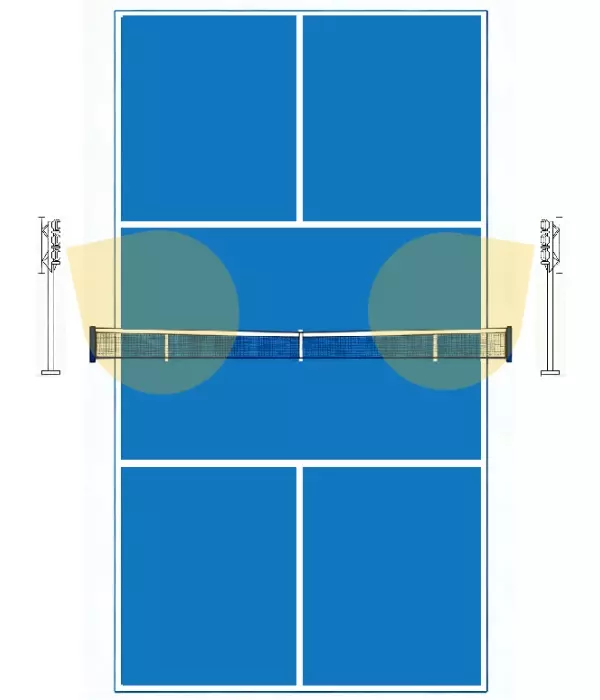
The Pros: It cuts your installation costs in half—fewer poles, less concrete, and less trenching. It is generally sufficient for casual, recreational play.
The Cons: Because the light originates from the center, it creates significant shadows in the four corners of the court (the baseline areas). While the "Kitchen" (non-volley zone) is bright, tracking a fast ball deep into the corner can be difficult.
Best For: Homeowners on a strict budget who play casually with family.
Option B: The 4-Pole Layout (The "Performance" Standard)
If you want a club-level experience or plan to play competitive matches, this is the recommended standard.
The Setup: Two poles are placed on each side, pushed towards the corners. Typically, these are positioned roughly 5 to 10 feet behind the baseline, along the sidelines.
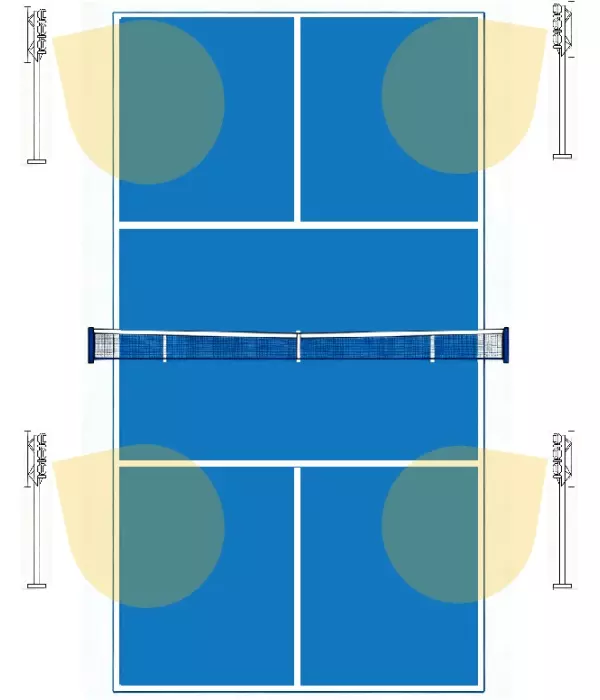
The Pros: By positioning lights near the corners, you achieve excellent uniformity. Light hits the ball from four distinct angles, virtually eliminating shadows. More importantly, this layout keeps the glare out of your peripheral vision when you are at the net looking forward.
The Verdict: While the upfront cost is higher, the visual comfort and safety make it the preferred choice for serious players and commercial facilities.
Commercial Solutions: "Shared Pole" Layout Strategy
If you are planning a facility with multiple adjacent courts, utilizing a standard 4-pole layout for every single court is a financial mistake. Doing so results in a "forest of poles," a cluttered skyline, and a massive bill for concrete foundations. This is where the "Shared Pole" Layout becomes the hero for commercial projects.
The concept is simple but effective: instead of installing separate poles for every court, we utilize Twin-Mount Brackets (T-Bars) on a single pole located between two side-by-side courts. For example, a standard 4-court battery (arranged 2x2) would normally require 16 individual poles if designed separately. With a shared layout strategy, you can achieve the same lighting quality with just 9 to 12 poles.
The central poles in this design mount two fixtures—one aiming left at Court A, and one aiming right at Court B. This approach significantly reduces excavation, trenching, and concrete costs by 30-40%. Furthermore, it cleans up the visual clutter of the facility, providing a sleek, professional appearance that players appreciate.
Technical Cheat Sheet: Lumens, Height, and Color
When communicating with your contractor or lighting supplier, you need to speak their language to avoid being oversold or underserviced. "Bright enough" is not a technical specification. Use the data below to ensure you get the exact performance required for your specific needs.
1. Brightness Levels (Court Classifications)
Lighting brightness is measured in Footcandles (fc). The American Sports Builders Association (ASBA) classifies pickleball courts into three distinct categories based on usage:
Class | Application | Target Brightness | Best For |
Class III | Residential / Recreational | 30 fc | Backyard courts, HOA amenities, and casual play. |
Class II | Club / Competition | 50 fc | Country clubs, dedicated pickleball facilities, and league matches. |
Class I | Professional / Televised | 75+ fc | National tournaments and high-speed HD broadcasting. |
2. Color Temperature (Kelvin)
The "color" of the light affects both aesthetics and visibility.
4000K (Warm/Neutral): Highly recommended for residential areas. This temperature is softer on the eyes and blends better with neighborhood streetlights, avoiding the harsh "commercial parking lot" look that annoys neighbors.
5000K (Cool/Daylight): The standard for dedicated sports facilities. It provides high contrast, making the neon yellow ball "pop" against the blue or green court surface, which is critical for fast reaction times in competitive play.
3. Uniformity Ratio (Max/Min)
Uniformity is arguably more important than raw brightness. A court that has bright spots in the center and dark corners is dangerous and unplayable.
The Metric: You should ask for a Max/Min Ratio of 2.0 or less.
What This Means: The brightest spot on your court should not be more than twice as bright as the darkest spot. This ensures smooth, consistent lighting across the entire 30' x 60' play area, allowing players to track the ball seamlessly from the net to the baseline.
How Do You Prevent Light Trespass and Neighbor Complaints?
For residential sports court lighting, the biggest threat isn't the weather—it’s the Homeowners Association (HOA) or an angry neighbor. "Light Trespass" (unwanted light spilling into a neighbor’s bedroom or living room) is the number one reason home courts get shut down.
Fortunately, a professional lighting layout solves this before it becomes a problem. The solution lies in a combination of Layout Geometry and Advanced Optics.
Full Cutoff Design: We recommend fixtures with "Full Cutoff" optics. Unlike old-school floodlights that spray light everywhere, these fixtures are engineered to direct light downwards. This ensures the light stays strictly within your property lines.
Backlight Shielding: For courts located near property borders, we incorporate physical Backlight Shields. These "visors" cut off the light on the back side of the pole, acting as a curtain that keeps the area behind the pole pitch black.
Dark Sky Compliance: By aiming fixtures strictly downwards (0-degree tilt) or using precise forward-throw optics, our layouts meet strict "Dark Sky" ordinances, preserving the view of the stars while keeping your court tournament-ready.
Beyond the Layout: Fixture Durability and Smart Controls
A perfect layout is useless if the lights themselves are a hassle to maintain. When calculating the budget for your pickleball court lighting, you must look beyond the upfront sticker price and consider the Total Cost of Ownership.
Long-Term Savings: Why Quality LEDs Pay for Themselves
The most expensive part of lighting isn't the electricity—it’s the maintenance. Changing a burnt-out metal halide bulb 25 feet in the air is not a ladder job; it requires renting a bucket truck or hiring a specialized crew, often costing $500 or more per visit.
This is why we utilize high-performance LEDs rated for 50,000+ hours (roughly 15+ years of nightly play). By choosing a commercial-grade fixture, you are effectively buying a "zero-maintenance" solution. You buy it once, install it, and don’t touch it again for a decade.
The "Smart" Advantage
Modern LED systems now offer app-based controls that add huge versatility to your layout:
Energy Savings: Practice night? Dim the lights to 50% to save electricity.
Neighbor Relations: Want to play late without being a nuisance? Lower the brightness to a "casual" level that is less intrusive to the surrounding area.
Curious about the cost of pickleball court lighting? Click here: Pickleball Court Lighting Cost Complete Guide 2025
Get a Free Photometric Lighting Plan
Building a pickleball court is a significant investment, and lighting is the one variable you cannot afford to get wrong. A poor layout can result in blinding glare, unplayable dark spots, or costly reinstallations.
Don't guess on your pole placement.
At Ceramiclite, we take the guesswork out of the equation. Send us your court dimensions, and our engineering team will generate a Free Photometric Lighting Plan specifically for your project.
This 3D simulation will show you exactly where the light will fall, the footcandle levels you will achieve, and how the light spill will be contained—all before you dig a single hole.