_thumb.jpg)
ソフトボール競技場の照明:基準、レイアウト、コストの内訳
金曜の夜の試合の勢いを一瞬で失わせるものとして、薄暗く不完全な外野ほど効果的なものはありません。施設管理者や学校長にとって、不十分な照明はスコアの問題だけでなく、責任問題にもなります。
いまだに旧式のメタルハライドランプ器具に頼っているのなら、その手順はご存じでしょう。大きなブザー音、電源が落ちた後の 15 分間のウォームアップ遅延、そして季節ごとの予算を食いつぶす莫大な電気代。
ソフトボール競技場の照明の更新や新設には多額の資本支出が必要であり、専門用語はすぐに理解しきれなくなる可能性があります。必要なのはセールストークではなく、ロードマップです。
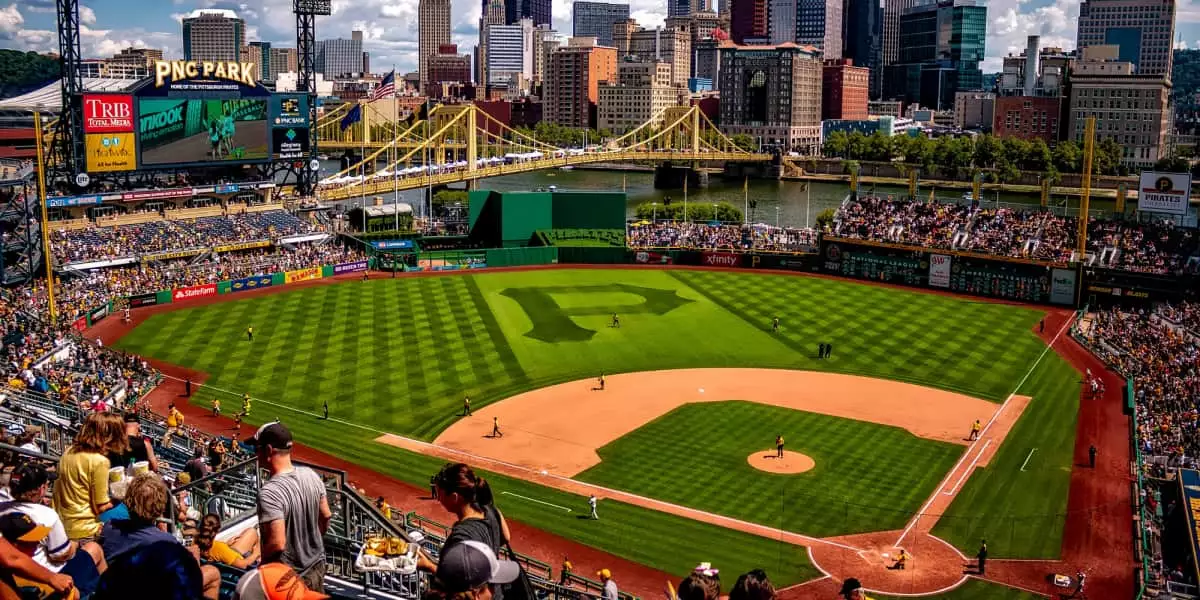
このガイドでは、2025 年のソフトボール ダイヤモンドの照明の詳細について説明します。
Ø ソフトボール場と野球場の重要な設計上の違い。
Ø 改修と新築の正確なコスト見積もり。
Ø カバレッジを最大化するレイアウト図 (4 極 vs. 6 極)。
Ø IES およびダークスカイ規制のコンプライアンス チートシート。
市営公園を改修する場合でも、大学のスタジアムを建設する場合でも、このリソースは現実的な予算を立て、コストのかかる設置エラーを回避するのに役立ちます。
目次
ソフトボールと野球のフィールドの寸法:照明デザインにおける重要性
初期の計画段階でよくある間違いは、ソフトボール場を単に「小さな野球場」とみなしてしまうことです。ソフトボールと野球は共通のDNAを持っていますが、プレーのスピードやフィールドの形状によって、照明の要件はそれぞれ異なります。
野球の照明レイアウトをソフトボールのダイヤモンドにコピーすると、通常、光(とお金)の無駄、または危険なグレアという 2 つの問題が発生します。
幾何学のギャップ
フィールドの物理的な占有面積によって、ポールをどこに設置するか、どのくらいの高さに立てるかが決まります。
内野:ソフトボールの標準的なダイヤモンドのベースパスは60フィート(約18メートル)ですが、野球の90フィート(約27メートル)よりも長いです。動きがタイトで、ボールはより狭い範囲を速く移動します。そのため、選手がボールの速度を瞬時に把握できるように、内野には高い均一性が求められます。
外野:ソフトボールのフェンスは通常、ホームベースから200~250フィート(約60~76メートル)の距離に設置されます。野球場は300~400フィート(約90~120メートル)ほどあります。
ポールの高さが重要な理由
Because the field is smaller, you generally do not need the massive 100-foot towers used in baseball stadiums. In fact, going too tall on a softball field is often a mistake.
l Softball Pole Standard: Typically 50 to 70 feet.
l The Logic: If you use a 100-foot pole on a 200-foot field, a significant percentage of your light will spill over the outfield fence into the neighbor's backyard (light trespass).
l The Glare Factor: Conversely, if poles are too short (under 40 feet), the fixture must be aimed flat to reach the outfield. This shines light directly into the batter’s eyes.
Quick Comparison: Design Parameters
We’ve summarized the key differences below to help you spot red flags in lighting proposals.
Feature | Softball Field | Baseball Field | Lighting Implication |
Base Paths | 60 ft | 90 ft | Softball needs higher infield uniformity due to faster reaction times. |
Fence Distance | 200 - 250 ft | 300 - 400+ ft | Softball requires less total wattage and fewer fixtures to light the area. |
Ideal Pole Height | 50 - 70 ft | 70 - 100+ ft | Shorter poles reduce maintenance costs but require stricter glare control. |
Beam Spread | Wide / Medium | Narrow / Long throw | Softball lights often use wider beam angles to cover the field evenly from closer distances. |
Key Takeaway: Before you look at lumens or watts, ensure your lighting designer is using the correct geometry. A design built for a 350-foot baseball field will leave your softball field over-lit in the center and dark in the corners, wasting your budget on light you don't need.
Lighting Standards & Requirements: How Much Light Do You Actually Need?
One of the most expensive mistakes you can make is guessing your lighting requirements. Under-lighting creates safety hazards and liability issues; over-lighting burns through your budget and can trigger lawsuits from neighbors due to light pollution.
The "right" amount of light depends entirely on the Class of Play. A municipal recreational field does not need the same brightness as an NCAA televised stadium.
We reference the IES RP-6-20 (North America) and EN 12193 (Europe) standards to help you determine your target levels.
The Infield vs. Outfield Rule
In softball, the infield is where the fastest action happens. Ground balls and line drives reach the infielder in split seconds. Therefore, industry standards always require higher light levels in the infield compared to the outfield to ensure contrast and visual acuity.
Recommended Illuminance Levels
Use this chart to identify which category your facility falls under.
Class of Play | Typical Facility | Target Infield Light | Target Outfield Light |
Class I | Professional / TV Broadcast | 100+ fc (1000+ Lux) | 70+ fc (750+ Lux) |
Class II | College / Semi-Pro | 50 fc (500 Lux) | 30 fc (300 Lux) |
Class III | High School / Competitive Club | 50 fc (500 Lux) | 30 fc (300 Lux) |
Class IV | Municipal Rec / Training | 30 fc (300 Lux) | 20 fc (200 Lux) |
(Note: "fc" = Foot-candles. 1 fc ≈ 10 Lux)
The Hidden Metric: Uniformity (Max/Min Ratio)
High brightness means nothing if the field is patchy. If a ball travels from a bright spot to a dark shadow, the player's eye cannot adjust fast enough, causing errors or injuries.
For recreational fields, aim for a uniformity ratio of 2.5:1 or better. For competitive play, you need 2.0:1. This ensures the light is evenly spread across the grass and dirt.
Compliance & "Dark Sky" Regulations
Before you sign a contract, check your local municipal codes.
l Dark Sky Compliance: Many US cities now strictly limit "spill light" (light crossing the property line). You may need fixtures with an U0 rating (zero uplight) and external visors to cut off glare.
l DLC Premium: If you want to claim energy rebates from your utility company in North America, your LED fixtures typically need to be DLC Premium listed.
Layout & Design: Where to Place the Poles
Once you know how much light you need, the next step is determining where the light comes from. The goal is to minimize shadows on the pitcher's mound and batter's box while keeping costs in check.
Most softball fields utilize either a 4-Pole or 6-Pole layout.
Option A: The 4-Pole Layout (Budget-Friendly)
This is the standard setup for recreational leagues, practice fields, and municipal parks (Class IV).
Placement: Two poles are positioned near the 1st and 3rd base dugouts (aiming inward), and two poles are positioned in the outfield.
Pros: Lower installation cost (fewer concrete bases, less trenching, fewer poles).
Cons: Uniformity is harder to achieve. You may see slight shadowing behind the pitcher or in the deep outfield corners.
Option B: The 6-Pole Layout (Performance Standard)
This is the go-to design for high schools, colleges, and tournament complexes (Class II & III).
Placement:
l 2 "A" Poles: Located roughly 30-50 feet past the 1st and 3rd base foul lines.
l 2 "B" Poles: Located further down the outfield foul lines.
l 2 "C" Poles: Located in the outfield, framing center field.
Pros: Superior light uniformity. By hitting the field from six angles, you virtually eliminate shadows.
Cons: Higher upfront cost for materials and installation.
Option C: The 8-Pole Layout (Broadcast & Championship Level)
When your facility hosts televised tournaments or professional league games (Class I), standard lighting isn't enough. Cameras require higher light levels than the human eye, and they detect shadows that players might ignore.
Placement: This layout typically adds two poles closer to the foul poles or splits the outfield coverage more granularly.
Pros: Ultimate uniformity. It supports 4K/HD broadcasting and slow-motion replays without flickering.
Cons: Highest capital expense; requires advanced aiming logic.
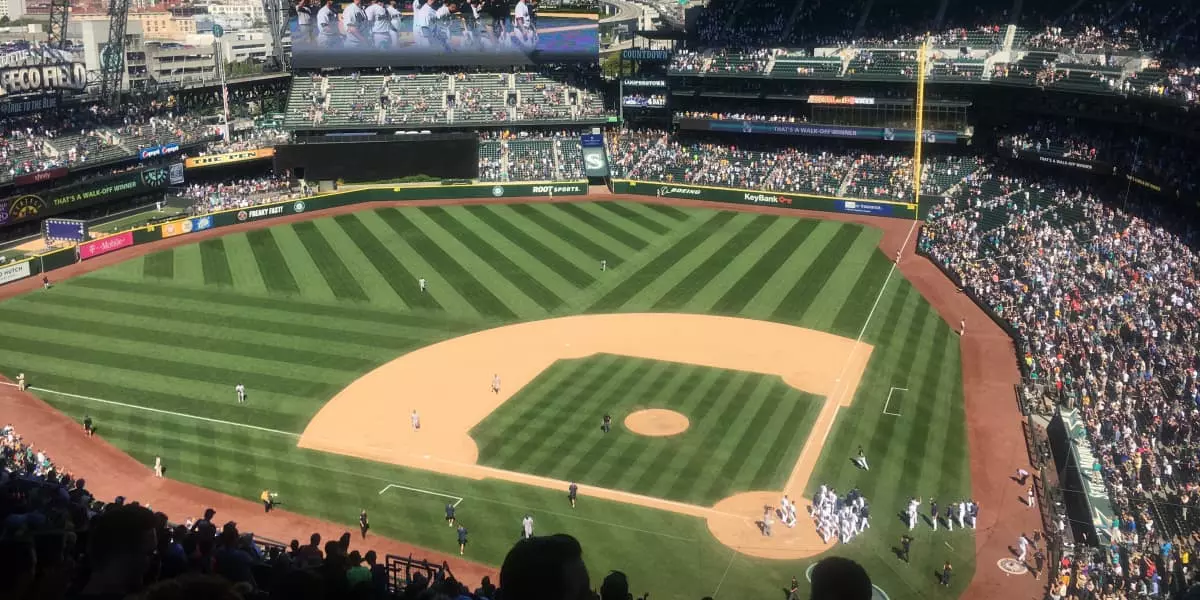
Case Study: Elite Design Principles (Guangzhou Olympic Field)
To understand how an 8-pole system works in practice, let’s look at the lighting engineering behind the Guangzhou Olympic Sports Center (a premier baseball/softball venue).
Pole Height Strategy:
The design utilizes 28-meter (approx. 92 ft) poles. While taller than average, this height allows for steeper aiming angles, pushing light deep into the infield without blinding the batter.
Fixture Configuration:
It’s not just about slapping lights on a pole. This project utilized a complex array of over 114 fixture groups (a mix of 2-bar and 4-bar configurations). This high density allows designers to "paint" the field with light, layer by layer.
The "50% Boost" Rule:
The hardest part of the design was balancing the Infield vs. Outfield. The engineers calculated the aiming angles to ensure the Infield average illuminance was ~50% higher than the Outfield.
Why? This draws the viewer's (and camera's) focus to the pitcher/batter duel while ensuring outfielders can still track high-velocity fly balls with zero dark spots.
TV-Ready Specs:
For the cameras, the design prioritized Vertical Illuminance (light hitting the player's face) alongside Horizontal Illuminance (light hitting the ground). They also selected high CRI (Color Rendering Index) chips to ensure team jersey colors looked vibrant and true-to-life on screen.
The "Cross-Aiming" Technique
Regardless of the number of poles, the fixtures must be aimed correctly. We use a technique called Cross-Aiming.
Instead of aiming a light directly forward, we aim it across the field (e.g., the 1st base pole aims lights toward left field).
Why? If lights are aimed straight ahead, a fielder looking up to catch a fly ball will look directly into the LED source. Cross-aiming ensures the light comes from the side, protecting players' vision.
Pro Tip: For a standard 200-foot softball field, we typically recommend a mounting height of 50 to 60 feet. Any lower, and you will struggle to angle the lights steeply enough to prevent glare for the neighbors.
Cost Breakdown & ROI: Budgeting for Your Project
The most common question we receive is, "How much does it cost to light a softball field?" The answer depends heavily on whether you are replacing existing light heads (Retrofit) or building from scratch (New Construction).
Here is a realistic breakdown of where your money goes.
Scenario A: The LED Retrofit (Fixtures Only)
If you already have structurally sound poles and functional wiring, you are in luck. You only need to swap the old Metal Halide fixtures for new LED ones.
l Estimated Cost: $15,000 – $45,000 per field.
l What’s Included:
ü 12 to 24 LED Sports Lighters (depending on Class of Play).
ü Mounting brackets (cross-arms).
ü Note: This usually excludes installation labor, which can add 2,000–2,000–5,000 for boom lift rentals and electrician hours.
Scenario B: New Construction (Full Turnkey)
If you are building a new complex or your old wooden poles are rotting, you need a complete system. This is a major construction project.
l Estimated Cost: $120,000 – $350,000 per field.
l Where the Money Goes:
ü Materials (40%): LED fixtures, steel or concrete poles, pre-cast concrete bases.
ü Installation & Civil Work (60%): This is often the shocker for buyers. It includes digging trenches for conduit, pouring concrete foundations, renting cranes to set the poles, and running high-voltage wiring from the transformer.
The ROI: LED vs. Metal Halide
The upfront cost of LED is higher, but the "Total Cost of Ownership" (TCO) tells a different story. Below is a 10-year projection for a standard high school softball field.
Cost Category | Metal Halide (Old Tech) | LED System (New Tech) | The LED Advantage |
Energy Cost (10 Years) | $60,000+ | $24,000 | 60% Savings |
Bulb Replacements | Every 2-3 years | None | Zero Downtime |
Maintenance Labor | $15,000 (Bucket truck rentals) | $0 | Eliminated |
Total 10-Year Cost | High & Unpredictable | Fixed & Low | ROI in ~2.5 Years |
Assumption: 500 hours of usage per year at $0.12/kWh.
Why Choose LED? Specific Advantages for Softball
Saving money is great, but for coaches and players, the switch to LED is about playability. Modern solid-state lighting solves specific problems that have plagued night games for decades.
1. Instant On/Off (The Rain Delay Savior)
Old Metal Halide lights utilize an arc tube that requires a cool-down and warm-up period.
The Problem: If a storm passes through and power flickers, or if you turn the lights off by mistake, you have to wait 15 to 20 minutes for the lights to re-strike. In a tight tournament schedule, this delay can force you to cancel the game.
The LED Solution: LEDs turn on instantly at 100% brightness. No warm-up, no buzzing, no waiting. You can pause a game for fireworks or a halftime show and bring the lights back immediately.
2. Maintenance-Free Durability
Changing a light bulb at home is easy. Changing a bulb 60 feet in the air requires renting a bucket truck and hiring a licensed electrician.
Lifespan: Quality LED sports lights are rated for L70 > 100,000 hours. Even if you run the lights 6 hours a night, every single night, they will last over 45 years.
Robust Design: Unlike fragile glass bulbs and filaments, LEDs are solid-state chips. They handle high winds and vibrations without failing.
3. Weather Resistance (IP & IK Ratings)
Outdoor sports lighting takes a beating from the elements. When reviewing spec sheets, look for these two ratings:
l IP Rating (Ingress Protection): Look for IP66 or IP67.
ü IP66: Protects against powerful water jets (heavy rain).
ü IP67: Can be submerged in water (essential for high-humidity areas or monsoon seasons in Southeast Asia).
l IK Rating (Impact Protection): Look for IK08 or IK10. This measures how well the fixture can withstand impact—like a foul ball hitting the light directly.
Summary: LED isn't just a "green" choice; it is a strategic operational choice. It removes the variables that cause game cancellations and unexpected maintenance bills.
Conclusion: Don't Guess, Calculate
Upgrading your softball field lighting is one of the best investments you can make for your facility. It extends playing hours, improves player safety, and, with LED technology, slashes your operating costs by more than half.
But every field is unique. A layout that works for a municipal park in Florida might not work for a high school in Oregon due to different wind load requirements or local light pollution laws.
Ready to see exactly what your field needs?
Stop guessing with spreadsheets. We offer Free Professional Lighting Designs (DIALux Simulations) to help you visualize the results before you spend a dime.

l See the exact pole locations.
l Get a precise fixture count.
l Receive a guaranteed uniformity report.
Click above to start your project today, and let’s get your field ready for the season opener.
Frequently Asked Questions (FAQ)
We hear the same questions from facility managers every week. Here are the quick answers to help you get started.
Q: How many light fixtures to light a softball field?
A: There is no single magic number, as it depends on the fixture's power and your required brightness. However, as a general rule of thumb:
Recreational Fields (30 fc): Typically require 12 to 16 high-efficiency LED fixtures spread across 4 or 6 poles.
Competitive/College Fields (50+ fc): Often require 24 to 40+ fixtures to achieve the necessary uniformity and brightness for fast-paced gameplay.
Note: Always base your purchase on a computer simulation, not just a fixture count.
Q: How many lumens to light a softball field?
A: Instead of focusing on individual fixture lumens, look at the "Total System Lumens." A standard recreational softball field usually requires a total package of 1,500,000 to 2,500,000 lumens to hit standard light levels.
例えば、13万ルーメンの光を発する照明器具を16個使用すると、約200万ルーメンの光を発します。高効率(1ワットあたり150ルーメン以上)の最新のLEDスポーツライトは、従来のシステムに比べて大幅に少ない電力でこの明るさを実現できます。
Q: ソフトボール場の照明はいくらですか?
A: 価格は作業範囲によって異なります。
ライトのみ(改造):既存のポールをそのまま使用する場合は、LED 照明器具と取り付け用ハードウェアに 15,000 ~ 45,000 ドルかかることを想定してください。
完全な設置 (新規建設): 新しいポール、コンクリート基礎、溝掘り、配線が必要な場合、プロジェクトの総コストは通常、フィールドごとに 120,000 ~ 350,000 ドルの範囲になります。
Q: ソフトボール用フィールドライトの高さはどれくらいですか?
A: ソフトボール用フィールドライトは、野球用フィールドライトよりもフィールドの面積が小さいため、一般的に低くなります。理想的な高さは通常50フィートから70フィート(15メートルから21メートル)です。
この高さは、フィールドの中央から照明器具までの角度が最低25度になるように計算されています。ポールが短すぎる場合(40フィート未満)、光の角度が平坦になりすぎて、打者の目に直接光が当たり、眩しいグレアを引き起こします。