_thumb.jpg)
Guía de iluminación para campos de golf y campos de prácticas
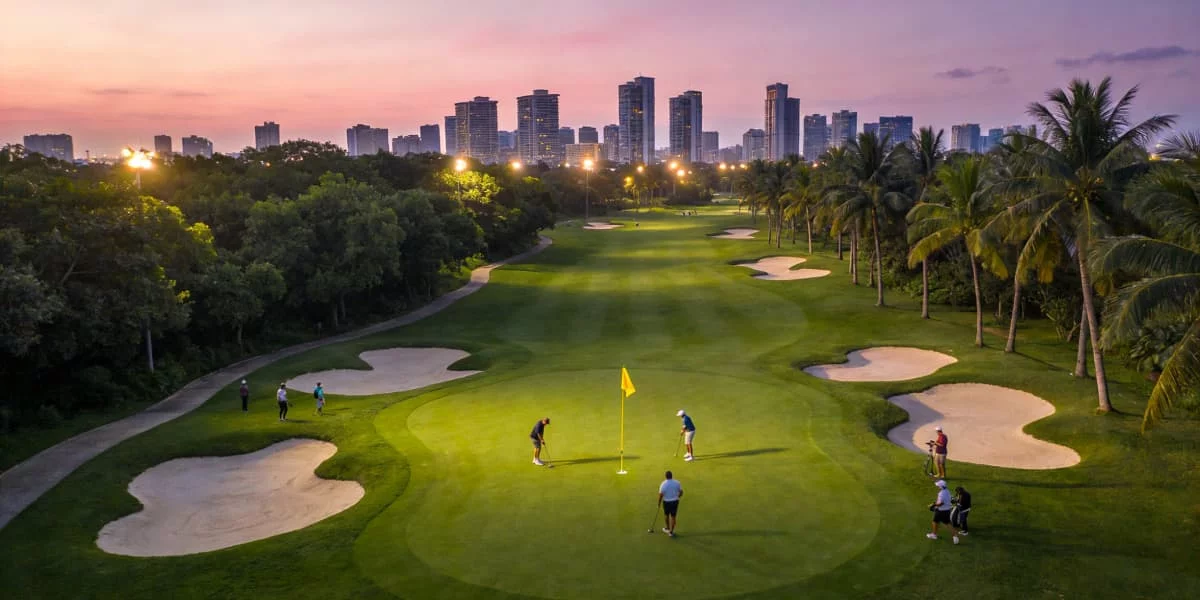
Tabla de contenido
Principales ventajas de actualizar a iluminación LED moderna para campos de golf
Iluminación de campos de golf frente a iluminación de campos de prácticas
¿Cómo seleccionar las luminarias LED ideales para instalaciones de golf?
Mejores prácticas en diseño y distribución de iluminación para campos de golf
Certificaciones de seguridad, durabilidad y rendimiento
Introducción
El panorama del golf está evolucionando. Ya no es un deporte exclusivamente diurno, condicionado por la salida y la puesta del sol. En los últimos años, el golf nocturno ha experimentado un crecimiento masivo, impulsado por jugadores que buscan escapar del calor sofocante del día y profesionales que desean practicar fuera de su horario laboral habitual. Para los propietarios de instalaciones, la capacidad de iluminar eficazmente un campo de golf o un campo de prácticas ha pasado de ser un lujo a una necesidad estratégica.
Sin embargo, la iluminación de un campo de golf profesional es mucho más compleja que simplemente instalar reflectores para iluminar el césped. Se trata de un arte altamente técnico. Iluminar un campo de golf requiere un delicado equilibrio: proporcionar suficiente iluminación vertical para que los jugadores puedan seguir la trayectoria de una bola a alta velocidad contra un cielo completamente oscuro, al tiempo que se controla rigurosamente el deslumbramiento para mantener una experiencia visual óptima y confortable.
Ya sea que esté renovando un campo de golf de campeonato de 18 hoyos o construyendo una nueva instalación de práctica comercial, comprender los estándares específicos para cada zona es fundamental. Esta guía completa desglosará los requisitos esenciales de iluminación, las estrategias de diseño y las principales diferencias entre la iluminación del campo y la del campo de prácticas para ayudarle a tomar decisiones de diseño informadas.
Principales ventajas de actualizar a iluminación LED moderna para campos de golf
La actualización de las lámparas de halogenuros metálicos (MH) obsoletas a la iluminación LED avanzada para campos de golf ya no es solo una tendencia tecnológica, sino una inversión empresarial estratégica que ofrece beneficios operativos y financieros inmediatos.
1. Aumento de ingresos y mayor jugabilidad.
La puesta de sol no debería ser el momento de cierre. Una iluminación de alta calidad amplía considerablemente el horario de juego, permitiendo a las instalaciones aprovechar al máximo las lucrativas horas punta de la tarde. Ya sea para ofrecer más horarios de salida en un campo de 18 hoyos o para aumentar la rotación de puestos de prácticas con una iluminación de primera calidad , las operaciones nocturnas maximizan directamente el retorno de la inversión e impulsan los ingresos generales.
2. Visibilidad superior y experiencia de juego premium.
Seguir la trayectoria de una pelota de golf a alta velocidad contra un cielo oscuro requiere una claridad excepcional. Las luminarias LED avanzadas proporcionan una iluminación con un alto índice de reproducción cromática (CRI > 80) que imita la luz natural, asegurando que la pelota blanca resalte con un alto contraste sobre el césped verde. Además, los LED eliminan la fatiga visual y ofrecen una alta uniformidad, evitando las molestas sombras en forma de cebra en la calle y el green.
3. Eficiencia energética y ahorros considerables en mantenimiento.
Los modernos focos LED para campos de práctica y campos de golf consumen hasta un 70 % menos de energía que las lámparas de halogenuros metálicos, a la vez que ofrecen una mayor luminosidad. Además del ahorro en la factura de la luz, los LED tienen una vida útil superior a las 50 000 horas. Esto prácticamente elimina los problemas de mantenimiento, evitando a los administradores de las instalaciones el alquiler de costosas plataformas elevadoras, las interrupciones en el juego y el riesgo de dañar el césped con los frecuentes cambios de bombillas.
4. Cumplimiento de la normativa Dark Sky y reducción de la luz difusa
Los campos de golf suelen estar junto a zonas residenciales, donde la contaminación lumínica y el resplandor del cielo son frecuentes y generan quejas entre los vecinos. Los modernos LED solucionan este problema mediante una óptica de precisión. Gracias a lentes asimétricas avanzadas y visores antirreflejo, la luz se dirige exclusivamente a las zonas de juego, lejos de las propiedades circundantes. Esto garantiza el cumplimiento de las normativas municipales sobre contaminación lumínica y los estándares internacionales de protección del cielo nocturno.
Iluminación de campos de golf frente a iluminación de campos de prácticas
Una idea errónea común entre los propietarios de instalaciones es que la iluminación de los campos de golf y la de los campos de prácticas son prácticamente iguales. En realidad, si bien comparten el mismo deporte, los principios de ingeniería, los requisitos ópticos y el diseño de la distribución son fundamentalmente diferentes.
Para diseñar un sistema eficaz y económico, es fundamental comprender las diferencias funcionales entre estos dos tipos de instalaciones.
Definiciones y operaciones de las instalaciones
El campo de golf (de 18 o 9 hoyos):
Un campo de golf completo se caracteriza por su gran extensión y topografía compleja. Consta de varias zonas diferenciadas, como el tee de salida, la calle, el green, el rough, los bunkers de arena y los obstáculos de agua. Dado que los jugadores se desplazan constantemente (a pie o en carrito de golf) de hoyo en hoyo, el sistema de iluminación debe proporcionar una iluminación integral, duradera e inmersiva en un amplio espacio tridimensional, garantizando la seguridad y una estética nocturna de primera calidad.
l Campo de prácticas de golf:
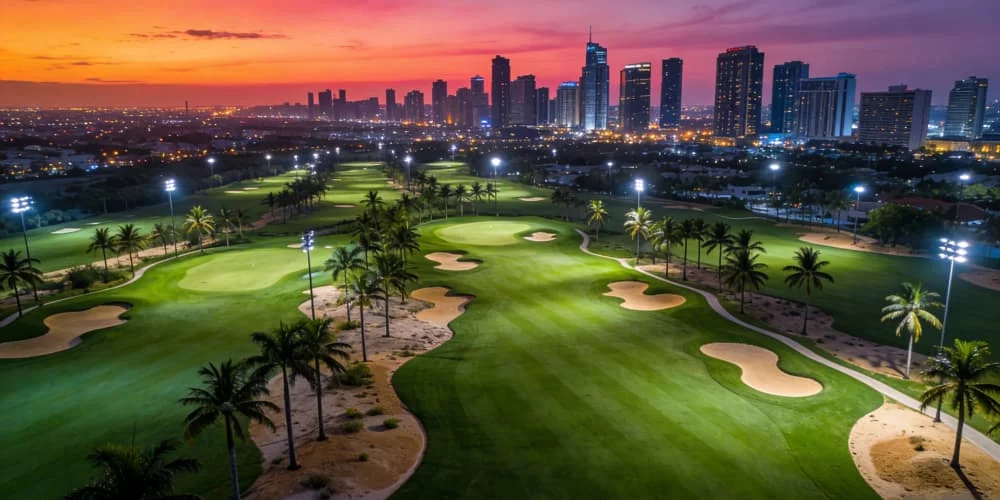
Un campo de prácticas tiene una estructura relativamente simple y lineal. Consiste principalmente en una sola fila de puestos de golpeo (la línea de salida) y una amplia zona de aterrizaje frontal que se extiende de 150 a más de 300 metros (165–330+ yardas). Se trata de un entorno de práctica unidireccional y de punto fijo. No hay greens que leer ni obstáculos complejos que sortear, por lo que el enfoque operativo se centra exclusivamente en seguir la trayectoria y el aterrizaje de la bola.
Requisitos de iluminación comunes para ambas instalaciones
A pesar de sus diferencias estructurales, ambas aplicaciones se engloban dentro de la iluminación deportiva profesional y comparten varios estándares innegociables:
Control estricto del deslumbramiento : En el golf, la mirada del jugador se desplaza constantemente del suelo al cielo. Ambos sistemas deben emplear tecnología antideslumbrante avanzada (como viseras personalizadas y lentes ópticas de precisión) para garantizar que la fuente de luz nunca deslumbre al jugador durante el movimiento de subida o bajada.
l Alto índice de reproducción cromática (IRC) : La representación precisa del color es fundamental. Ambas instalaciones requieren un IRC (Ra) mínimo de 70, y los campos de golf de alta gama suelen exigir un Ra de 80. Esta alta reproducción cromática garantiza un contraste nítido entre el verde intenso del césped y el blanco brillante de la pelota de golf, lo que facilita el seguimiento visual.
l Alta uniformidad : La luz debe transitar suavemente por el césped. Los diseñadores de iluminación deben garantizar altos índices de uniformidad para eliminar por completo las zonas claras y oscuras alternadas (el temido efecto de "rayas de cebra"), que pueden causar fatiga visual y errores de percepción de profundidad.
l Durabilidad y estándares de seguridad : Dado el entorno exterior adverso, los dispositivos para ambas aplicaciones deben contar con una sólida clasificación IP66 (impermeables y a prueba de polvo), resistencia al impacto IK08+ y dispositivos de protección contra sobretensiones (SPD) de alta capacidad para soportar fuertes lluvias, rayos y alguna que otra pelota de golf perdida.
Las principales diferencias en el diseño de iluminación
La diferencia entre ambas instalaciones radica en la forma en que se distribuye y proyecta la luz.
1. Diseño de iluminación para campos de golf (integral, complejo y de alto nivel)
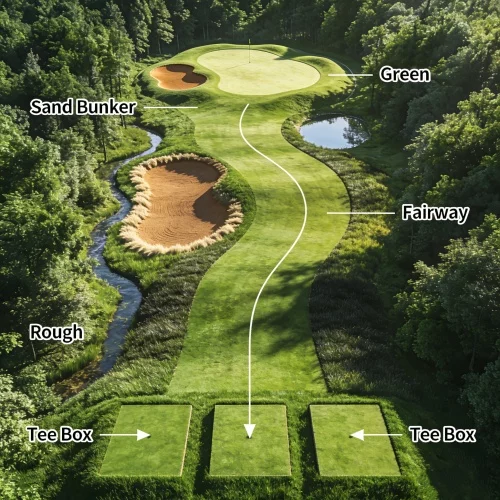 Iluminar un campo de golf real es una tarea de ingeniería muy compleja que requiere iluminación espacial tridimensional y niveles de intensidad variables.
(1) Múltiples estándares de lux por zona : No todo el césped requiere el mismo brillo.
Los greens de práctica requieren la máxima iluminación (normalmente entre 200 y 250 lux). Los jugadores necesitan una claridad absoluta para leer las sutiles pendientes y desniveles del césped.
ü Las calles de los campos de golf requieren una iluminancia moderada (100–150 lux) con un fuerte énfasis en la uniformidad.
Las zonas de salida necesitan una luz brillante y focalizada (150-200 lux) para la alineación de la cabeza del palo, mientras que las zonas de rough requieren niveles más bajos, suficientes solo para recuperar la bola de forma segura.
(2) Iluminación cruzada multidireccional : Para eliminar las sombras, especialmente en el green, las luminarias deben orientarse desde múltiples ángulos. La colocación de los postes es muy compleja; los diseñadores deben posicionarlos estratégicamente para evitar interferir con la trayectoria de la bola, manteniendo al mismo tiempo la estética general del paisaje nocturno. En consecuencia, el costo total del sistema y la complejidad de la instalación son elevados.
2. Diseño de iluminación para campo de prácticas de golf (proyección unidireccional de largo alcance)
 La iluminación de alta calidad en los campos de prácticas de golf plantea un desafío completamente diferente. La prioridad cambia: en lugar de iluminar terrenos complejos, hay que penetrar la oscuridad a distancias extremas.
Proyección de largo alcance extremo : El objetivo principal de los reflectores de los campos de práctica de golf es iluminar la zona de aterrizaje delantera y los marcadores de distancia verticales a 100 m, 150 m y más de 200 m de distancia. Esto requiere luminarias LED especializadas con ángulos de haz extremadamente estrechos (por ejemplo, ópticas de 10° o 25°) capaces de proyectar un haz de luz concentrado en el interior del campo de práctica.
ü Lógica de diseño simplificada : A diferencia de las necesidades multidireccionales de un campo de golf, un campo de prácticas se basa en iluminación unidireccional. Los postes de mástil alto se instalan normalmente en una sola línea detrás o directamente a los lados de la línea de salida. Los jugadores se colocan de espaldas o de lado a la fuente de luz.
Asignación de presupuesto : Las zonas de salida solo requieren una iluminación confortable y sin deslumbramiento. La mayor parte del presupuesto de iluminación y la potencia de las luminarias se destinan a proyectores de largo alcance. Debido a que la disposición es lineal y unidireccional, el diseño está altamente estandarizado, lo que resulta en un costo total del proyecto relativamente menor en comparación con un campo de 18 hoyos.
Resumen de comparación rápida
(A continuación se incluye una guía de referencia rápida para ayudar a los propietarios de instalaciones a comprender las diferentes prioridades de un vistazo).
| Característica | Campo de golf (18 hoyos) | Campo de prácticas |
|---|---|---|
| Enfoque principal | Terreno completo, sombras, estética | Seguimiento de pelotas a larga distancia |
| Prioridad de iluminancia | Campo de minigolf (máxima iluminación) | Zona de aterrizaje lejana (más de 200 m) |
| Complejidad del diseño | Alta (Iluminación cruzada multidireccional) | Bajo (unidireccional, detrás de los jugadores) |
| Óptica de la luminaria | Asimétrico (Expansión amplia y precisa) | Haz simétrico/estrecho (largo alcance) |
| Costo total | Alto (extensas zanjas y postes) | Moderado (línea de postes estandarizada) |
¿Cómo seleccionar las luminarias LED ideales para instalaciones de golf ?
Conocer las normas de iluminación es solo la mitad del trabajo; para cumplirlas, es fundamental seleccionar la luminaria adecuada. Un enfoque estandarizado no funciona en la iluminación de campos de golf. Los requisitos ópticos para una calle de 250 yardas son radicalmente diferentes a los de una zona de práctica de tiro.
Aquí tienes una guía práctica sobre qué buscar al evaluar luminarias LED de alta potencia para deportes.
1. Óptica y ángulos del haz: La precisión lo es todo.
El elemento central de cualquier luminaria deportiva es su lente óptica. El ángulo del haz determina cómo se distribuye la luz emitida sobre el césped.
Para campos de práctica (proyección de largo alcance):
Al elegir focos para campos de práctica , la prioridad absoluta es alcanzar las zonas de aterrizaje y los greens más alejados. Para lograr este potente haz de luz a más de 200 metros, es necesario seleccionar luminarias con ángulos de haz extremadamente estrechos (por ejemplo, lentes de 10° o 25°) . Estas ópticas altamente concentradas y simétricas (o asimétricas altamente especializadas) actúan como un foco, dirigiendo la iluminación hacia el interior del campo sin que se disperse demasiado rápido en el cielo nocturno.
Para campos de golf (cobertura amplia y uniforme):
Iluminar una calle extensa o un green complejo requiere un enfoque diferente. Para aplicaciones estándar en campos de golf, los expertos recomiendan encarecidamente la óptica de distribución asimétrica . A diferencia de las luces simétricas estándar que concentran la luz directamente debajo del poste, las lentes asimétricas están diseñadas para proyectar la luz con precisión hacia adelante y de manera uniforme sobre el césped. Esto maximiza el área de cobertura, garantiza una alta uniformidad y reduce drásticamente el desperdicio de luz ascendente (resplandor del cielo).
2. Protectores antirreflejos avanzados: Protegen la visión del jugador.
En el golf, los jugadores miran constantemente hacia arriba para seguir la trayectoria de la bola contra el cielo oscuro. Si ven directamente un diodo LED sin recubrimiento, el resplandor resultante puede cegarlos temporalmente, arruinando el golpe y la experiencia.
Por lo tanto, las luminarias LED de alta gama deben estar equipadas con accesorios antirreflejo profesionales.
l Visores (protectores superiores/laterales) : Estos protectores físicos externos actúan como la visera de una gorra de béisbol, impidiendo que la luz se disperse hacia atrás o hacia arriba, obstruyendo la línea de visión del jugador o las propiedades vecinas.
Rejillas internas (Lamas) : Para un control óptimo del deslumbramiento, se pueden integrar rejillas internas tipo panal en el diseño de la lente. Estas confinan estrictamente el haz de luz al área objetivo deseada, lo que garantiza un entorno visual suave y confortable en el área de salida.
Mejores prácticas en diseño y distribución de iluminación para campos de golf
Incluso las luminarias LED más avanzadas tendrán un rendimiento deficiente si se instalan en el lugar equivocado. Una planificación fotométrica adecuada es fundamental para lograr una experiencia de golf nocturna impecable, sin necesidad de adquirir el equipo necesario.
A continuación se presentan las reglas de oro para el diseño e instalación de la iluminación en campos de golf.
1. La regla de oro de la colocación de la pole position: Nunca ciegues al golfista.
El error más grave en el diseño de iluminación de campos de golf es colocar un poste de luz en la línea de visión frontal directa del jugador. La iluminación frontal (iluminación desde detrás o ligeramente al lado del jugador) es el principio fundamental.
l En el área de salida : Los postes deben colocarse estratégicamente detrás del área de salida, proyectando luz en la dirección exacta en la que el jugador está golpeando.
l En la calle : Los postes suelen estar escalonados a lo largo de los lados de la calle (a menudo ocultos entre las hileras de árboles o la maleza), inclinados hacia adentro y hacia adelante para seguir la trayectoria del juego.
2. Consideraciones sobre la altura del poste: Cuanto más alto, mejor.
Al planificar la infraestructura, la altura de los postes influye directamente tanto en la calidad de la luz como en el presupuesto del proyecto. Los postes de iluminación estándar para campos de golf tienen una altura que oscila entre los 15 y los 25 metros (aproximadamente entre 50 y 80 pies) .
² La física de la altura: Los postes más altos proporcionan un ángulo de puntería más pronunciado. Esto ofrece dos ventajas principales: Primero , mejora significativamente la uniformidad (reduciendo las sombras intensas). Segundo , minimiza el deslumbramiento, ya que la fuente de luz se sitúa muy por encima del ángulo de visión natural del jugador. Si bien los postes más altos requieren una mayor inversión inicial en acero y cimentación, suelen permitir la instalación de menos postes en total, lo que compensa el coste a largo plazo.
3. Aerodinámica y carga de viento (EPA)
Los campos de golf y los campos de prácticas al aire libre son espacios abiertos, lo que los hace muy susceptibles a las inclemencias del tiempo, los fuertes vientos y los tifones/huracanes.
Al seleccionar luminarias para un mástil de 20 metros de altura, debe evaluar el Área Proyectada Efectiva (EPA, por sus siglas en inglés) de la luminaria . La EPA es una medida de la resistencia al viento de la luminaria.
² Por qué importa la baja clasificación EPA: Las luces deportivas LED de alta calidad presentan un diseño aerodinámico, delgado y de bajo perfil (baja clasificación EPA). Esto reduce la resistencia aerodinámica y la tensión estructural que se ejerce sobre el poste de luz durante tormentas intensas. Una menor clasificación EPA no solo garantiza la seguridad de los jugadores, sino que también permite a los contratistas utilizar postes y cimientos de hormigón más ligeros y económicos, optimizando así el presupuesto general del proyecto.
Certificaciones de seguridad, durabilidad y rendimiento
Los campos de golf y las canchas de práctica exponen los equipos de iluminación a condiciones climáticas adversas e impredecibles, desde lluvias torrenciales y rayos hasta el impacto físico de una pelota de golf perdida. Para garantizar la fiabilidad y la seguridad a largo plazo, las luminarias LED de alta gama deben cumplir con las siguientes especificaciones y certificaciones mínimas:



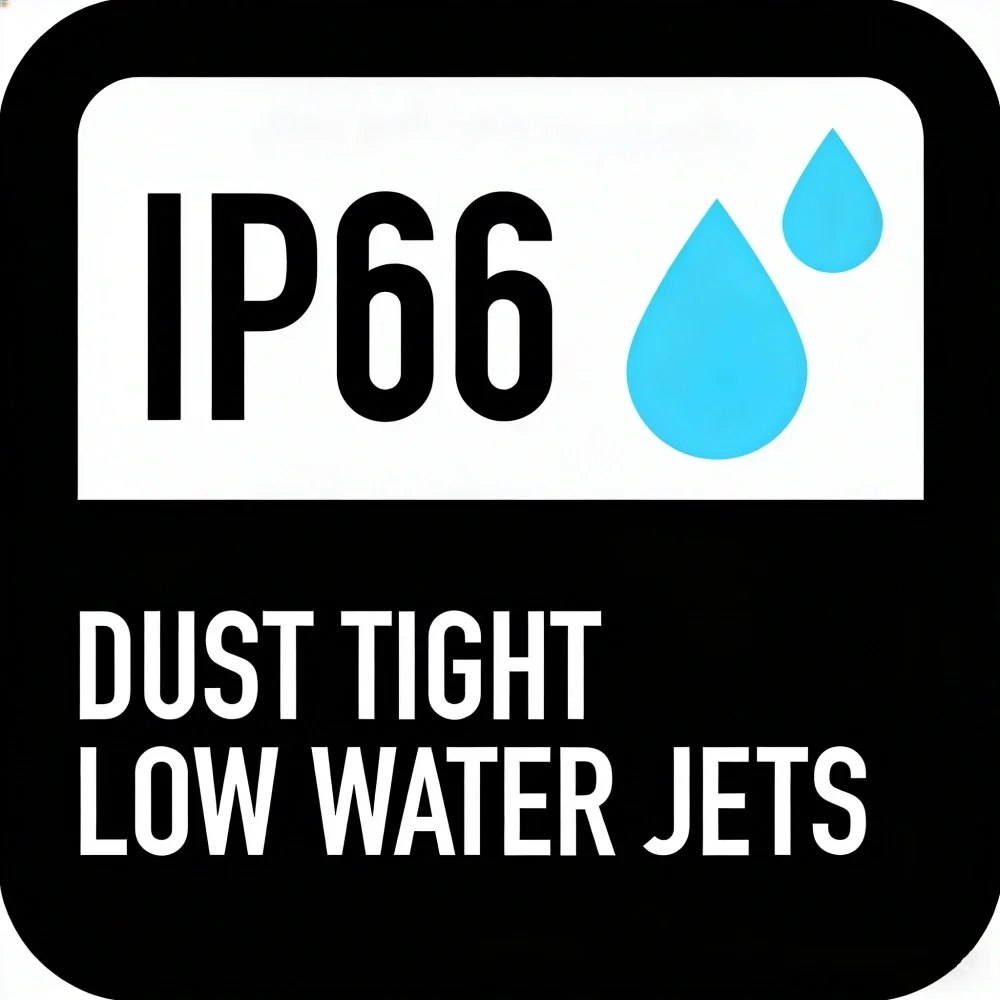



Altas calificaciones de propiedad intelectual e inteligencia artificial.
Una luminaria de alta calidad debe tener una clasificación IP66 como mínimo (totalmente hermética al polvo y protegida contra chorros de agua a presión o lluvia intensa). Igualmente importante es su resistencia a los impactos. Una clasificación IK08 o superior garantiza que la lente óptica y la carcasa puedan soportar granizadas extremas o impactos directos de una pelota de golf a alta velocidad.
Protección robusta contra sobretensiones
Debido a que las instalaciones de golf son espacios amplios y elevados, los postes de luz son muy susceptibles a los rayos y las sobretensiones. Las luces LED que seleccione deben estar equipadas con dispositivos de protección contra sobretensiones (SPD) integrados de 10 kV o 20 kV para evitar fallas eléctricas catastróficas.
Certificaciones de calidad globales
Busque luminarias que cumplan con rigurosos estándares internacionales, como UL/cUL (para Norteamérica) y CE/RoHS (para Europa). Además, seleccionar luminarias certificadas por la IDA (Asociación Internacional del Cielo Oscuro) garantiza que la luminaria minimice eficazmente la contaminación lumínica y el resplandor del cielo, asegurando el cumplimiento de las estrictas leyes de zonificación municipales.
Preguntas frecuentes
Para ayudar a los operadores de instalaciones y a los jugadores a comprender los aspectos básicos del golf nocturno, hemos respondido a las preguntas más frecuentes a continuación.
P: ¿Los campos de golf tienen iluminación nocturna? / ¿Se puede jugar al golf de noche?
Sí, por supuesto que se puede jugar al golf de noche. Si bien no todos los campos de 18 hoyos están iluminados, un número cada vez mayor de campos de golf de primer nivel, campos ejecutivos par 3 y prácticamente todos los campos de prácticas comerciales están instalando iluminación deportiva LED de alta potencia. Estos sistemas especializados proporcionan una visibilidad similar a la luz del día, lo que permite a los jugadores seguir la trayectoria de la bola con seguridad incluso después del atardecer.
P: ¿Cuál es la principal diferencia entre la iluminación del campo de golf y la del campo de prácticas?
A: La principal diferencia radica en el objetivo de la iluminación. La iluminación de un campo de golf requiere una iluminación compleja y multidireccional (iluminación cruzada) que abarque terrenos extensos e irregulares (calles, greens, obstáculos) para eliminar sombras y resaltar la topografía. En cambio, la iluminación de un campo de prácticas de golf es unidireccional; se centra principalmente en proyectar un haz de luz estrecho y de alta intensidad en línea recta para iluminar una zona de aterrizaje distante (a más de 200 yardas) mientras mantiene la línea de salida cómodamente iluminada desde detrás de los jugadores.
P: ¿Cuánto cuesta iluminar un campo de prácticas de golf?
A: El costo de iluminar un campo de prácticas varía significativamente según el tamaño de las instalaciones, los niveles de lux requeridos, la altura de los postes y si se trata de una instalación nueva (que implica excavación y postes nuevos) o una modernización con tecnología LED. En promedio, una modernización con iluminación LED de alta calidad para un campo de prácticas comercial estándar puede costar entre $20,000 y más de $60,000. Si bien la inversión inicial es considerable, la reducción del 70 % en las facturas de energía y la eliminación de los costos de mantenimiento generalmente resultan en un retorno de la inversión total en un plazo de 2 a 4 años.