_thumb.jpg)
LED-Rennstreckenbeleuchtung: Standards, Design und Lösungen bis 2026
Wenn Rennwagen mit 240 km/h über eine Gerade rasen oder durch enge Kurve auf unbefestigter Strecke driften, geht es bei der Beleuchtung nicht mehr nur um Sichtbarkeit – sie ist lebenswichtig. In der rasanten Welt des Motorsports benötigen die Fahrer blitzschnelle Reaktionszeiten, die Boxencrews makellose Präzision und die Zuschauer ein unvergessliches visuelles Erlebnis.
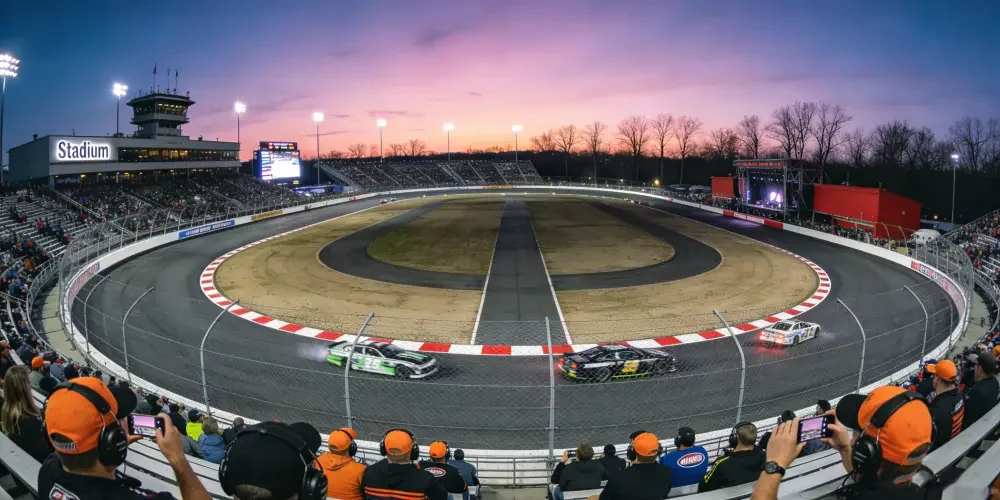
(Hinweis: Dieser umfassende technische Leitfaden konzentriert sich ausschließlich auf LED-Beleuchtungssysteme mit hohen Masten für professionelle, Amateur- und Dirt-Track-Rennstrecken. Er behandelt keine Weihnachtsdekorationen für Rennstrecken, Beleuchtungsanlagen für Spielzeugautobahnen oder spezielle Warnlichtsysteme wie z. B. Whelen-Startbäume.)
Jahrzehntelang setzten Rennstrecken auf 1000-Watt- oder 2000-Watt-Metallhalogenidlampen. Diese veralteten Systeme weisen jedoch gravierende Nachteile auf: rascher Lichtstromabfall, enormer Energieverbrauch und – am gefährlichsten – eine 15-minütige Aufwärmverzögerung bei Stromausfall während eines Rennens. Die Umrüstung auf LED-Rennstreckenbeleuchtung bietet heute sofortige volle Helligkeit , präzise Lichtstrahlsteuerung und über 60 % Einsparungen bei Energie- und Wartungskosten.
Doch der Austausch alter Leuchten ist nicht so einfach wie das Wechseln einer Glühbirne. Er erfordert die strikte Einhaltung offizieller Normen und eine präzise Planung. Hier finden Sie alles, was Sie wissen müssen, um Ihre Rennstrecke sicher und professionell auszuleuchten.
Inhaltsverzeichnis
Beleuchtungsstandards und Beleuchtungsanforderungen für Rennstrecken
Umfassendes LED-Beleuchtungsdesign für Rennstrecken
Wie wählt man die besten LED-Leuchten für die Rennstrecke aus?
Kritische Fehler, die es bei der Beleuchtung von Rennstrecken zu vermeiden gilt
Werten Sie Ihre Veranstaltungsstätte mit Motorsportlösungen auf.
Beleuchtungsstandards und Beleuchtungsanforderungen für Rennstrecken
Bei der Planung einer Beleuchtungsanlage im Motorsport ist Raten ein sicheres Rezept für Probleme. Professionelle Lichtplanung muss sich an etablierte Branchenstandards halten, wie beispielsweise die der Illuminating Engineering Society (IES) , um optimale Sichtverhältnisse, Gleichmäßigkeit und Blendungsreduzierung zu gewährleisten.
Ein einheitlicher Ansatz funktioniert im Rennsport jedoch nicht. Die benötigte Beleuchtungsstärke – gemessen in Foot-Candles (fc) oder Lux – variiert stark in Abhängigkeit von zwei Hauptfaktoren: der Rennklasse und dem jeweiligen Streckenabschnitt . Beispielsweise benötigen enge Kurven stets eine höhere Beleuchtungsstärke als Geraden, um dem Fahrer die Antizipation zu erleichtern, während Boxenbereiche höchste Helligkeit für sichere und schnelle Reparaturen erfordern.
Empfohlene Foot Candles nach Rennklasse (Matrixtabelle)
Um Facility Managern und Elektrofachkräften zu helfen, ihre spezifischen Anforderungen schnell zu ermitteln, haben wir die branchenüblichen Lux-Zielwerte in einer übersichtlichen Matrix zusammengefasst.
( Profi-Tipp für Inspektionen : Überprüfen Sie diese Basiswerte immer mit Ihrem jeweiligen Rennsportverband – wie z. B. NASCAR, FIA oder lokalen Dirt-Track-Verbänden –, da diese möglicherweise spezielle Übertragungs- oder Sicherheitsbestimmungen haben.)
Streckenstufe / Veranstaltungsebene | Geradeaus | Kurven und Ecken | Boxenbereiche | Zuschauertribünen |
Professionelle Rennstrecken (Spitzenveranstaltungen, z. B. Formel 1, NASCAR) | 50 - 75 FC | 75 - 100 FC | 100 - 150 FC | 30 - 50 FC |
Halbprofessionelle Strecken | 30 - 50 FC | 50 - 80 FC | 75 - 100 FC | 20 - 30 FC |
Club- und Amateurstrecken | 25 - 40 FC | 40 - 60 FC | 60 - 80 FC | 15 - 25 FC |
Regionale Dirt-Track-Rennen (Lokale kleine Dirt-Track-Veranstaltungen) | 20 - 30 FC | 30 - 50 FC | 50 - 75 FC | 10 - 20 FC |
Motocross, BMX & Karting | 20 - 30 FC | 30 - 50 FC | 50 - 75 FC | 10 - 20 FC |
Wie Schienenoberflächenmaterialien die Beleuchtungsanforderungen verändern
Die in der obigen Tabelle angegebenen Werte in einer Computersimulation zu erreichen, ist das eine; sie in der Realität umzusetzen, das andere. Als erfahrene Sportbeleuchtungsingenieure wissen wir, dass das Oberflächenmaterial der Rennstrecke das Verhalten des Lichts grundlegend verändert . Man kann nicht dieselbe Beleuchtungsstrategie für eine trockene Schotterpiste anwenden wie für eine frisch asphaltierte Rennstrecke.
So beeinflussen unterschiedliche Schienenmaterialien Ihre Beleuchtungsauswahl:
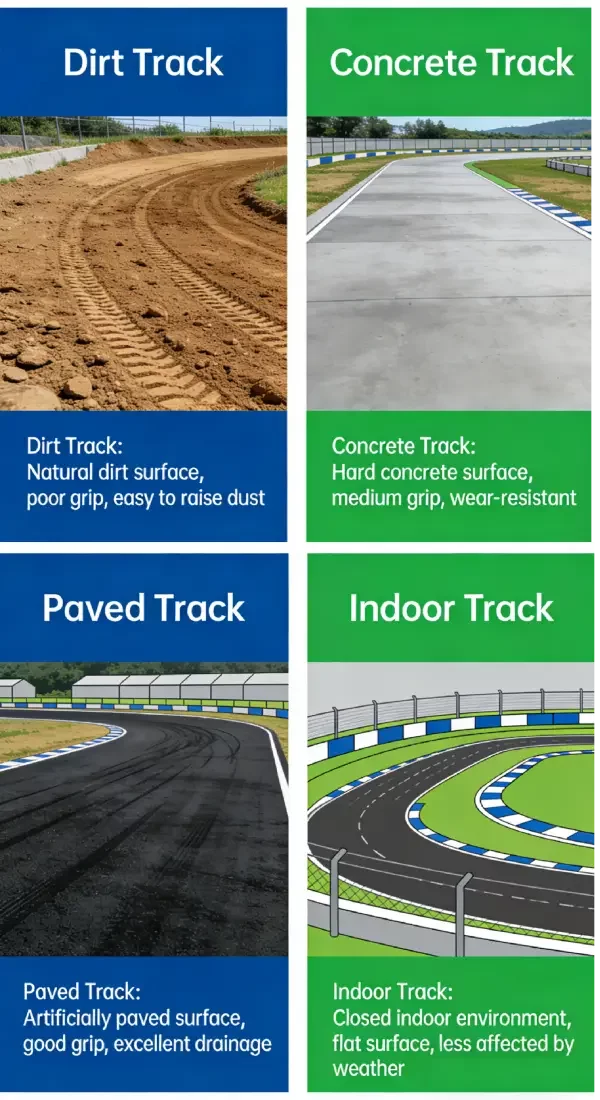 (1) Feldwege
Schmutz absorbiert Licht . Dunkler Lehm und lockerer Boden absorbieren Licht, anstatt es zu reflektieren. Zudem wirbeln Rennfahrzeuge massive Staubwolken auf, die die Lichtstrahlen streuen und die Sichtweite verringern.
Bei der Planung von LED-Beleuchtung für unbefestigte Strecken müssen Ingenieure eine höhere Lichtausbeute (Lumen) einplanen, um die Lichtabsorption auszugleichen. Darüber hinaus müssen die LED-Leuchten die extremen Schutzarten IP65/IP66 (Witterungsschutz) und IK08 (Schlagfestigkeit) aufweisen , um Steinschlag und starker Staubbelastung standzuhalten.
(2) Zement- und befestigte Gleise
Zement reflektiert Licht . Asphalt und Beton besitzen eine leichte Reflexionsfähigkeit, die sich bei Nässe durch Regen deutlich verstärkt.
Absolute Priorität hat hier die Blendungsbegrenzung . Werden herkömmliche Flutlichtstrahler falsch ausgerichtet, wird das Licht von der Fahrbahn reflektiert und prallt direkt in die Augen der Fahrer. Enge Abstrahlwinkel und moderne Blendschutzblenden sind daher unerlässlich, um das Licht präzise auf die Fahrbahn zu lenken.
(3) Indoor-Laufbahnen
Hohe Anforderungen an Reflexion und Lichtverteilung. Indoor-Kartbahnen oder Motocross-Arenen sind geschlossene Räume, in denen Wände, Decken und polierte Böden das Licht kontinuierlich reflektieren.
Bei Indoor-Rennbahnen liegt der Fokus primär auf gleichmäßiger Ausleuchtung (Vermeidung dunkler Flecken oder „Zebrastreifen“) und flimmerfreier Beleuchtung . Dies ist besonders wichtig, wenn die Rennen mit Hochgeschwindigkeitskameras aufgezeichnet oder im Fernsehen übertragen werden. Erfahren Sie mehr über flimmerfreie LED-Beleuchtung.Die
Umfassendes LED-Beleuchtungsdesign für Rennstrecken
Betrachten Sie ein beliebiges hochkarätiges Rennsportereignis – sei es ein hochkarätiges NASCAR- Rennen unter Flutlicht in Daytona oder die spektakulären Formel-1- Nachtrennen in Singapur oder Las Vegas. Die Beleuchtung bei diesen Veranstaltungen entsteht nicht zufällig; sie ist das Ergebnis akribischer, millimetergenauer Ingenieurskunst.
Um dieses Niveau an professioneller Sichtbarkeit und Sicherheit auf Ihrer lokalen Rennstrecke oder Clubstrecke zu erreichen, müssen die Anlagenmanager über den bloßen Kauf von Leuchten hinausgehen und sich auf ein umfassendes Lichtdesign konzentrieren.
Nachrüstungsprojekte vs. Gleisneuinstallationen
Die technische Herangehensweise ändert sich grundlegend, je nachdem, ob man eine Rennstrecke von Grund auf neu baut oder eine bestehende Anlage modernisiert.
A. Nachrüstung (Modernisierung bestehender Gleise)
Die größte Hürde bei einem Umrüstungsprojekt ist die Kompatibilität der vorhandenen Hardware . Bevor Sie neue LED-Leuchten zum Ersatz alter Halogen-Metalldampflampen kaufen, müssen Sie die effektive Lichtausbeute (EPA) und die Tragfähigkeit Ihrer vorhandenen Lichtmasten prüfen.
Wenn Ihre vorhandenen Masten die Windlast oder das Gewicht der neuen Leuchten nicht tragen können, ist die Stabilität des gesamten Systems gefährdet. Darüber hinaus müssen Elektrofachbetriebe die vorhandene Spannungskapazität (typischerweise 100–277 V oder Hochspannung 277–480 V) überprüfen, um eine reibungslose Integration ohne vollständige Neuverkabelung des Gebäudes zu gewährleisten.
B. Neuinstallationen
Der Bau einer neuen Rennstrecke bietet die Möglichkeit, von Grund auf zu optimieren. Im Vordergrund steht dabei die wissenschaftliche Bestimmung der idealen Masthöhe. Für den Motorsport empfehlen wir dringend Montagehöhen von 18 bis 30 Metern oder mehr . Höhere Masten sorgen dafür, dass das Licht nach unten streut, wodurch die Blendwirkung für die Fahrer deutlich reduziert und die Ausleuchtung der gesamten Rennstrecke erheblich verbessert wird.
Berechnung der Leuchtenanzahl und Mastplatzierung
Eines der gefährlichsten Dinge, die ein Facility Manager tun kann, ist, die benötigte Anzahl an Lampen intuitiv zu erraten.
Für die genaue Anzahl der Scheinwerfer und die optimale Positionierung der Masten ist eine professionelle photometrische Analyse erforderlich . Mithilfe fortschrittlicher 3D-Simulationssoftware ermitteln Lichttechniker die exakten Abmessungen Ihrer Rennstrecke. Basierend auf der Mastposition berechnet die Software die präzisen Abstrahlwinkel . Da Rennstrecken lang, schmal und kurvenreich sind, sind herkömmliche Weitwinkelscheinwerfer ungeeignet. Stattdessen verwenden die Techniker asymmetrische, enge Abstrahlwinkel von 15° bis 60° . Diese präzise optische Steuerung gewährleistet, dass das intensive Licht gezielt auf die Rennstrecke gelenkt wird und nicht in die Zuschauerränge oder den Nachthimmel streut.
Intelligente Lichtsteuerung (DMX & 0-10V Dimmung)
Moderne Motorsportanlagen benötigen eine Beleuchtung, die sowohl der Sicherheit dient als auch ein Unterhaltungsfaktor darstellt. Die Integration intelligenter Steuerungssysteme verwandelt eine herkömmliche Rennstrecke in eine kommerzielle Veranstaltungsstätte.
0-10V DimmungDiese Standardsteuerung ermöglicht es den Anlagenbetreibern, die Gleisbeleuchtung während nicht im Fernsehen übertragener Übungsfahrten oder Gleiswartungsarbeiten zu dimmen, wodurch das System äußerst energieeffizient und kostengünstig wird.
DMX-SteuerungFür kommerzielle Veranstaltungen ist die DMX-Integration ein echter Durchbruch. Sie ermöglicht die Programmierung der Beleuchtungsanlage für spektakuläre Lichtshows vor dem Rennen, pulsierende Blitze beim Überqueren der Ziellinie oder die Synchronisierung mit Musik und Warnflaggen. Diese dynamische Beleuchtungsfunktion bringt das Entertainment-Erlebnis der Formel 1 auf regionale und semiprofessionelle Rennstrecken.
Wie wählt man die besten LED-Leuchten für die Rennstrecke aus?
Nachdem der Entwurf vorliegt, geht es nun darum, die technischen Details zu prüfen. Nicht alle LED-Sportbeleuchtungsanlagen sind für die extremen Bedingungen einer Rennstrecke geeignet. Hier erfahren Sie, wie Sie die beste LED-Rennstreckenbeleuchtung für Ihre Investition auswählen.
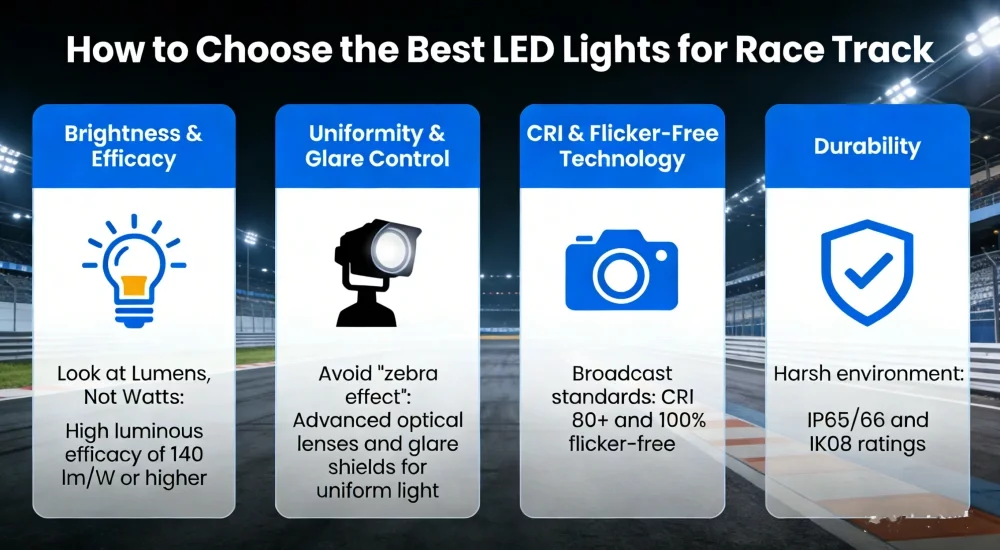
Helligkeit und Effizienz (Achten Sie auf Lumen, nicht auf Watt):
Viele Käufer machen den Fehler, nur nach Wattzahl zu kaufen. Im LED-Zeitalter zählt jedoch die Effizienz. Achten Sie auf Leuchten mit einer hohen Lichtausbeute von 140 lm/W oder mehr . So erhalten Sie maximale Helligkeit (hohe Lichtausbeute) bei gleichzeitig hoher Energieeffizienz und niedrigen Betriebskosten.
Gleichmäßigkeit und Blendungsreduzierung:
Bei Geschwindigkeiten von bis zu 240 km/h kann das Durchfahren abwechselnder heller und dunkler Bereiche – der sogenannte Zebrastreifen-Effekt – zu starker Augenbelastung und räumlicher Desorientierung führen. Hochwertige Schienenstrahler nutzen fortschrittliche optische Linsen und integrierte Blendschutzblenden, um eine gleichmäßige Ausleuchtung zu gewährleisten, die die Sicht des Fahrers schützt und gleichzeitig gefährliche dunkle Bereiche eliminiert.
CRI- und flimmerfreie Technologie:
Wenn auf Ihrer Rennstrecke Veranstaltungen stattfinden, die im Fernsehen oder online übertragen werden, muss Ihre Beleuchtung den Rundfunkstandards entsprechen. Stellen Sie sicher, dass die Scheinwerfer einen Farbwiedergabeindex (CRI) von mindestens 80 aufweisen , um die Farben der Fahrzeuge und Sponsorenlogos naturgetreu darzustellen. Darüber hinaus müssen die Treiber (LED-Netzteile) absolut flimmerfrei sein , damit Zeitlupen- und Hochgeschwindigkeitskameras flüssige, professionelle Aufnahmen ohne Stroboskop-Effekte liefern.
Haltbarkeit (IP- und IK-Schutzarten):
Rennstreckenbedingungen sind extrem anspruchsvoll. Die Vibrationen der Motoren, herumfliegende Steine und andere Fremdkörper auf unbefestigten Strecken sowie die rauen Witterungsbedingungen erfordern äußerst robuste Leuchten. Wählen Sie daher Leuchten mit Schutzart IP65 oder IP66 (absolut staubdicht und wasserdicht) und Stoßfestigkeit nach IK08 , um Steinschlag und herumfliegenden Teilen standzuhalten. So ist eine einfache Wartung und ein einwandfreier Betrieb Saison für Saison gewährleistet.
Kritische Fehler, die es bei der Beleuchtung von Rennstrecken zu vermeiden gilt
Selbst bei bester Absicht können Fehlentscheidungen beim Kauf katastrophale Folgen, fehlgeschlagene Inspektionen und Sicherheitsrisiken nach sich ziehen. Vermeiden Sie diese drei häufigen Fehler bei der Modernisierung Ihrer Rennstrecke:
1. Verwendung von Standard-Sportflutlichtern : Eine Rennstrecke ist kein Fußballfeld. Der Kauf von Standard-Flächenleuchten oder Weitwinkel-Sportflutlichtern führt zu verschwendeter Lichtmenge. Das Licht streut sich überall hin, nur nicht dort, wo die Fahrer es tatsächlich benötigen. Dies führt zu schlechter Sicht auf der Strecke und unnötigem Stromverbrauch. Bestehen Sie daher immer auf Scheinwerfer mit engem Lichtkegel.
2. Zu niedrige Montage der Leuchten : Die Installation von LED-Leuchten mit hoher Lichtstärke an kurzen Masten (unter 15 Metern) ist ein fataler Fehler. Der flache Winkel lenkt das intensive Licht direkt in die Windschutzscheiben und Sonnenblenden entgegenkommender Fahrer und verursacht so eine blendende Wirkung, die leicht zu Unfällen bei hohen Geschwindigkeiten führen kann.
3. Missachtung der Lichtstreuungsbestimmungen : Viele Rennstrecken befinden sich in der Nähe von Wohngebieten. Wird die Lichtstreuung (Lichtverschmutzung außerhalb des Geländes) nicht berücksichtigt, drohen schnell Verstöße gegen die Bauvorschriften, hohe Bußgelder und verärgerte Anwohner. Professionelle photometrische Planung und eine geeignete Abschirmung sind unerlässlich, um die Einhaltung der örtlichen Bestimmungen zu gewährleisten.
Werten Sie Ihre Veranstaltungsstätte mit Motorsportlösungen auf.
Die Modernisierung der Beleuchtungsanlage einer Rennstrecke ist eine der bedeutendsten Investitionen, die eine Anlage tätigen kann. Sie entscheidet nicht nur über die Sicherheit der Fahrer, sondern auch über den wirtschaftlichen Erfolg der veranstalteten Events. Bei solch hohen Einsätzen kann man es sich nicht leisten, auf Standardanbieter von Beleuchtungstechnik zu setzen, denen die Expertise im Motorsport fehlt.
Bei CeramicliteWir fertigen nicht nur LED-Leuchten, sondern entwickeln komplette Beleuchtungslösungen für den Motorsport . Unsere hochentwickelten Schienenbeleuchtungssysteme sind für den Einsatz unter härtesten Bedingungen ausgelegt und bieten folgende Vorteile:
l Enorme Lichtausbeute und Effizienz : Ausgestattet mit hochwertigen LED-Chips und Treibern für eine ultrahelle Lichtausbeute von über 140 lm/W, wodurch der Energieverbrauch Ihres Veranstaltungsortes drastisch reduziert wird.
l Präzisions-Asymmetrische Optik : Spezielle enge Abstrahlwinkel von 15° bis 60° in Kombination mit integrierten Blendschutzblenden gewährleisten eine gleichmäßige, brillante Ausleuchtung von Asphalt oder unbefestigten Flächen und verhindern gleichzeitig, dass Licht in den Nachthimmel oder in benachbarte Siedlungen abstrahlt.
l Unübertroffene Langlebigkeit : Unsere Leuchten wurden für die rauen Bedingungen auf der Rennstrecke entwickelt und verfügen über die Wetterschutzklasse IP65/IP66 sowie die Stoßfestigkeitsklasse IK08 – sie sind so konstruiert, dass sie starkem Regen, massiven Staubwolken und herumfliegenden Trümmern standhalten.
Planen Sie Ihre Beleuchtung nicht im Dunkeln. Ob Sie bestehende 1000-W-/2000-W-Metallhalogenid-Lampen nachrüsten oder eine brandneue Rennstrecke bauen – unser Team von Lichtingenieuren unterstützt Ihr Projekt von der Konzeption bis zur Installation. Wir bieten umfassende Ingenieurdienstleistungen, darunter:
Kostenlose photometrische Analyse & 3D-Beleuchtungspläne
l Bewertung der Tragfähigkeit bestehender Masten und Nachrüstungsmaßnahmen
l Expertenauswahl für Leuchten und Berechnung der Kapitalrendite
Sind Sie bereit, Ihre Rennstrecke in ein erstklassiges Rennsportziel zu verwandeln? Wir helfen Ihnen dabei, Sicherheitsstandards zu erfüllen und die Erwartungen Ihrer Fans zu übertreffen.
Fordern Sie noch heute Ihre kostenlose Lichtsimulation und ein Expertenangebot an!

Häufig gestellte Fragen (FAQ)
Was sind LED-Rennstreckenbeleuchtungen?
LED-Rennstreckenbeleuchtungen sind Hochleistungs-Hochmastleuchten, die speziell für Motorsportanlagen entwickelt wurden. Im Gegensatz zu herkömmlichen Sportplatzleuchten nutzen sie eine enge Abstrahloptik (15° bis 60°), um lange, kurvige Strecken präzise auszuleuchten. Sie bieten sofortiges Einschalten, flimmerfreie Helligkeit und sind dank der Schutzarten IP65+ und IK08 robust genug, um starken Vibrationen, Staub und Witterungseinflüssen standzuhalten.
Was kostet die Beleuchtung einer unbefestigten Rennstrecke?
Die Kosten für die Beleuchtung einer Dirt-Track-Rennstrecke variieren stark je nach Streckengröße, Masthöhe und den erforderlichen Beleuchtungsstandards. Eine grundlegende Beleuchtungsmodernisierung für eine kleine regionale Ovalstrecke beginnt bei etwa 20.000 bis 40.000 US-Dollar, während die Beleuchtung einer semiprofessionellen 800-Meter-Strecke nach Fernsehstandards zwischen 60.000 und über 150.000 US-Dollar kosten kann. Der Umstieg von Halogen-Metalldampflampen auf LEDs führt jedoch typischerweise zu Energie- und Wartungseinsparungen von 60 bis 75 Prozent und damit zu einer schnellen Amortisation. Kontaktieren Sie Ceramiclite für ein präzises, individuelles Angebot basierend auf einer kostenlosen photometrischen Planung.
Welche Zertifizierungen sollten Rennstreckenbeleuchtungen haben?
Sicherheit und Zuverlässigkeit sind im Motorsport unerlässlich. Professionelle LED-Schienenstrahler müssen strenge elektrische Sicherheitszertifizierungen erfüllen, wie z. B. UL- oder ETL-gelistet (für Nordamerika) und CE/RoHS (für Europa). Um zudem für lokale Förderprogramme für Energieeffizienz in Frage zu kommen, sollten die Leuchten DLC-Premium-zertifiziert sein. Sie benötigen die Schutzart IP65 oder IP66 für vollständigen Staub- und Wasserschutz sowie die Stoßfestigkeitsklasse IK08.