_thumb.jpg)
¿Qué es el índice de reproducción cromática (IRC)? Guía profesional sobre el IRC
Imagine a un gerente de control de calidad en una planta textil de Lyon. Bajo la antigua iluminación LED de la fábrica, un lote de tela de primera calidad luce un negro intenso y uniforme. Pero cuando esa misma tela llega a la tienda del cliente en Londres, luce inconfundiblemente azul marino.
¿El resultado? Un envío rechazado, pérdidas financieras y una reputación dañada.

No se trata de un problema de visión, sino de datos de iluminación. En el mundo profesional, la luz no se trata solo de brillo (lúmenes), sino de precisión . Ya sea que gestione un taller de precisión, un mercado de alimentos frescos o un estadio deportivo, la capacidad de su iluminación para reproducir colores con autenticidad es innegociable.
Esto nos lleva a la métrica más crítica para la calidad de la luz: ¿qué es el índice de reproducción cromática?
Tabla de contenido
¿Qué es el índice de reproducción cromática?
¿Cómo se mide el IRC? Más allá del ojo humano
¿Por qué es importante el cálculo del CRI en su industria?
Índice de reproducción cromática vs. Temperatura de color (CCT)
¿Cómo elegir el CRI adecuado para su proyecto?
¿Qué es el índice de reproducción cromática? (Definición de conceptos)
Para entender la calidad de la iluminación, primero debemos aclarar tres términos comúnmente confundidos: CRI , Ra y TCS .
1. CRI (El Concepto)
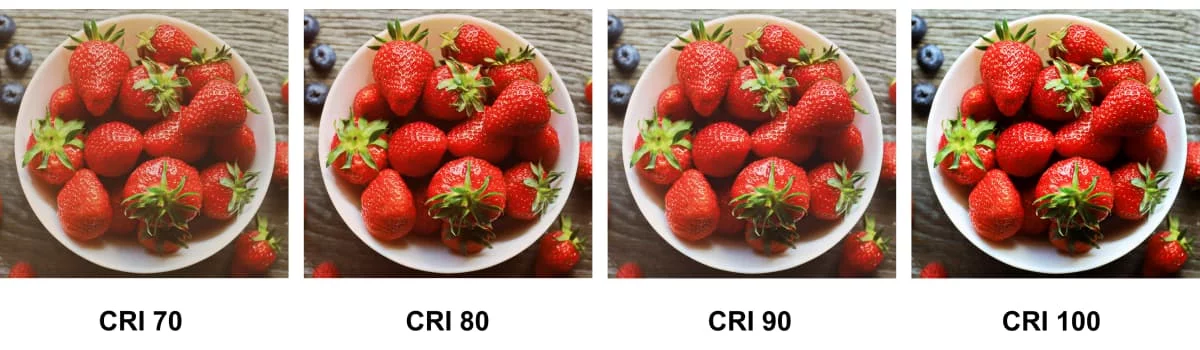
El Índice de Reproducción Cromática (IRC) es el sistema general definido por la CIE para evaluar la capacidad de una fuente de luz para revelar fielmente los colores de diversos objetos en comparación con una fuente de luz natural (como la luz solar). El nombre de la prueba es «IRC».
CRI es una medida cuantitativa (0-100) de la capacidad de una fuente de luz para revelar los colores de varios objetos fielmente en comparación con una fuente de luz natural o ideal (como la luz solar).
u 100: Se adapta perfectamente a la luz natural (por ejemplo, el sol).
u 0: Los colores son indistinguibles (por ejemplo, una farola de sodio de baja presión).
2. Ra (La Métrica)
Cuando ves una puntuación como "CRI 80" en un cuadro, generalmente se refiere a Ra (Índice general de reproducción cromática) .
Ra es la puntuación numérica específica (0-100) derivada de la prueba.
Es el "grado" estándar de la industria para la calidad de la iluminación.
3. TCS (La Herramienta)
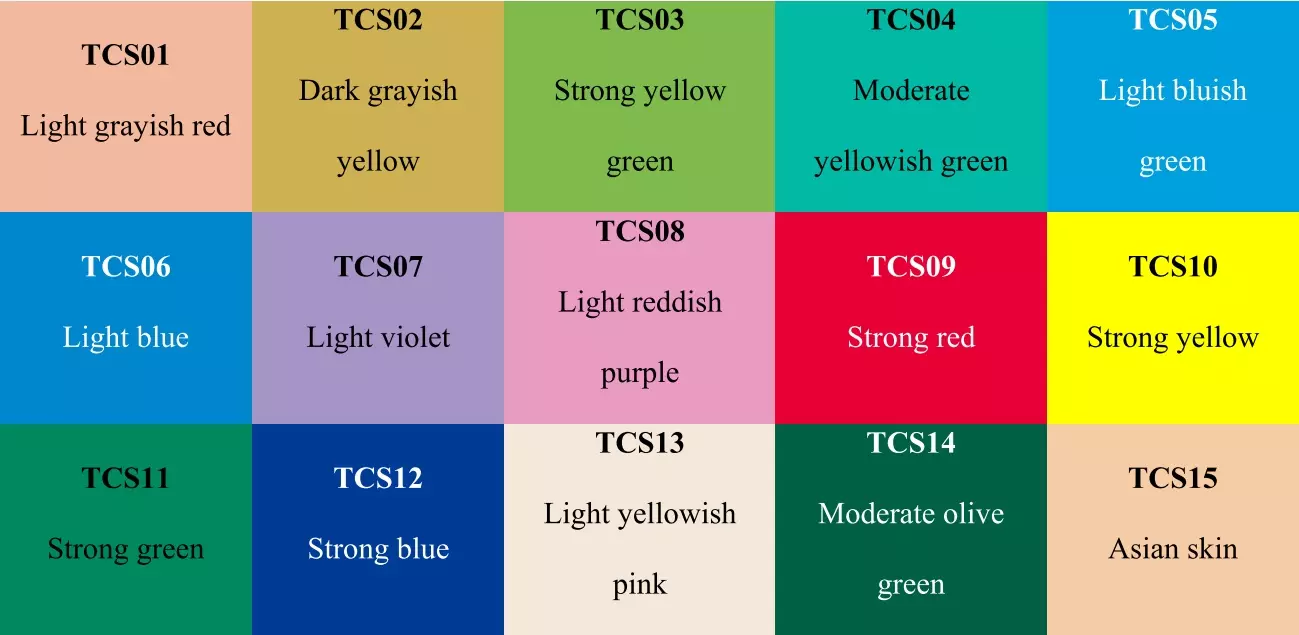
Las Muestras de Color de Prueba (TCS) son las paletas de colores estandarizadas que se utilizan para realizar la prueba. Al igual que se evalúa a un estudiante en temas específicos, una fuente de luz se evalúa en colores específicos de TCS para calcular su puntuación.
Por qué es importante el cumplimiento normativo.
Para los administradores de instalaciones europeos, estas no son solo definiciones; son reglas. La norma europea EN 12464-1 (Iluminación y luz - Iluminación de lugares de trabajo) exige valores mínimos de Ra específicos para garantizar el confort visual y la seguridad. Ignorar el IRC no solo da una mala imagen, sino que puede hacer que sus instalaciones incumplan la normativa.
¿Cómo se mide el IRC? Más allá del ojo humano
No se puede juzgar la calidad de la iluminación simplemente observando una bombilla. Para determinar la verdadera puntuación Ra, utilizamos el método científico establecido por la CIE (Comisión Internacional de Iluminación) , que se basa completamente en las Muestras de Color de Prueba (TCS) .
Muestras de color de prueba (TCS): la regla "15 vs. 8"
El estándar CIE en realidad define 15 muestras de color específicas (TCS01–TCS15) para cubrir el espectro de la visión humana.
Ø TCS01 – TCS08 (R1–R8) : Son colores pastel (tonos insaturados que se encuentran en la naturaleza).
Ø TCS09 – TCS15 (R9–R15) : son colores saturados (rojo intenso, azul fuerte, verde vivo y tonos de piel).
Fuente: ScienceDirect
El cálculo de Ra (CRI general)
Aquí está el detalle crítico que separa el conocimiento profesional de la comprensión básica: Ra sólo cuenta los pasteles .
El índice de reproducción cromática general (Ra) se calcula utilizando SÓLO la media aritmética de las primeras 8 muestras (R1–R8).
Fórmula para Ra: Ra = (R1 + R2 + R3 + R4 + R5 + R6 + R7 + R8) / 8
Nota: Los colores saturados (R9 a R15) NO están incluidos en esta fórmula.
La métrica "oculta": Por qué es importante el R9
Aquí está el secreto profesional que ocultan la mayoría de los resúmenes de hojas de datos: el cálculo estándar de Ra ignora Red .
Debido a que Ra solo promedia los primeros 8 colores pastel (R1-R8), una luz LED puede alcanzar un respetable CRI 80 y al mismo tiempo tener una capacidad terrible para reproducir colores rojos.
l R9 (Rojo saturado) : esta muestra mide qué tan bien una luz reproduce tonos rojos fuertes.
l Por qué es importante : R9 es fundamental para los tonos de piel (médicos), la frescura de la carne (alimentos) y la madera (muebles).
Muchos LED industriales genéricos tienen un valor R9 negativo, lo que hace que la piel parezca enfermiza y la madera parezca verde.
En CeramilcitePonemos énfasis en los altos valores R9 para garantizar que lo que usted ve sea químicamente preciso.
Herramientas de medición
No dependa de las aplicaciones para teléfonos inteligentes. Para una medición precisa del IRC, se requiere un espectrorradiómetro o un medidor de IRC portátil profesional . Estos dispositivos analizan la distribución espectral de potencia (DPP) completa para proporcionar los datos necesarios para auditorías profesionales.
El espectro CRI: jerarquía de estándares y aplicaciones
En el mercado europeo, no existe una solución universal. El índice de reproducción cromática requerido depende completamente de la tarea visual en cuestión.
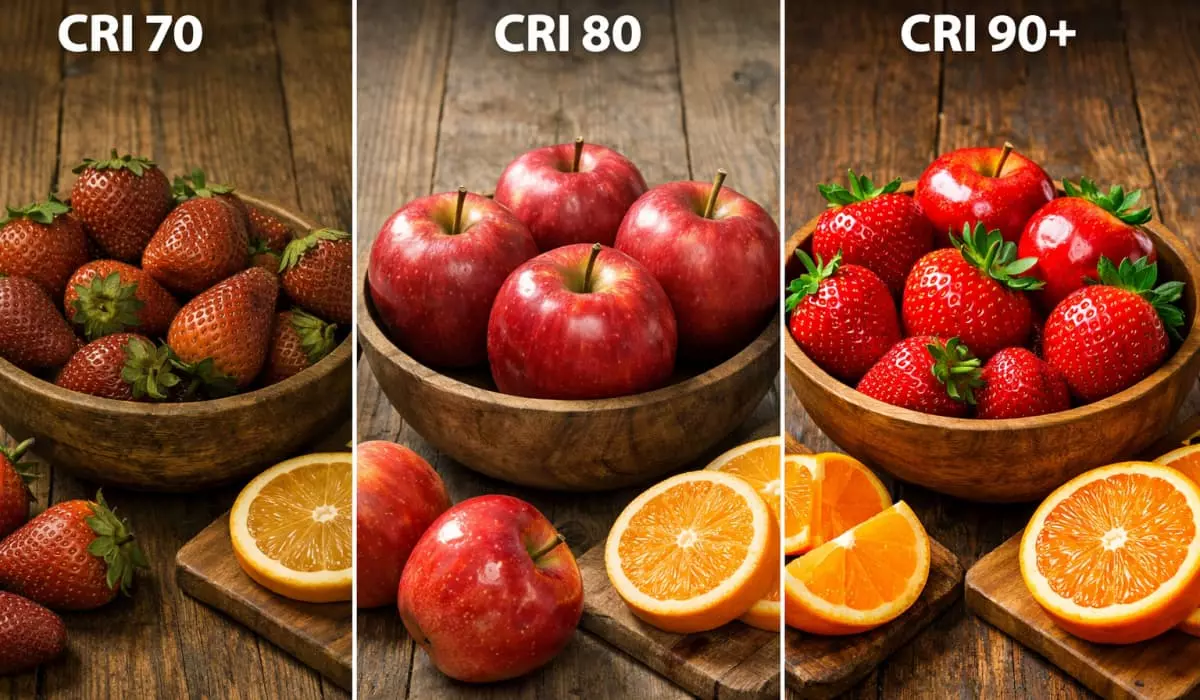
A continuación se muestra la jerarquía de las normas CRI según los requisitos de la norma EN 12464-1 y las mejores prácticas del sector. Utilice esta tabla para determinar la especificación correcta para su próximo proyecto.
CRI (Ra) Rango | Clasificación | Aplicaciones típicas (normas europeas) |
90 - 100 | Excelente / Crítico | Examen clínico (médico) : esencial para diagnosticar afecciones de la piel. Coincidencia de colores : Impresión textil y artes gráficas donde se aplica la norma ISO 3664. Exhibición de alimentos frescos: Carnicerías y productos agrícolas (se requiere R9 alto). Galerías de arte : Cómo prevenir la distorsión del color en las obras de arte. |
80 - 89 | Bueno / Estándar | Oficinas y aulas : el estándar mínimo para áreas ocupadas según EN 12464-1. Ensamblaje de precisión : Electrónica industrial o trabajos de detalle. Comercio minorista : ropa y mercancías en general. |
60 - 79 | Regular / Básico | Almacenamiento general : operaciones con montacargas donde la identificación por color no es crítica. Áreas exteriores : Alumbrado público, estacionamientos y muelles de carga. Industria pesada : acerías o fundiciones. |
< 60 | Pobre | Iluminación de seguridad : puramente para visibilidad, no para identificación. Sitios de construcción : Iluminación temporal. (Nota: No recomendado para lugares de trabajo interiores permanentes). |
Por qué es importante el cálculo del CRI en su industria
En entornos profesionales, las especificaciones de iluminación inciden directamente en el éxito operativo. Sin embargo, los requisitos varían drásticamente entre un almacén de envíos y un estadio televisado.
Para la industria y la manufactura (textil, alimentación, logística)
En entornos industriales, el objetivo suele ser un equilibrio entre la claridad visual y la eficiencia energética .
El costo del error : En la fabricación y la logística, una reproducción cromática deficiente puede generar riesgos de seguridad (lectura errónea de etiquetas con códigos de color) o una disminución de la eficiencia (dificultad para distinguir componentes). Los informes del sector indican que mejorar la calidad de la iluminación puede reducir la tasa de accidentes al garantizar que la señalización de seguridad y las zonas de peligro sean claramente visibles.
El estándar :
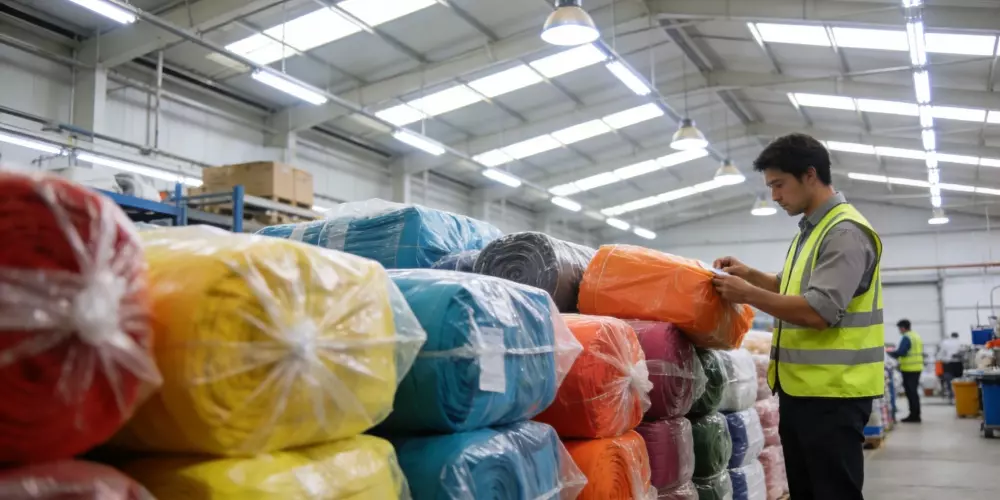
l Zonas críticas de control de calidad : Las mesas de inspección textil generalmente requieren fuentes CRI 90+ especializadas (D65).
Producción general y almacenamiento : Para la mayor parte del espacio (líneas de hilado, áreas de empaquetado y almacenamiento en estanterías altas), el CRI 80 es el estándar europeo de la industria (EN 12464-1). Ofrece un confort visual mucho mayor que las antiguas lámparas CRI 70, pero mantiene una mayor eficiencia energética que las luces de estudio.
La solución Ceramilcite :
Entendemos que las instalaciones industriales no pueden ignorar los costos de electricidad. La serie de luminarias industriales LED High Bay de Ceramilcite se centra en el punto óptimo para la fabricación. Ofrecemos opciones robustas con CRI 70 y CRI 80 .
Esto permite a los administradores de instalaciones instalar una iluminación brillante y eficiente que cumple con los estándares de seguridad e identificación para tareas industriales generales, sin el consumo de energía innecesario de las luminarias de grado galería.
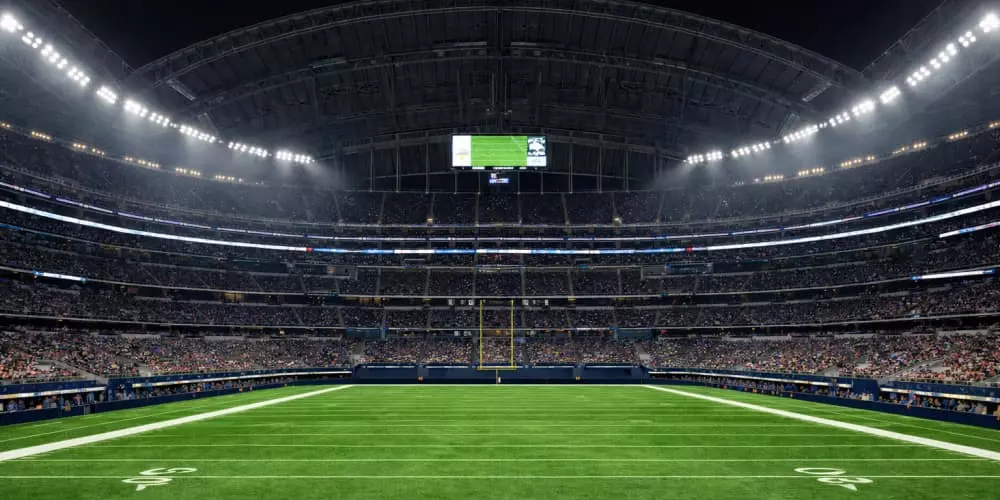
Para iluminación y retransmisiones deportivas (estadios)
La iluminación deportiva es única porque debe satisfacer a dos públicos diferentes: los jugadores en el campo y las cámaras que transmiten el juego.
El problema : una fuente de luz puede parecer lo suficientemente brillante para el ojo de un jugador, pero provocar "parpadeos" o cambios de color cuando se ve a través de cámaras de cámara lenta de alta definición.
La jerarquía de aplicaciones:
Clase III (Entrenamiento y Recreación) : Para clubes locales y campos de entrenamiento, la visibilidad es la prioridad número uno. El CRI 70 es el nivel estándar aceptado para equilibrar el presupuesto y la luminosidad.
Ø Clase II (Competencia Regional) : Requiere una mejor definición de color para los espectadores. Se recomienda un CRI 80 .
Ø Clase I (Eventos Televisados) : La transmisión profesional requiere un CRI 90+ y puntajes TLCI altos para garantizar que el césped se vea verde y los uniformes del equipo se vean precisos en la televisión.
La flexibilidad de Ceramilcite :
Ceramilcite ofrece un enfoque escalonado que se adapta a las necesidades específicas de su recinto. No imponemos una solución universal. Nuestra gama de iluminación deportiva incluye:
l Modelos CRI 70/80 de alta eficiencia : perfectos para maximizar los lúmenes en campos de entrenamiento y campos municipales.
l Opciones CRI 90 de alto rendimiento : diseñadas para lugares con requisitos de transmisión, lo que garantiza que sus instalaciones estén preparadas para eventos televisados en el futuro.
Índice de reproducción cromática vs. Temperatura de color (CCT)
Al actualizar a LED, los compradores suelen confundir la "temperatura de color" (el ambiente) con la "reproducción cromática" (la calidad). Comprender la diferencia es clave para evitar decepciones.
Aclaración: Los dos pilares de luz
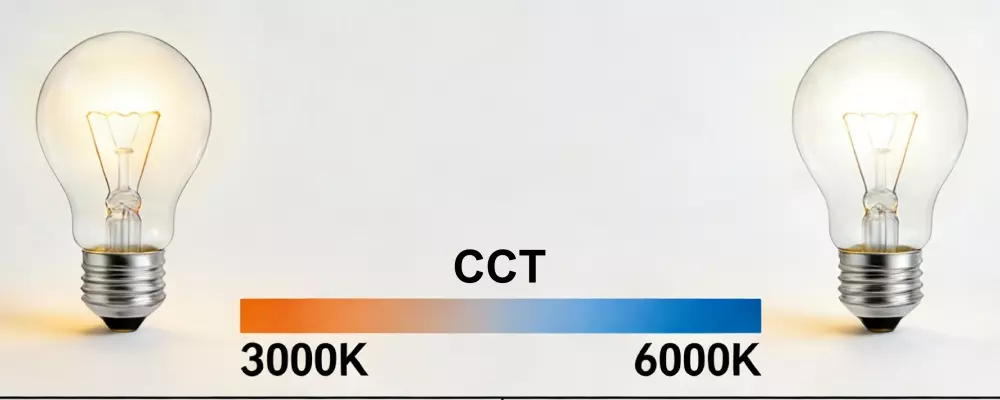
1. CCT (temperatura de color correlacionada):
u Pregunta: "¿De qué color es la luz en sí?"
Escala u : Medida en Kelvin (K).
u Rango: Desde cálido (3000K) a frío (6500K).
u Uso: 3000K crea una atmósfera acogedora; 5000K promueve el estado de alerta.
2. CRI (Índice de reproducción cromática):
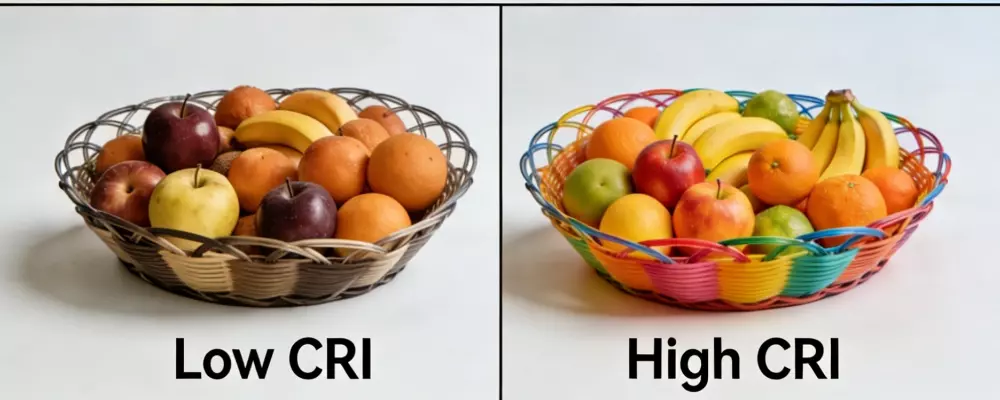
u Pregunta: "¿Qué tan reales se ven los objetos bajo esta luz?"
Escala u : Medida en Ra (0-100).
u Rango: Desde pobre (<70) a excelente (>90).
u Uso: Determina si una manzana roja se ve roja o marrón.
La conexión del espectro (semántica)
¿Por qué dos luces pueden tener la misma CCT (p. ej., 4000 K) pero verse completamente diferentes? La respuesta está en el espectro .
Los LED económicos suelen lograr luz blanca mezclando un pico azul intenso con fósforo amarillo, dejando huecos en el espectro rojo y cian. Esto podría crear la "temperatura de color" correcta, pero da como resultado una luz hueca donde los colores se ven planos.
Enfoque de Ceramilcite :
Utilizamos tecnología avanzada de chips LED para optimizar la distribución espectral. Ya sea que elija nuestras luces industriales con CRI 80 o luces deportivas con CRI 90, nuestro enfoque de ingeniería se centra en crear un espectro equilibrado . Esto garantiza que, para su aplicación específica —ya sea la localización de una carretilla elevadora en un almacén o el seguimiento de un balón en un estadio—, la información visual se transmita con precisión y comodidad.
Leer más : ¿Quieres saber más sobre la temperatura de color (CCT)? Aquí tienes una guía completa sobre la temperatura de color..
Si desea obtener más información sobre conocimientos técnicos sobre iluminación, aquí tiene una guía sobre glosario de iluminación para usted.
¿Cómo elegir el CRI adecuado para su proyecto?
Seleccionar el índice de reproducción cromática correcto es un equilibrio entre la calidad visual , la eficiencia energética y el presupuesto . No siempre se necesita el valor más alto; se necesita el correcto para su aplicación específica.
Utilice esta lista de verificación para definir los requisitos exactos para sus instalaciones:
✅ Compruebe su cumplimiento (EN 12464-1)
¿Ilumina un espacio de trabajo permanentemente ocupado, como una oficina o un taller de precisión? La norma europea EN 12464-1 exige un mínimo de Ra ≥ 80 para garantizar el bienestar y la comodidad visual de los empleados.
✅ Verifique su tarea y presupuesto (la opción Ra 70)
No todas las áreas necesitan iluminación con calidad de galería.
u El ahorro de costes : en almacenes logísticos con techos altos, patios de almacenamiento al aire libre o campos de entrenamiento amateur, la discriminación del color suele ser secundaria al brillo y al coste.
Beneficio : Elegir luminarias con IRC 70 para estas zonas le permite maximizar la salida de lúmenes y reducir el consumo de energía. Si su objetivo es simplemente la detección en lugar de la inspección, la serie CRI 70 Industrial y Deportiva de Ceramilcite ofrece la solución más económica.
✅ Verifique sus necesidades de precisión
¿Su tarea implica juzgar la calidad del producto en función del color?
u Industrial : Si clasifica carne, mezcla pinturas o inspecciona textiles, no puede hacer concesiones. Necesita un Ra ≥ 90 .
u Deportes : Para los estadios de primer nivel que albergan partidos televisados, la iluminación estándar no es suficiente. Se necesitan especificaciones aptas para la transmisión para capturar la acción con precisión.
✅ Verifique el equilibrio entre eficiencia y eficiencia.
Existe una regla de la física: normalmente, a medida que aumenta el CRI, la producción de lúmenes disminuye.
u El desafío : un chip CRI 90 generalmente produce menos lúmenes por vatio que un chip CRI 70.
u El equilibrio de Ceramilcite : Diseñamos nuestras luminarias para minimizar esta pérdida. Ya sea que elija nuestros modelos de alta eficiencia CRI 70 o de alta fidelidad CRI 90, garantizamos que la gestión térmica y la eficiencia del controlador estén optimizadas para brindarle la mejor salida de luz posible por su inversión en energía.
Conclusión
Durante demasiado tiempo, el Índice de Reproducción Cromática (IRC) se ha tratado como una nota al pie en las especificaciones de iluminación. Pero, como hemos visto, tanto si gestiona una planta textil en Milán como un estadio de fútbol en Mánchester, el IRC no es una métrica vanidosa: es una herramienta de productividad y un punto de referencia para la seguridad.
l Low CRI (70) es su caballo de batalla para lograr eficiencia en espacios grandes y no críticos.
La norma CRI (80) es su base de cumplimiento para lugares de trabajo centrados en el ser humano.
l Alto CRI (90+) es su herramienta especializada para precisión y transmisión.
No deje el rendimiento visual de sus instalaciones al azar.
¿Estás listo para optimizar tu plan de iluminación?
Deje de adivinar con especificaciones genéricas. Contacte con un especialista en Ceramilcite. para discutir qué nivel de CRI ofrece el mejor ROI para su proyecto específico.