_thumb.jpg)
Was ist der Farbwiedergabeindex (CRI)? Ein Leitfaden für Profis zum CRI.
Stellen Sie sich einen Qualitätsmanager in einer Textilfabrik in Lyon vor. Unter der alten LED-Beleuchtung der Fabrik wirkt eine Charge hochwertiger Stoffe tiefschwarz. Doch wenn derselbe Stoff im Londoner Einzelhandelsgeschäft des Kunden ankommt, erscheint er in einem deutlichen Marineblau.
Das Ergebnis? Eine zurückgewiesene Lieferung, finanzielle Verluste und ein beschädigter Ruf.

Das ist kein Problem der Sehschärfe, sondern ein Problem der Beleuchtungsdaten. Im professionellen Bereich geht es bei Licht nicht nur um Helligkeit (Lumen), sondern auch um Präzision . Ob Präzisionswerkstatt, Wochenmarkt oder Sportarena – die Fähigkeit Ihrer Beleuchtung, Farben authentisch wiederzugeben, ist unerlässlich.
Damit kommen wir zum wichtigsten Kriterium für die Lichtqualität: Was ist der Farbwiedergabeindex?
Inhaltsverzeichnis
Was ist der Farbwiedergabeindex?
Wie wird der Farbwiedergabeindex (CRI) gemessen? Jenseits des menschlichen Auges
Warum die CRI-Berechnung in Ihrer Branche wichtig ist?
Farbwiedergabeindex vs. Farbtemperatur (CCT)
Wie wählt man den richtigen CRI für sein Projekt aus?
Was ist der Farbwiedergabeindex? (Definition der Konzepte)
Um die Qualität von Beleuchtungen zu verstehen, müssen wir zunächst drei häufig verwechselte Begriffe klären: CRI , Ra und TCS .
1. CRI (Das Konzept)
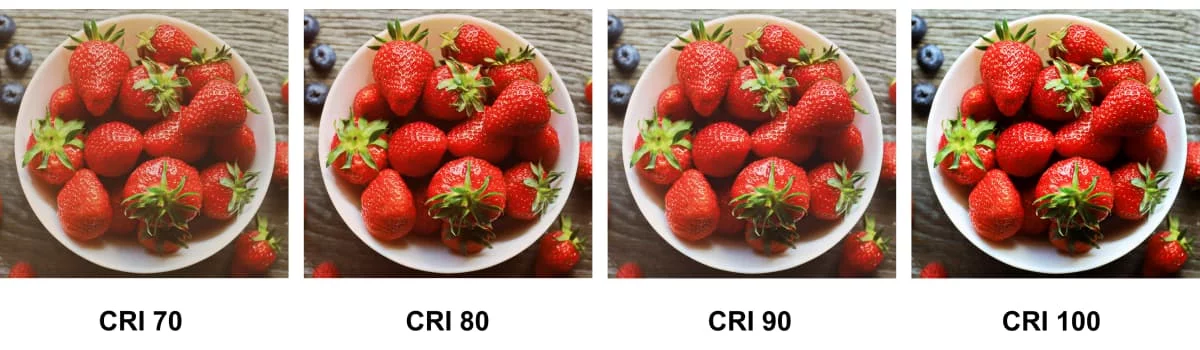
Der Farbwiedergabeindex (CRI) ist das von der CIE definierte, umfassende System zur Bewertung der Fähigkeit einer Lichtquelle, Farben verschiedener Objekte im Vergleich zu einer natürlichen Lichtquelle (wie Sonnenlicht) naturgetreu wiederzugeben. Man kann sich „CRI“ als den Namen des Tests vorstellen.
Der Farbwiedergabeindex (CRI) ist ein quantitatives Maß (0-100) für die Fähigkeit einer Lichtquelle, die Farben verschiedener Objekte im Vergleich zu einer natürlichen oder idealen Lichtquelle (wie z. B. Sonnenlicht) getreu wiederzugeben.
u 100: Entspricht perfekt dem natürlichen Tageslicht (z. B. der Sonne).
u 0: Farben sind nicht zu unterscheiden (z. B. eine Natriumdampf-Niederdruck-Straßenlaterne).
2. Ra (Die Metrik)
Wenn auf einer Verpackung eine Angabe wie „CRI 80“ zu sehen ist, bezieht sich dies in der Regel auf Ra (General Color Rendering Index) .
Ra ist der spezifische numerische Wert (0-100), der aus dem Test abgeleitet wird.
Es handelt sich um den branchenüblichen Standard für die Lichtqualität.
3. TCS (Das Werkzeug)
Testfarbmuster (TCS) sind die standardisierten Farbpaletten, die für den Test verwendet werden. Genau wie ein Schüler in bestimmten Fächern geprüft wird, wird auch eine Lichtquelle anhand bestimmter TCS-Farben getestet, um ihre Leistung zu bewerten.
Warum die Einhaltung der Vorschriften wichtig ist:
Für europäische Facility Manager sind dies nicht nur Definitionen, sondern verbindliche Regeln. Die europäische Norm EN 12464-1 (Licht und Beleuchtung – Beleuchtung von Arbeitsplätzen) schreibt bestimmte Mindestwerte für den Farbwiedergabeindex (Ra) vor, um Sehkomfort und Sicherheit zu gewährleisten. Die Missachtung des Farbwiedergabeindex (CRI) lässt die Beleuchtung nicht nur unschön aussehen, sondern kann dazu führen, dass Ihre Einrichtung die Vorschriften nicht mehr erfüllt.
Wie wird der Farbwiedergabeindex (CRI) gemessen? Jenseits des menschlichen Auges
Die Lichtqualität lässt sich nicht allein durch das Aussehen einer Glühbirne beurteilen. Um den tatsächlichen Ra-Wert zu ermitteln, verwenden wir die von der CIE (Internationale Beleuchtungskommission) etablierte wissenschaftliche Methode , die ausschließlich auf den Testfarbmustern (TCS) basiert .
Die Testfarbmuster (TCS): Die „15 vs. 8“-Regel
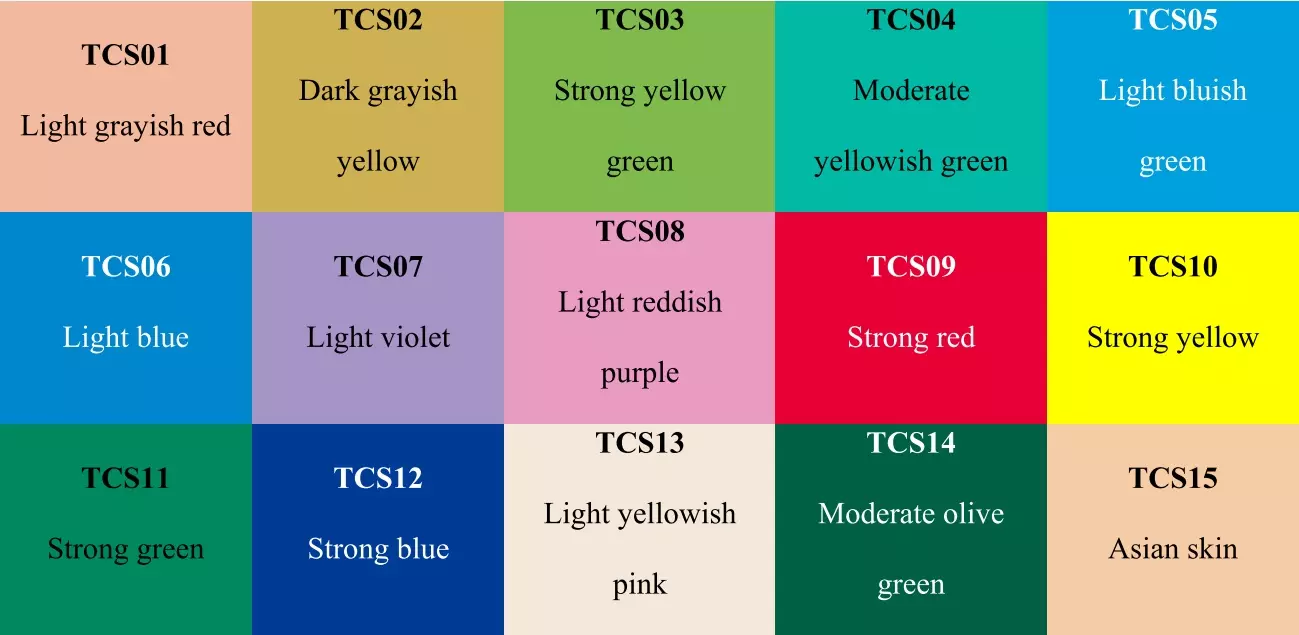
Der CIE-Standard definiert tatsächlich 15 spezifische Farbmuster (TCS01–TCS15), um das Spektrum des menschlichen Sehvermögens abzudecken.
Ø TCS01 – TCS08 (R1–R8) : Dies sind Pastellfarben (ungesättigte Farbtöne, die in der Natur vorkommen).
Ø TCS09 – TCS15 (R9–R15) : Dies sind gesättigte Farben (tiefrot, kräftig blau, leuchtend grün und Hauttöne).
Quelle: ScienceDirect
Die Berechnung von Ra (Allgemeiner CRI)
Hier liegt das entscheidende Detail, das Fachwissen von grundlegendem Verständnis unterscheidet: Ra zählt nur die Pastellkreiden .
Der allgemeine Farbwiedergabeindex (Ra) wird ausschließlich unter Verwendung des arithmetischen Mittels der ersten 8 Abtastwerte (R1–R8) berechnet .
Formel für Ra: Ra = (R1 + R2 + R3 + R4 + R5 + R6 + R7 + R8) / 8
Hinweis: Die gesättigten Farben (R9 bis R15) sind in dieser Formel NICHT enthalten.
Die „versteckte“ Kennzahl: Warum R9 wichtig ist
Hier ist das Profi-Geheimnis, das die meisten Datenblattzusammenfassungen verschweigen: Die Standard-Ra-Berechnung ignoriert Red .
Da Ra nur die ersten 8 Pastellfarben (R1-R8) mittelt, kann eine LED-Lampe einen respektablen CRI von 80 erreichen, obwohl sie Rottöne nur sehr schlecht wiedergibt.
l R9 (Gesättigtes Rot) : Diese Probe misst, wie gut eine Lichtquelle kräftige Rottöne wiedergibt.
Warum das wichtig ist : R9 ist entscheidend für Hauttöne (medizinisch), die Frische von Fleisch (Lebensmittel) und Holz (Möbel).
Viele handelsübliche Industrie-LEDs haben einen negativen R9-Wert, wodurch Haut kränklich und Holz grünlich wirkt.
Bei CeramilcitWir legen Wert auf hohe R9-Werte, um sicherzustellen, dass das, was Sie sehen, chemisch korrekt ist.
Messwerkzeuge
Verlassen Sie sich nicht auf Smartphone-Apps. Für eine präzise CRI-Messung benötigen Sie ein Spektroradiometer oder ein professionelles, tragbares CRI-Messgerät . Diese Geräte analysieren die vollständige spektrale Leistungsverteilung (SPD) und liefern so die für professionelle Audits erforderlichen Daten.
Das CRI-Spektrum: Standardhierarchie & Anwendungen
Auf dem europäischen Markt gibt es keine Einheitslösung. Der erforderliche Farbwiedergabeindex hängt vollständig von der jeweiligen visuellen Aufgabe ab.
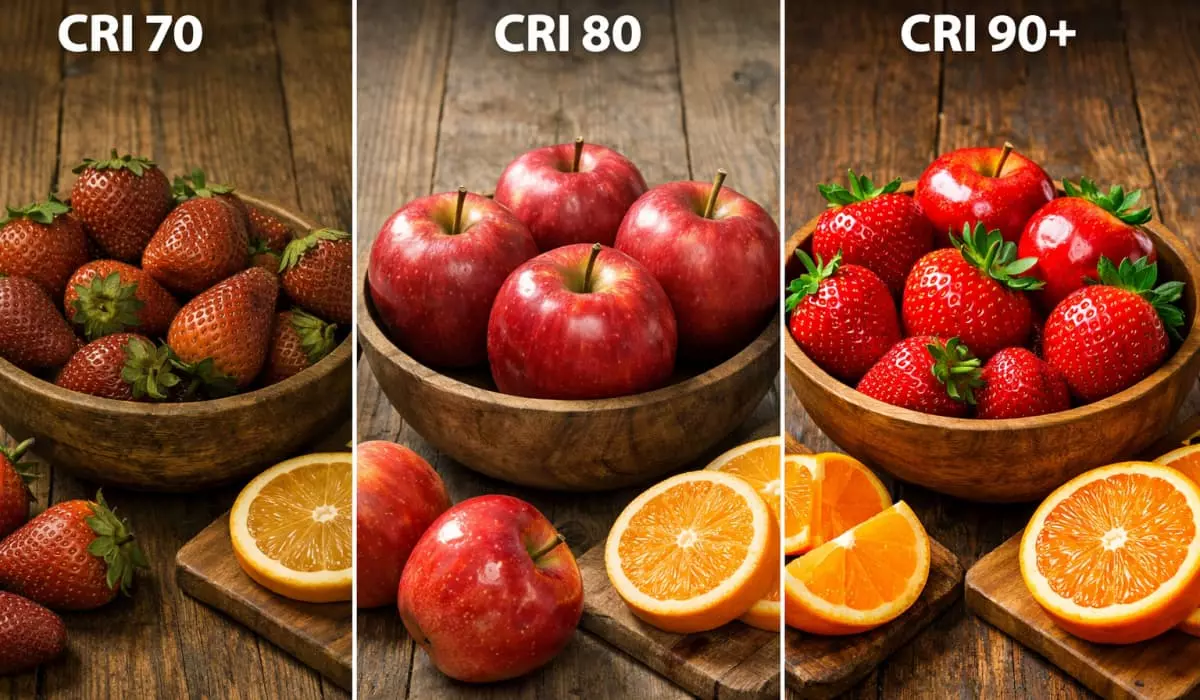
Nachfolgend finden Sie die Hierarchie der CRI-Standards basierend auf den Anforderungen der EN 12464-1 und bewährten Verfahren der Branche. Nutzen Sie diese Tabelle, um die passende Spezifikation für Ihr nächstes Projekt zu ermitteln.
CRI (Ra) Reichweite | Einstufung | Typische Anwendungen (Europäische Normen) |
90 - 100 | Ausgezeichnet / Kritisch | Klinische Untersuchung (medizinisch) : Unerlässlich für die Diagnose von Hauterkrankungen. Farbabstimmung : Textildruck und grafische Künste, für die ISO 3664 gilt. Frischewarenauslage: Metzgereien und Obst- und Gemüseabteilung (Hoher R9-Wert erforderlich). Kunstgalerien : Vermeidung von Farbverzerrungen in Kunstwerken. |
80 - 89 | Gut / Standard | Büros & Klassenzimmer : Der Mindeststandard für belegte Bereiche gemäß EN 12464-1. Präzisionsmontage : Industrieelektronik oder Detailarbeiten. Einzelhandel : Allgemeine Bekleidung und Waren. |
60 - 79 | Fair / Basic | Allgemeine Lagerhaltung : Gabelstaplerbetrieb, bei dem die Farbkennzeichnung nicht entscheidend ist. Außenbereiche : Straßenbeleuchtung, Parkplätze und Laderampen. Schwerindustrie : Stahlwerke oder Gießereien. |
< 60 | Arm | Sicherheitsbeleuchtung : Rein zur Sichtbarkeit, nicht zur Identifizierung. Baustellen : Temporäre Beleuchtung. (Hinweis: Nicht für dauerhafte Arbeitsplätze in Innenräumen empfohlen). |
Warum die CRI-Berechnung in Ihrer Branche wichtig ist
In professionellen Umgebungen haben die Beleuchtungsspezifikationen direkten Einfluss auf den Betriebserfolg. Die Anforderungen unterscheiden sich jedoch drastisch zwischen einem Versandlager und einem im Fernsehen übertragenen Stadion.
Für Industrie & Fertigung (Textilien, Lebensmittel, Logistik)
In industriellen Umgebungen besteht das Ziel oft in einem ausgewogenen Verhältnis zwischen visueller Klarheit und Energieeffizienz .
Die Kosten von Fehlern : In Fertigung und Logistik kann eine mangelhafte Farbwiedergabe zu Sicherheitsrisiken (Fehlinterpretationen farbcodierter Etiketten) oder Effizienzverlusten (Schwierigkeiten bei der Unterscheidung von Bauteilen) führen. Branchenberichte zeigen, dass eine verbesserte Beleuchtungsqualität die Unfallzahlen senken kann, indem sie die Sichtbarkeit von Sicherheitskennzeichnungen und Gefahrenbereichen deutlich verbessert.
Der Standard :
l Kritische QC-Zonen : Textilinspektionstische benötigen typischerweise spezielle CRI 90+ Quellen (D65).
l Allgemeine Produktion & Lagerhaltung : Für den Großteil der Produktionsfläche – Spinnereien, Verpackungsbereiche und Hochregallager – ist ein Farbwiedergabeindex (CRI) von 80 der europäische Industriestandard (EN 12464-1). Er bietet einen deutlich höheren Sehkomfort als die alten CRI-70-Lampen und ist gleichzeitig energieeffizienter als Studioleuchten.
Die Ceramilcite-Lösung :
Wir wissen, dass Industrieanlagen die Stromkosten nicht ignorieren können. Die industrielle LED-Hallenleuchten-Serie von Ceramilcite ist optimal auf die Anforderungen der Fertigung abgestimmt. Wir bieten leistungsstarke CRI -Optionen (Farbwiedergabeindex) von 70 und 80.
Dies ermöglicht es Facility Managern, eine effiziente, helle Beleuchtung zu installieren, die den Sicherheits- und Kennzeichnungsstandards für allgemeine industrielle Aufgaben entspricht, ohne den unnötigen Energieverbrauch von Leuchten in Galeriequalität.

Für Sportbeleuchtung und -übertragung (Stadien)
Die Beleuchtung im Sport ist insofern einzigartig, als sie zwei unterschiedlichen Zielgruppen gerecht werden muss: den Spielern auf dem Spielfeld und den Kameras, die das Spiel übertragen.
Das Problem : Eine Lichtquelle mag für das Auge eines Spielers hell genug erscheinen, verursacht aber bei der Betrachtung durch hochauflösende Zeitlupenkameras ein „Flimmern“ oder Farbverschiebungen.
Die Anwendungshierarchie:
Ø Klasse III (Training & Freizeit) : Für lokale Vereine und Trainingsplätze hat die Sichtbarkeit höchste Priorität. Ein Farbwiedergabeindex (CRI) von 70 gilt als Standardwert, um ein ausgewogenes Verhältnis zwischen Kosten und Helligkeit zu gewährleisten.
Ø Klasse II (Regionalwettbewerb) : Erfordert eine bessere Farbwiedergabe für die Zuschauer. Ein CRI von 80 wird üblicherweise empfohlen.
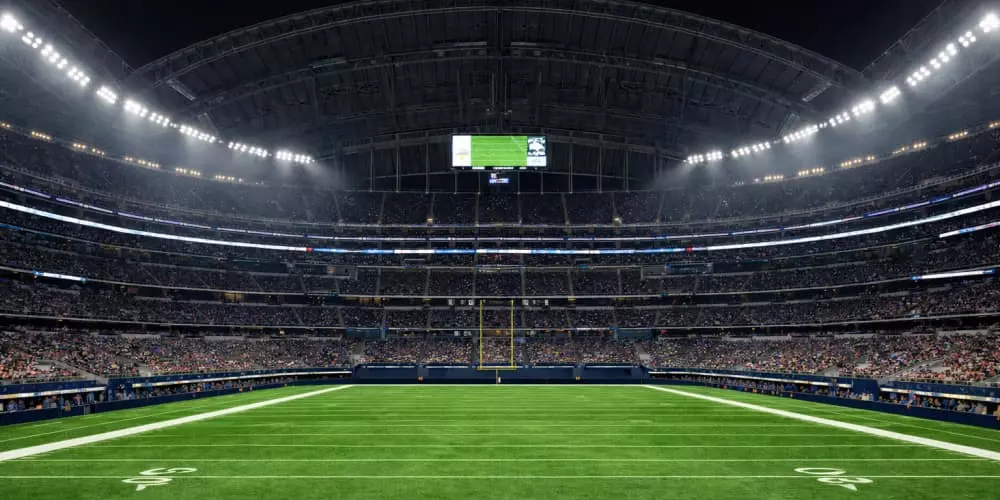
Ø Klasse I (Fernsehübertragungen) : Für professionelle Übertragungen sind ein CRI-Wert von mindestens 90 und hohe TLCI-Werte erforderlich , um sicherzustellen, dass der Rasen grün aussieht und die Trikots der Teams im Fernsehen korrekt dargestellt werden.
Die Flexibilität von Ceramilcite :
Ceramilcite bietet ein gestaffeltes System, das auf die spezifischen Bedürfnisse Ihrer Location zugeschnitten ist. Wir setzen nicht auf eine Einheitslösung. Unser Sortiment an Sportbeleuchtung umfasst:
l Hocheffiziente CRI 70/80-Modelle : Ideal zur Maximierung der Lichtausbeute auf Trainingsplätzen und städtischen Sportanlagen.
l Hochleistungsfähige CRI 90-Optionen : Konzipiert für Veranstaltungsorte mit Rundfunkanforderungen, um sicherzustellen, dass Ihre Einrichtung zukunftssicher für Fernsehübertragungen ist.
Farbwiedergabeindex vs. Farbtemperatur (CCT)
Beim Umstieg auf LED verwechseln Käufer oft die Farbtemperatur (die Lichtstimmung) mit der Farbwiedergabe (der Farbqualität). Das Verständnis des Unterschieds ist entscheidend, um Enttäuschungen zu vermeiden.
Klarstellung: Die zwei Säulen des Lichts
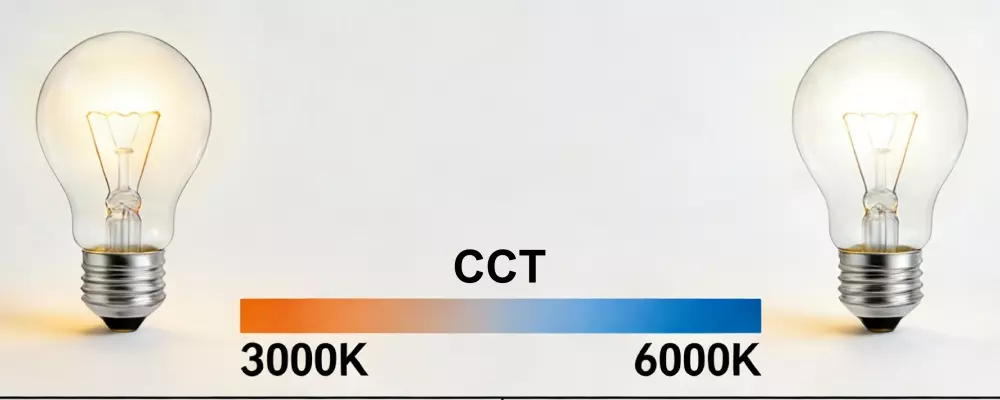
1. CCT (Korrelierte Farbtemperatur):
Frage : „Welche Farbe hat das Licht selbst?“
u- Skala: Gemessen in Kelvin (K).
u -Bereich: Von warm (3000K) bis kühl (6500K).
Anwendung : 3000K schafft eine gemütliche Atmosphäre; 5000K fördert die Wachsamkeit.
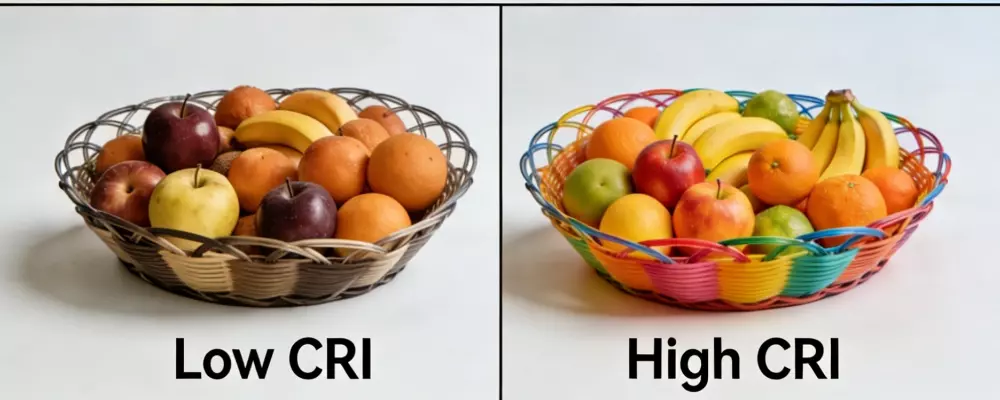
2. CRI (Farbwiedergabeindex):
Frage : „Wie naturgetreu sehen Objekte unter diesem Licht aus?“
u -Skala: Gemessen in Ra (0-100).
u -Bereich: Von mangelhaft (<70) bis ausgezeichnet (>90).
Anwendung : Bestimmt, ob ein roter Apfel rot oder braun aussieht.
Die Spektrumverbindung (Semantik)
Warum können zwei Lampen die gleiche Farbtemperatur (z. B. 4000 K) haben, aber völlig unterschiedlich aussehen? Die Antwort liegt im Lichtspektrum .
Billige LEDs erzeugen weißes Licht oft durch die Mischung eines starken blauen Anteils mit gelbem Leuchtstoff, wodurch Lücken im roten und cyanfarbenen Spektrum entstehen. Dies mag zwar die korrekte Farbtemperatur ergeben, führt aber zu einem leblosen Licht, bei dem die Farben flach wirken.
Der Ansatz von Ceramilcite :
Wir nutzen fortschrittliche LED-Chip-Technologie zur Optimierung der spektralen Verteilung. Ob Sie sich für unsere Industrieleuchten mit einem Farbwiedergabeindex (CRI) von 80 oder unsere Sportleuchten mit CRI 90 entscheiden – unser Entwicklungsschwerpunkt liegt auf der Schaffung eines ausgewogenen Spektrums . So stellen wir sicher, dass die visuellen Informationen für Ihre spezifische Anwendung – sei es die Ausleuchtung eines Gabelstaplers im Lager oder die Verfolgung eines Fußballs im Stadion – präzise und komfortabel vermittelt werden.
Weiterlesen : Möchten Sie mehr über Farbtemperatur erfahren? Hier finden Sie einen vollständigen Leitfaden.Die
Wenn Sie mehr über technisches Wissen im Bereich Beleuchtung erfahren möchten, finden Sie hier ein Glossar zur Beleuchtungslehre .
Wie wählt man den richtigen CRI für sein Projekt aus?
Die Wahl des richtigen Farbwiedergabeindex (CRI) erfordert ein ausgewogenes Verhältnis zwischen Bildqualität , Energieeffizienz und Budget . Man benötigt nicht immer den höchsten Wert, sondern den richtigen Wert für die jeweilige Anwendung.
Nutzen Sie diese Checkliste, um die genauen Anforderungen für Ihre Einrichtung festzulegen:
✅ Prüfen Sie die Einhaltung der Norm (EN 12464-1):
Beleuchten Sie einen dauerhaft genutzten Arbeitsbereich wie ein Büro oder eine Präzisionswerkstatt? Die europäische Norm EN 12464-1 schreibt im Allgemeinen einen Mindestwert von Ra ≥ 80 vor , um das Wohlbefinden der Mitarbeiter und den Sehkomfort zu gewährleisten.
✅ Prüfen Sie Ihre Aufgabe & Ihr Budget (Die Ra 70 Option)
Nicht jeder Bereich benötigt Licht in Galeriequalität.
u Der Kostensparer : Bei Logistiklagern mit hohen Decken, Freilagerplätzen oder Amateur-Trainingsplätzen ist die Farbunterscheidung oft zweitrangig gegenüber Helligkeit und Kosten.
Der Vorteil : Die Wahl von Leuchten mit einem Farbwiedergabeindex (CRI) von 70 für diese Bereiche ermöglicht eine maximale Lichtausbeute bei gleichzeitig reduziertem Energieverbrauch. Wenn es Ihnen lediglich um die „Erkennung“ und nicht um die „Inspektion“ geht, bieten die Industrie- und Sportleuchtenserien von Ceramilcite mit CRI 70 die wirtschaftlichste Lösung.
✅ Überprüfen Sie Ihre Präzisionsanforderungen:
Beinhaltet Ihre Aufgabe die Beurteilung der Produktqualität anhand der Farbe?
Industrielle Anwendungen : Bei der Sortierung von Fleisch, dem Mischen von Farben oder der Textilprüfung dürfen keine Kompromisse eingegangen werden. Sie benötigen einen Ra-Wert von ≥ 90 .
u Sports : Für erstklassige Stadien, in denen Spiele im Fernsehen übertragen werden, reicht Standardbeleuchtung nicht aus. Sie benötigen sendefähige Spezifikationen, um das Spielgeschehen präzise einzufangen.
✅ Prüfen Sie den Effizienz-Kompromiss
Es gibt eine physikalische Regel: Normalerweise sinkt die Lichtausbeute mit steigendem CRI.
Die Herausforderung : Ein CRI-90-Chip erzeugt in der Regel weniger Lumen pro Watt als ein CRI-70-Chip.
Die Ceramilcite-Balance : Wir entwickeln unsere Leuchten so, dass dieser Verlust minimiert wird. Ob Sie sich für unsere hocheffizienten CRI-70-Modelle oder unsere hochauflösenden CRI-90-Modelle entscheiden – wir stellen sicher, dass das Wärmemanagement und die Treibereffizienz optimiert sind, um Ihnen die bestmögliche Lichtausbeute für Ihre Energiekosten zu bieten.
Abschluss
Der Farbwiedergabeindex (CRI) wurde in Beleuchtungsspezifikationen viel zu lange vernachlässigt. Doch wie wir gesehen haben, ist der CRI – egal ob man eine Textilfabrik in Mailand oder ein Fußballstadion in Manchester leitet – keine bloße Eitelkeitskennzahl, sondern ein Produktivitätsinstrument und ein grundlegender Sicherheitsstandard.
Ein niedriger CRI-Wert (70) ist Ihr Arbeitspferd für Effizienz in großen, nicht kritischen Räumen.
Der Standard CRI (80) ist Ihre Compliance-Grundlage für menschenzentrierte Arbeitsplätze.
l Hoher Farbwiedergabeindex (90+) ist Ihr Spezialwerkzeug für Präzision und Rundfunk.
Überlassen Sie die visuelle Wirkung Ihrer Einrichtung nicht dem Zufall.
Sind Sie bereit, Ihren Beleuchtungsplan zu optimieren?
Hören Sie auf, mit allgemeinen Spezifikationen zu raten. Kontaktieren Sie einen Ceramilcite-Spezialisten . um zu besprechen, welches CRI-Niveau den besten ROI für Ihr spezifisches Projekt bietet.