_thumb.jpg)
Guide expert d'éclairage pour les sports de plein air : conception, normes et retour sur investissement
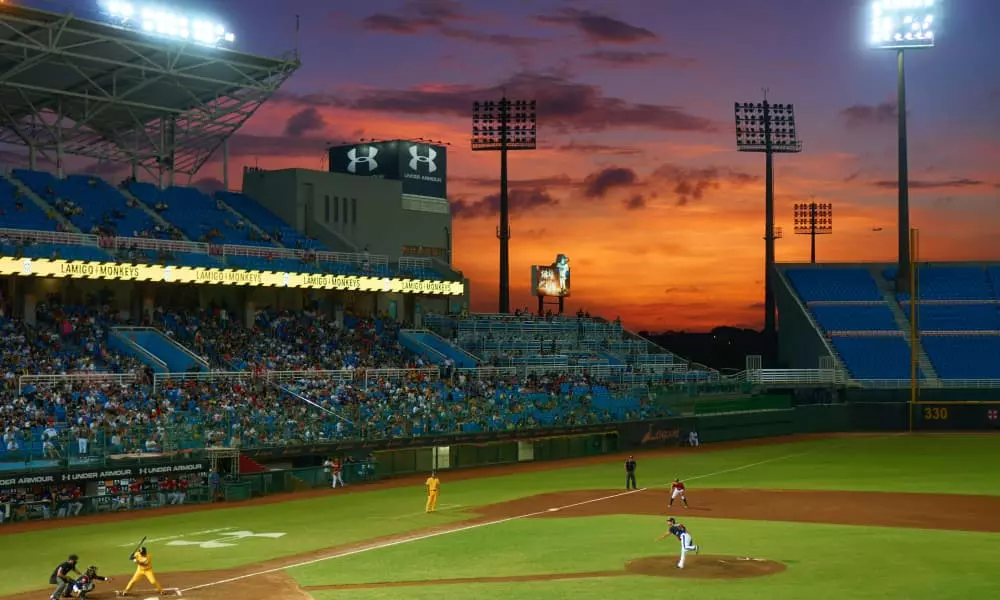
Table des matières
Pourquoi le monde se tourne-t-il vers l'éclairage sportif LED ?
Normes d'éclairage clés : exigences IES, EN et internationales
Spécificités de l'application : Un éclairage sur mesure pour chaque sport
Résoudre le mal de tête dû à la pollution lumineuse
Comment concevoir un système d'éclairage pour les sports de plein air ? (Le plan photométrique)
5 questions à poser à votre fournisseur d'éclairage
Introduction
L'éclairage sportif extérieur haute performance repose sur l'application stratégique de la technologie LED avancée afin de fournir un éclairage uniforme et sans éblouissement sur les sites sportifs. Un système professionnel garantit la conformité aux normes de sécurité les plus strictes , telles que IES RP-6-20 ou EN 12193 , tout en améliorant considérablement l'expérience des joueurs, des spectateurs et des diffuseurs.
Le défi des lieux modernes
Soyons réalistes : gérer un complexe sportif extérieur en 2025 est un exercice d'équilibre.
Que vous modernisiez un terrain de football municipal , construisiez un nouveau terrain de pickleball ou gériez un stade universitaire, vous serez probablement confronté aux mêmes trois problèmes :
l La flambée des coûts de l'énergie.
l Réglementation stricte « DarkSky » (lois sur la pollution lumineuse).
l Exigences en matière de luminosité de qualité télévisuelle.
Si vous utilisez encore de vieilles lampes à halogénures métalliques ou à sodium haute pression, vous ne perdez pas seulement de la lumière , vous perdez aussi de l'argent.
Ce guide élimine le jargon technique et offre une feuille de route claire, de la conformité réglementaire à la conception photométrique , vous assurant ainsi d'investir dans une solution d'éclairage pour stade sportif qui maximise la sécurité des joueurs tout en minimisant les coûts d'exploitation à long terme.
Pourquoi le monde se tourne-t-il vers l'éclairage sportif LED ?
Le passage de l'éclairage traditionnel à décharge à haute intensité (HID) aux LED n'est pas qu'une simple tendance , c'est la nouvelle norme du secteur.
Si vous vous demandez encore si la mise à niveau vaut l'investissement, les chiffres parlent d'eux-mêmes. Voici pourquoi des installations aux États-Unis et en Europe abandonnent leurs anciens systèmes.
1. Réduction massive de la consommation d'énergie (le principal moteur du retour sur investissement)
Le calcul est simple. L'éclairage sportif extérieur à LED consomme généralement de 50 % à 70 % d'énergie en moins que les luminaires traditionnels aux halogénures métalliques.
Pour un terrain de football ou un stade de soccer extérieur standard, éclairé 1 000 heures par an, cela représente des milliers de dollars d'économies annuelles. Le retour sur investissement (RSI) de la plupart des projets commerciaux est désormais inférieur à 24 mois.
2. Technologie « allumage instantané »
Quiconque a déjà géré d'anciens éclairages de terrain connaît les désagréments liés à la période de « chauffage ». En cas de coupure de courant, il faut parfois attendre 15 à 20 minutes avant que les lumières ne se rallument.
Les LED changent la donne. Elles offrent une capacité d'allumage/extinction instantanée .
Pas d'attente : les lumières sont prêtes dès que vous actionnez l'interrupteur.
Divertissement : Ceci permet des spectacles de lumière dynamiques et des effets clignotants pendant la mi-temps ou la présentation des joueurs — une fonctionnalité auparavant impossible avec les lampes HID.
3. Zéro entretien pendant une décennie
Le « coût caché » de l'éclairage extérieur, ce n'est pas l'ampoule elle-même, mais le camion-nacelle spécialisé et la main-d'œuvre nécessaires pour la changer à 18 mètres de hauteur.
Les ampoules traditionnelles doivent souvent être remplacées toutes les 3 000 à 5 000 heures. En revanche, les luminaires sportifs à LED de haute qualité , notamment ceux dotés d’une gestion thermique avancée comme Ceramiclite , ont une durée de vie de 50 000 à plus de 100 000 heures .
Cela signifie qu'une fois installés, vous n'aurez probablement plus besoin d'y toucher pendant plus de 10 ans.
Normes d'éclairage clés : exigences IES, EN et internationales
L'éclairage ne consiste pas seulement à rendre les choses lumineuses ; il s'agit aussi de respecter les règles.
Que vous soyez aux États-Unis et suiviez les directives de l'IES (Illuminating Engineering Society) ou en Europe et respectiez la norme EN 12193 , le non-respect de certains niveaux d'éclairement peut rendre votre terrain inéligible pour les matchs officiels , voire pire, dangereux pour les joueurs.
Ne vous laissez pas déconcerter par les acronymes. Voici le détail des trois principales « classes de jeu » qui déterminent vos besoins en éclairage.
Comprendre les 3 classes
La plupart des normes d'éclairage des terrains de sport classent les sites en fonction du niveau de compétition :
Classe I (Professionnelle et télévisée) : Compétition de haut niveau. Exige une luminosité élevée (lux) et une uniformité exceptionnelle pour que les caméras puissent capturer des ralentis sans scintillement.
Classe II (Universitaire et semi-professionnelle) : Jeu de haut niveau, mais généralement sans exigences importantes en matière de diffusion. Courant pour les universités et les grands clubs régionaux.
l Classe III (Récréatif et entraînement) : Terrains municipaux locaux, terrains d'entraînement des lycées et utilisation générale pour l'éducation physique.
Aide-mémoire : Niveau de luxe
Voici ce que vous devez généralement viser lors de la planification de votre projet :
Classe / Niveau | Cible typique Lux | Rapport d'uniformité | Idéal pour... |
Classe I | 500 - 750+ lux | 0,7 | Stades professionnels / Événements nationaux |
Classe II | 300 - 500 lux | 0,6 | Matchs universitaires / Ligues régionales |
Classe III | 200 - 300 lux | 0,5 | Entraînement / EPS scolaire / Ligues récréatives |
Note sur la durabilité globale
Bien que les normes IES et EN se concentrent sur la qualité de la lumière, n'ignorez pas la conformité environnementale.
Si votre projet se situe dans une région où les précipitations sont abondantes (comme l'Asie du Sud-Est ou le Royaume-Uni) ou exposée aux embruns salés côtiers (comme la Floride), les installations standard ne résisteront pas à l'épreuve du temps.
Assurez-vous que vos luminaires d'éclairage sportif extérieur possèdent un indice de protection IP66 minimum (étanches à l'eau et à la poussière) et un boîtier résistant à la corrosion. Ainsi, votre investissement résistera aux intempéries bien après l'expiration de la garantie.
Spécificités de l'application : Un éclairage sur mesure pour chaque sport
L'éclairage d'un vaste terrain de football exige une conception optique totalement différente de celle d'un terrain de pickleball compact. Pour optimiser le retour sur investissement et la satisfaction des joueurs, il est indispensable d'adapter l'aménagement aux exigences spécifiques de ce sport.
Sports de raquette : tennis, basketball et pickleball
Dans les sports de salle, l'action est rapide, la balle est souvent petite et l'aire de jeu réduite. Le principal ennemi est l'éblouissement . Comme les joueurs et les spectateurs sont proches de l'action, il est essentiel de maîtriser la luminosité en plongée pour éviter d'éblouir les athlètes.
Tennis :
Selon les normes de l’ITF (Fédération Internationale de Tennis) , la visibilité est primordiale. La règle d’or de l’éclairage d’un court de tennis est le positionnement. Les projecteurs doivent toujours être installés le long des lignes de côté , jamais directement derrière les lignes de fond. Cette approche d’« éclairage latéral » garantit que lorsqu’un joueur lève les yeux pour servir ou smasher un lob, il ne regarde pas directement une puce LED.
Pour les spécifications résidentielles ou de club, consultez notre analyse des normes d'éclairage des courts de tennis..
Pickleball :
Sport connaissant la plus forte croissance aux États-Unis, le pickleball présente des exigences particulières. Le terrain étant plus petit, les mâts d’éclairage sont souvent plus bas (généralement entre 4,5 et 6 mètres) qu’au tennis. Cette faible hauteur d’installation nécessite des systèmes optiques spécifiques pour diffuser la lumière uniformément et éviter les zones de suréclairage sur la surface du terrain.
Basketball :
Pour l’éclairage des terrains de basketball extérieurs , il est essentiel de porter une attention particulière à l’indice de rendu des couleurs (IRC). Nous recommandons des luminaires avec un IRC supérieur à 80. Une haute fidélité des couleurs permet aux joueurs de suivre instantanément la balle et de distinguer les maillots de leurs coéquipiers grâce à leur vision périphérique rapide.
Sports collectifs : football américain, football et baseball
Les sports collectifs se déroulent sur de vastes surfaces. Le principal défi consiste à réaliser un « long lancer » — c'est-à-dire à projeter la lumière du bord du terrain jusqu'au centre sans créer d'ombres marquées.
Football :
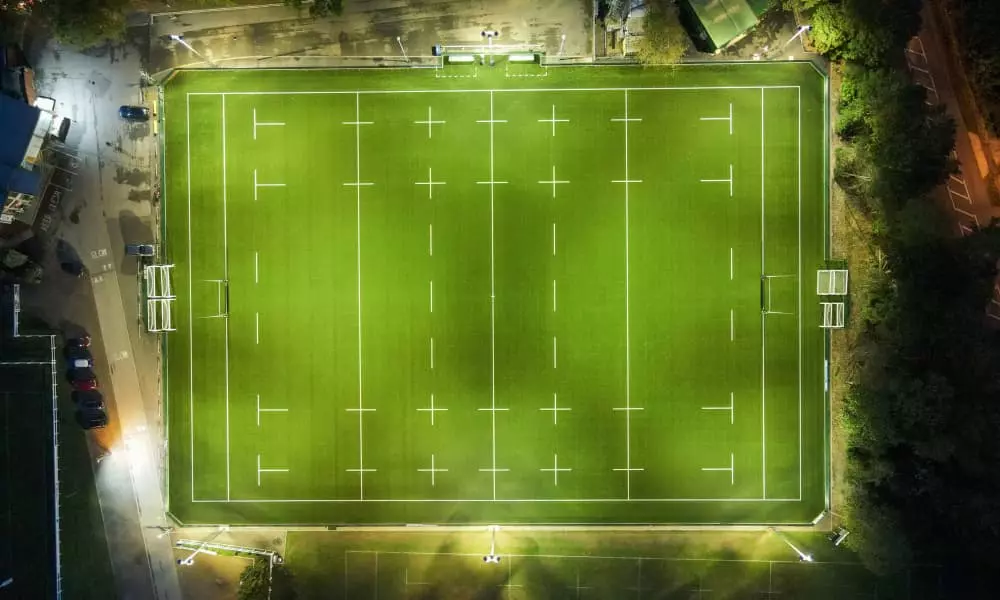
Que ce soit pour respecter les directives de la FIFA ou les exigences locales du club, l'uniformité est primordiale. Un éclairage mal conçu crée le fameux « effet zèbre » (des bandes d'ombre et de lumière sur le terrain). Non seulement cela nuit au confort des spectateurs, mais cela peut aussi masquer le ballon pendant le jeu. Des optiques de haute qualité garantissent un éclairage homogène et constant d'un but à l'autre.
Baseball et softball :
Ces terrains sont uniques car leurs besoins en éclairage ne sont pas symétriques. Le champ intérieur requiert des niveaux d’éclairement nettement supérieurs à ceux du champ extérieur. Pourquoi ? Parce que la majorité des actions rapides (lancers, frappes, courses sur les bases) se déroulent dans le diamant. La conception de l’éclairage doit privilégier la terre battue du champ intérieur afin de garantir la sécurité, tout en maintenant une visibilité suffisante pour les balles en l’air du champ extérieur.
Vous gérez un site de grande envergure ? Découvrez nos solutions d’ éclairage LED pour stades sur mâts de grande hauteur .
Résoudre le mal de tête dû à la pollution lumineuse
Pour les gestionnaires d'installations, le pire cauchemar n'est pas une panne de courant , mais une poursuite judiciaire de la part des voisins.
Avec la densification des zones urbaines, la pollution lumineuse (la lumière parasite diffusée là où elle n'est pas souhaitée) est devenue un enjeu juridique majeur. Qu'il s'agisse d'un terrain de sport privé ou d'un terrain municipal, le respect des principes de protection du ciel nocturne est souvent obligatoire.
Pour assurer la sécurité de votre projet, vous devez comprendre deux indicateurs clés :
1. UGR (Unified Glare Rating)
Ce paramètre mesure l'inconfort psychologique causé par une lumière vive. Un UGR élevé signifie que les joueurs devront plisser les yeux. Les projecteurs professionnels utilisent des puces profondément encastrées et des lentilles spéciales pour maintenir un UGR bas et garantir un confort visuel optimal.
2. Évaluation des BUG (Rétroéclairage, Éclairage indirect, Éblouissement)
Ce système permet de classifier la quantité de lumière qui s'échappe du luminaire.
l Rétroéclairage : Lumière se répandant derrière le poteau (dans la fenêtre du voisin).
l Éclairage ascendant : Lumière projetée vers le ciel (gâchant les étoiles/la lueur du ciel).
l Éblouissement : Lumière à angle élevé qui aveugle les observateurs.
Pour l'éclairage d'un terrain de sport résidentiel , il est essentiel de choisir un luminaire de classe énergétique « B0 » ou « U0 ». Cela permet d'obtenir un terrain bien éclairé tout en laissant dans l'obscurité la zone située à seulement 3 mètres de la clôture.
Comment concevoir un système d'éclairage pour les sports de plein air ? (Le plan photométrique)
S'il vous plaît, ne devinez pas.
On constate trop souvent l'échec de projets parce que les entrepreneurs ont simplement estimé le nombre de poteaux ou la puissance nécessaire. L'éclairage est une science qui exige un plan photométrique .
Voici le processus professionnel en 4 étapes que nous utilisons chez Ceramiclite pour garantir des résultats :
Étape 1 : Définir la zone
. La précision est essentielle. Un court de tennis standard mesure 23,8 m x 11 m, mais quelle surface supplémentaire devez-vous éclairer ? Nous mesurons la surface de jeu totale (SLT) pour garantir la sécurité.
Étape 2 : Déterminer l’utilisation (classe)
Organisez-vous des retransmissions de matchs télévisés (classe I) ou simplement des entraînements en soirée (classe III) ? Ce choix déterminera le nombre de lumens nécessaires.
Étape 3 : Placement et hauteur du poteau
Configuration à 4 poteaux : Courante pour les terrains de loisirs (Économique).
Configuration à 6 ou 8 pôles : requise pour une uniformité supérieure et des ombres réduites (professionnel).
Remarque : Les poteaux plus hauts (20 pieds et plus) permettent généralement une meilleure uniformité et moins d'éblouissement que les poteaux courts.
Étape 4 : La simulation DIALux.
Avant d’acheter un seul boulon, exigez un rapport de simulation DIALux . Ce jumeau numérique de votre terrain crée une carte thermique des niveaux de lumière, indiquant précisément la luminosité du terrain.
Vous prévoyez d'aménager un nouveau terrain ? Consultez notre guide détaillé sur l'éclairage des terrains de pickleball pour un placement précis des poteaux.
Vous vous interrogez sur les coûts d'installation ? Découvrez les facteurs qui influencent le coût de l'éclairage d'un terrain de pickleball et les autres dépenses liées au projet afin d'établir un budget précis.
5 questions à poser à votre fournisseur d'éclairage
Choisir un partenaire d'éclairage est un engagement sur 10 ans. Avant de signer un contrat, posez-vous ces cinq questions essentielles pour distinguer les fabricants professionnels des simples revendeurs.
1. « Fournissez-vous un rapport de simulation DIALux gratuit ? »
N'achetez jamais au hasard. S'ils ne peuvent pas vous fournir un rapport informatique précis montrant comment la lumière éclairera votre champ, renoncez à l'achat.
2. « Le luminaire est-il résistant à l'eau salée et à la corrosion ? »
Si votre installation se situe près de la côte ou dans une région humide, les boîtiers en aluminium standard s'oxyderont. Renseignez-vous sur la résistance au brouillard salin et la conformité à la norme IP66 pour garantir leur durabilité.
3. « Quelle est la valeur L70 ? »
« L70 » indique la durée de vie de la lampe (en heures) avant qu'elle ne perde 30 % de sa luminosité. Une lampe bon marché peut avoir une durée de vie L70 de 10 000 heures. Un projecteur professionnel devrait avoir une durée de vie L70 de plus de 50 000 heures .
4. « Ces lampes sont-elles compatibles avec les systèmes de commande sans fil ? »
Anticipez l'avenir de votre établissement. Renseignez-vous sur la compatibilité des drivers avec les systèmes DALI, Zigbee ou autres systèmes de contrôle intelligents afin de pouvoir moduler l'éclairage ou le programmer via votre smartphone.
5. « Que couvre réellement la garantie ? »
Certaines garanties ne couvrent que la puce LED, et non le circuit de commande (la pièce la plus susceptible de tomber en panne). Assurez-vous de souscrire une garantie complète de 5 à 10 ans couvrant les pièces et la main-d'œuvre.
Conclusion et CTA
L'éclairage des installations sportives extérieures ne se résume plus à fixer un projecteur puissant sur un poteau. Il s'agit d'un équilibre stratégique entre performance visuelle , conformité réglementaire et rentabilité .
Que vous modernisiez un stade universitaire ou créiez un club de pickleball, un système d'éclairage adapté vous permettra de réduire vos factures et d'assurer la sécurité de vos joueurs. Un mauvais système, en revanche, entraînera des problèmes d'éblouissement et des difficultés de maintenance.
Prêt à transformer votre établissement ?
Ne laissez pas votre projet au hasard. Qu'il s'agisse d' un terrain de football de championnat ou d'un court de tennis privé, contactez Ceramiclite dès aujourd'hui. Nos ingénieurs vous proposeront une conception d'éclairage gratuite et un devis personnalisé pour optimiser votre équipement.