Expert Outdoor Sports Lighting: Design, Standards & ROI Guide


户外运动照明棒球场


Table of Contents

Introduction

Why the World is Switching to LED Sports Lighting?

Key Lighting Standards: IES, EN, and Global Requirements

Application Specifics: Tailoring Light for Every Sport

Solving the "Light Pollution" Headache

How to Design Outdoor Sports Lighting Layout? (The Photometric Plan)

5 Questions to Ask Your Lighting Supplier

Conclusion & CTA


Introduction

High-performance outdoor sports lighting is the strategic application of advanced LED technology to deliver uniform, glare-free illumination across athletic venues. A professional system ensures compliance with strict safety standardslike IES RP-6-20 or EN 12193while significantly enhancing the experience for players, spectators, and broadcasters alike.


The Challenge of Modern Venues

Lets be real: managing an outdoor athletic facility in 2025 is a balancing act.

Whether you are upgrading a municipal football field, building a new pickleball court, or managing a university stadium, you are likely facing the same three headaches:


Skyrocketing energy costs.

Strict "DarkSky" regulations (light pollution laws).

Demands for TV-quality brightness.


If you are still relying on old Metal Halide or High-Pressure Sodium lamps, you aren't just losing lightyou're losing money.


This guide cuts through the technical noise, offering a clear roadmap from regulatory compliance to photometric designensuring you invest in a sports stadium lighting solution that maximizes player safety while minimizing long-term operational costs.


Why the World is Switching to LED Sports Lighting?

The shift from traditional HID (High-Intensity Discharge) lighting to LED isn't just a trendit is the new industry standard.


If you are currently debating whether the upgrade is worth the investment, the data speaks for itself. Here is why facilities across the US and Europe are retiring their old systems.


1. Massive Energy Reduction (The ROI Driver)

The math is simple. LED outdoor sports lighting typically consumes 50% to 70% less energy than traditional Metal Halide fixtures.


For a standard outdoor soccer field or football stadium running lights for 1,000 hours a year, this translates to thousands of dollars in savings annually. The Return on Investment (ROI) for most commercial projects is now under 24 months.


2. "Instant-On" Technology

Anyone who has managed older field lights knows the pain of the "warm-up" period. If the power trips, you might wait 15 to 20 minutes for the lights to come back on.


LEDs are a game-changer here. They offer instant on/off capabilities.


No waiting: Lights are ready the second you flip the switch.


Entertainment: This allows for dynamic light shows and flashing effects during halftime or player introductionsa feature previously impossible with HID lamps.


3. Zero Maintenance for a Decade

The "hidden cost" of outdoor lighting isn't the bulb; it's the specialized lift truck and labor required to change it 60 feet in the air.


Traditional bulbs often need replacing every 3,000 to 5,000 hours. In contrast, high-quality LED sports lighting fixturesespecially those with advanced thermal management like Ceramicliteare rated for 50,000 to 100,000+ hours.


That means once you install them, you likely wont need to touch them for over 10 years.


Key Lighting Standards: IES, EN, and Global Requirements

Lighting isn't just about making things bright; it's about following the rules.


Whether you are in the US following IES (Illuminating Engineering Society) guidelines or in Europe adhering to EN 12193, failing to meet specific lux levels can mean your field is ineligible for official matchesor worse, unsafe for players.


Don't get lost in the acronyms. Here is the breakdown of the three main "Classes of Play" that dictate your lighting needs.


Understanding the 3 Classes

Most sports field lighting standards categorize venues based on the level of competition:


Class I (Professional & Televised): Top-tier competition. Requires high brightness (Lux) and exceptional uniformity so cameras can capture slow-motion replays without flicker.


Class II (Collegiate & Semi-Pro): High-level play but usually without major broadcasting requirements. Common for universities and large regional clubs.


Class III (Recreational & Training): Local municipal fields, high school practice fields, and general physical education use.


Quick Reference: Lux Level "Cheat Sheet"

Here is what you typically need to aim for when planning your project:


Class / Level

Typical Lux Target

Uniformity Ratio

Best For...

Class I

500 - 750+ Lux

0.7

Pro Stadiums / National Events

Class II

300 - 500 Lux

0.6

College Matches / Regional Leagues

Class III

200 - 300 Lux

0.5

Training / School PE / Rec Leagues


A Note on Global Durability

While IES and EN standards focus on light quality, don't ignore environmental compliance.


If your project is in a region with heavy rainfall (like Southeast Asia or the UK) or coastal salt spray (like Florida), standard fixtures won't last.


Ensure your outdoor sports lighting fixtures carry a minimum rating of IP66 (water/dust proof) and feature corrosion-resistant housings. This ensures your investment survives the elements long after the warranty expires.


Application Specifics: Tailoring Light for Every Sport

Lighting a massive football pitch requires a completely different optical design than a compact pickleball court. To get the best Return on Investment (ROI) and player satisfaction, you need to tailor the layout to the specific demands of the sport.


夜晚灯光璀璨的橄榄球场


Court Sports: Tennis, Basketball & Pickleball

In court sports, the action is fast, the ball is often small, and the playing area is confined. The biggest enemy here is glare. Since players and spectators are close to the action, controlling high-angle brightness is critical to prevent blinding athletes.


Tennis:
According to
 ITF (International Tennis Federation) standards, visibility is paramount. The golden rule of tennis court lighting is positioning. Fixtures should always be mounted along the sidelinesnever directly behind the baselines. This "lateral lighting" approach ensures that when a player looks up to serve or smash a lob, they aren't looking directly into an LED chip.


For residential or club specifications, see our analysis of [tennis court lighting standards].


Pickleball:
As the fastest-growing sport in the US, pickleball has unique requirements. Because the court is smaller, the lighting poles are often lower (typically 15-20 feet) compared to tennis. This lower mounting height requires specialized optics to spread light evenly without creating "hot spots" on the court surface.


Basketball:
For 
outdoor basketball court lighting, strict attention must be paid to the Color Rendering Index (CRI). We recommend fixtures with a CRI > 80. High color fidelity helps players instantly track the ball and distinguish teammates' jerseys in fast-paced peripheral vision.


Field Sports: Football, Soccer & Baseball

Field sports cover massive surface areas. The primary challenge here is achieving a "Long Throw"pushing light from the edge of the field all the way to the center without creating dark shadows.


Soccer & Football:
Whether meeting FIFA guidelines or local club requirements, 
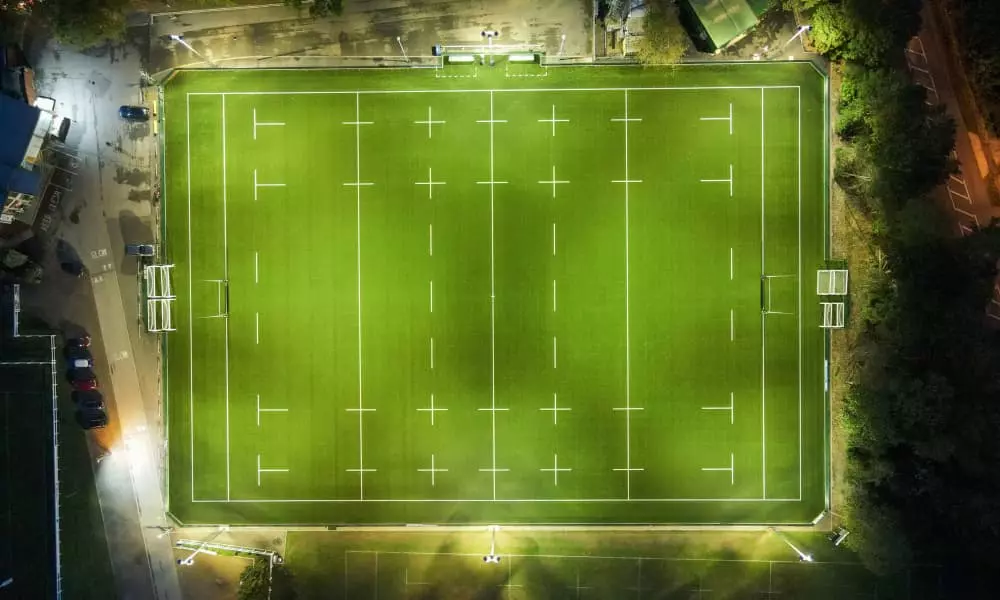
Uniformity is the most critical metric. Poorly designed floodlights create the dreaded "Zebra Effect" (strips of light and shadow across the pitch). This not only ruins the spectator experience but can also hide the ball during play. High-quality optics ensure smooth, consistent light from goal to goal.


Baseball & Softball:
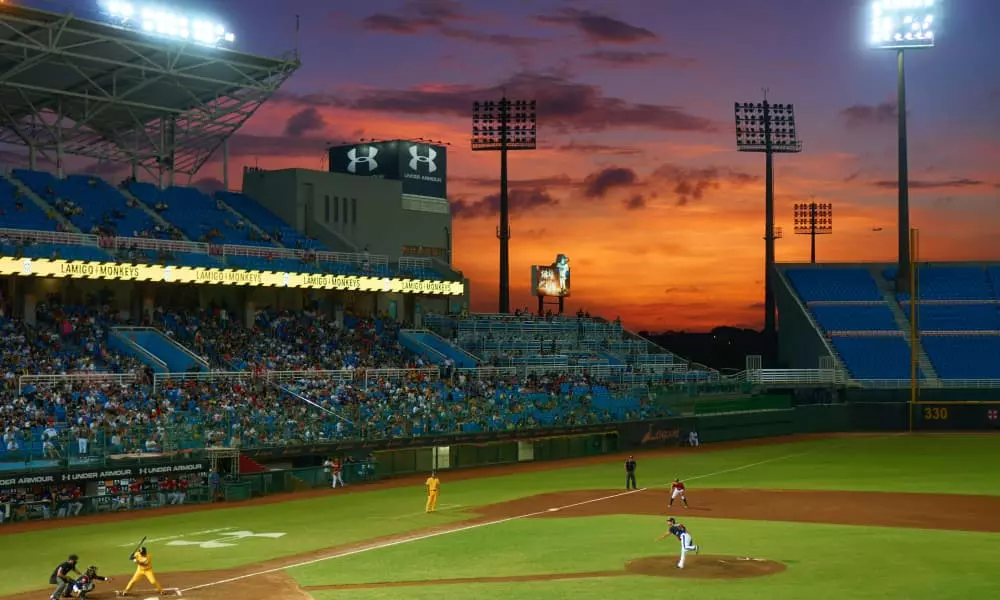
These fields are unique because the lighting needs are not symmetrical. The 
Infield requires significantly higher Lux levels than the Outfield. Why? Because the majority of fast-action plays (pitching, batting, base running) happen in the diamond. The lighting design must prioritize the infield clay to ensure safety while maintaining adequate visibility for outfield fly balls.


Managing a larger venue? Explore our solutions for high-mast led stadium lights.


Solving the "Light Pollution" Headache

For facility managers, the biggest nightmare isn't a power outageit's a lawsuit from the neighbors.


As urban areas become denser, "Light Trespass" (light spilling where it isn't wanted) has become a major legal issue. Whether you are building a backyard court or a municipal field, compliance with DarkSky principles is often mandatory.


To keep your project safe, you need to understand two key metrics:


1. UGR (Unified Glare Rating)

This measures the psychological "discomfort" caused by bright light. A high UGR means players will be squinting. Professional fixtures use deep-recessed chips and special lenses to keep UGR low, ensuring visual comfort.


2. BUG Ratings (Backlight, Uplight, Glare)

This system classifies how much light escapes the fixture.


Backlight: Light spilling behind the pole (into the neighbor's window).

Uplight: Light shooting into the sky (ruining the stars/skyglow).

Glare: High-angle light that blinds observers.


If you are planning residential sport court lighting, choosing a fixture with a "B0" or "U0" rating is critical. It allows you to have a brightly lit court while the area just 10 feet outside the fence remains pitch black.


How to Design Outdoor Sports Lighting Layout? (The Photometric Plan)

Please, do not guess.


We see too many projects fail because contractors simply guessed the number of poles or the wattage needed. Lighting is a science, and it requires a Photometric Plan.


Here is the 4-step professional process we use at Ceramiclite to guarantee results:


第一步:确定场地面积
。精确度至关重要。一个标准网球场的尺寸为 78 英尺 x 36 英尺,但您需要照明多少额外的“溢出”区域?我们测量总比赛区域 (TPA) 以确保安全。


步骤 2:确定用途(等级)
您是举办电视直播比赛(I 级)还是只是进行晚间训练(III 级)?此决定将影响您需要的流明数。


步骤三:立柱放置位置和高度


  • 4 极装置:休闲球场的常见配置(经济型)。

  • 6 极或 8 极设置:为了获得更高的均匀性和减少阴影(专业级)而需要。


注意:较高的灯杆(20 英尺以上)通常比短灯杆能提供更好的均匀性和更少的眩光。


第四步:DIALux 模拟
在购买任何螺栓之前,请务必索取一份 
DIALux 模拟报告。这份报告可以模拟您场地的数字孪生模型,生成光照强度热图,精确展示场地的亮度。


计划新建球场?请查看我们关于匹克球场照明布局的详细指南,以便精确定位灯杆位置。


想了解安装费用吗?阅读更多关于影响匹克球场照明成本 和其他项目费用的因素,以便准确规划您的预算。


向照明供应商询问的 5 个问题

选择照明合作伙伴是一项长达十年的承诺。在签署任何合同之前,请务必询问以下五个关键问题,以区分专业的制造商和普通的经销商。


1.  “你们提供免费的DIALux模拟报告吗?”

切勿凭猜测购买。如果他们无法提供电脑生成的报告,准确显示光线将如何照射到您的田地上,那就放弃购买。


2.  “该灯具是否耐盐水腐蚀?”

如果您的工厂位于沿海地区或潮湿地区,标准铝制外壳会发生氧化。请咨询盐雾测试等级和 IP66 防护等级,以确保其耐用性。


3.  “L70 评级是什么?”

“L70”表示灯具在亮度衰减30%之前可以运行多少小时。廉价灯具的L70可能在10,000小时左右达到。专业灯具的 L70应该在50,000小时以上达到。


4.  “这些灯与无线控制系统兼容吗?”

确保您的场地面向未来。询问驱动器是否兼容 DALI、Zigbee 或其他智能控制系统,以便您可以通过智能手机调暗灯光或设置灯光定时。


5.  “保修范围究竟涵盖哪些内容?”

有些保修只涵盖LED芯片,不包括驱动器(这部分最容易出故障)。务必确保您购买的 保修期为5至10年 ,涵盖零件和人工服务。


结论与行动指南

户外运动照明不再只是简单地在杆子上安装一盏明亮的灯。它需要在 视觉效果、 法规遵从性和 成本效益之间取得战略平衡。


无论您是升级大学体育场还是建造社区匹克球俱乐部,合适的照明系统都能降低您的能源费用并保障球员安全。而错误的照明系统则会导致眩光投诉和维护方面的麻烦。


准备好改造您的场地了吗?


别让您的项目黯然失色。无论是
冠军级足球场还是私人网球场,请立即联系 Ceramiclite。我们的工程师将为您提供 免费的照明设计方案 和定制报价,助您将项目提升至全新高度。


联系我们报价