_thumb.jpg)
How to Design Your Tennis Court Lighting?
Full Guide Here
Tennis is a popular game of precision, speed, and focus—and lighting plays a decisive role in all three. Whether you manage a sports club, a school facility, or a private court, tennis court lighting determines not only how well players perform but also how your venue is perceived.
Google search data shows that terms like “tennis courts with lights near me” are increasingly popular, proving that well-lit courts attract more visitors, members, and night-time games. Upgrading your lighting system can turn your court into a local landmark—a reference point for evening play and professional tournaments alike.
This guide walks you through everything you need to know: what tennis court lighting really means, the standards you must meet, design principles, and key factors before you buy.
Let's dive into how to make your tennis court shine—literally and competitively!

Table of Contents
What is Tennis Court Lighting?
Types of Lights Used for Tennis Court Lighting
Tennis Court Lighting Standards You Should Know
How to Design the Perfect Tennis Court Lighting Layout?
Key Factors to Consider Before Buying Tennis Court Lights
What is Tennis Court Lighting?
Tennis court lighting refers to a professional lighting system designed to illuminate the entire court evenly, ensuring clear visibility for players, referees, and spectators during games or training sessions.
A standard tennis court measures 23.77 m long and 8.23 m wide for singles (10.97 m for doubles), meaning the lighting layout must cover a wide area without creating shadows or glare. The tennis ball moves at speeds exceeding 200 km/h, so consistent brightness and uniformity are essential—players must see the ball clearly at every angle and height. Poor lighting can lead to eye strain, missed shots, and even injuries.
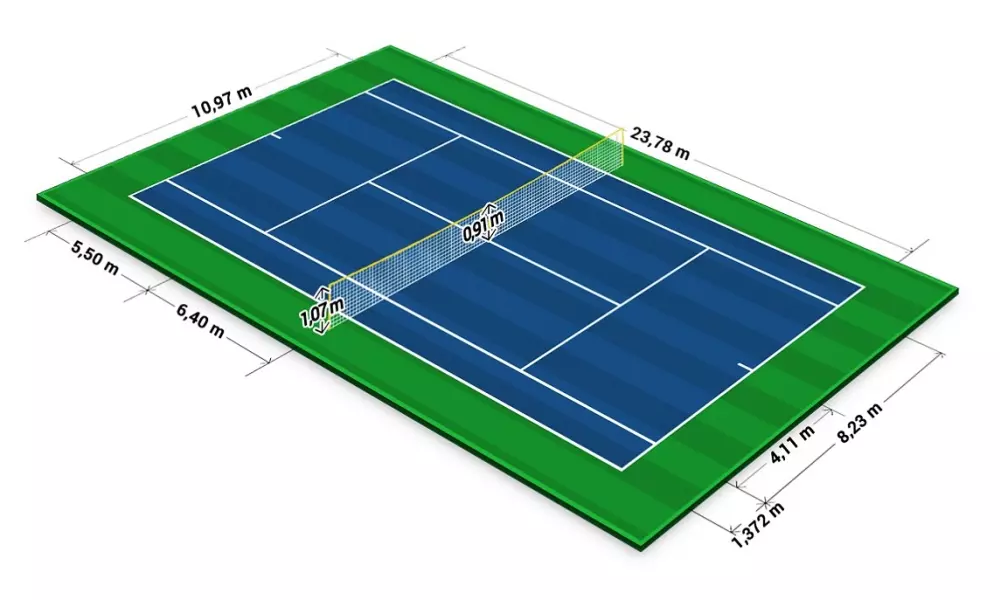
A well-designed lighting system also enhances the audience's viewing experience, both on-site and through live broadcasts, by accurately reproducing the ball's color and movement. Balanced illumination creates a professional, visually comfortable environment that keeps the focus on the game.
In some venues, tennis, padel, and pickleball courts share similar layouts, so choosing flexible and efficient LED lighting becomes even more important—it can adapt to different court types and usage scenarios.
Types of Lights Used for Tennis Court Lighting
Lighting technology has evolved significantly over the years. While older tennis courts relied on traditional lamps, modern facilities now prefer advanced LED systems for better brightness, efficiency, and control.
Understanding each type helps you make the right decision for performance, energy use, and long-term maintenance.
1. Metal Halide Lamps – The Old Standard
For decades, metal halide lamps were the go-to choice for outdoor sports lighting. They deliver bright white light and were once praised for their high intensity. However, they come with several major drawbacks:
l Long warm-up time – they take several minutes to reach full brightness.
l Fast lumen depreciation – light output decreases by 30–40% within the first year.
l High maintenance costs – bulbs need frequent replacement due to shorter lifespans (typically 6,000–10,000 hours).
l Poor energy efficiency – a large portion of energy is wasted as heat.
For these reasons, metal halide lamps are no longer recommended for new tennis court lighting projects. Most sports facilities have transitioned to LED systems for better performance and sustainability.
2. LED Tennis Court Lights – The Modern Upgrade
LED tennis court lights have become the global standard for both indoor and outdoor courts. They offer superior brightness, instant start-up, and consistent illumination even after thousands of hours of use.
Key advantages include:
l High efficiency: Up to 70% less energy consumption than metal halide.
l Long lifespan: Often exceeding 50,000 hours, drastically reducing maintenance.
l Excellent light uniformity: Ensures players see the ball clearly across the entire court.
l Adjustable color temperature: Creates an optimal visual environment between 4000K–5000K.
l Instant on/off: No waiting time or flicker—perfect for clubs and public courts.
l Environmentally friendly: No mercury or UV emissions.
LEDs also allow for smart lighting control, such as dimming, scheduling, and zoning, helping facility managers reduce operational costs and tailor brightness to specific events or practice sessions.
3. High Bay and Modular Lighting Options for Tennis Courts
For large or multi-purpose venues, high bay and modular LED lighting systems are often used. These fixtures are designed for powerful, uniform illumination from high mounting points—ideal for stadiums, training centers, or courts shared with padel or pickleball.
High bay LED lights deliver concentrated brightness with minimal glare, ensuring even coverage without dark spots. Meanwhile, modular LED floodlights provide flexibility in installation and maintenance—individual light modules can be replaced or adjusted without dismantling the entire fixture.
Together, these modern solutions offer durability, precision, and design freedom—making them the preferred choice for today's professional tennis court lighting systems.
Tennis Court Lighting Standards You Should Know
In fact, referees have the authority to suspend or delay matches if lighting levels are below regulation values. Visiting teams may even file complaints if illumination does not meet official standards.
"Canceled" and "postponed" are the two words that those working in the sports industry least want to hear. Therefore, understanding the stadium lighting standards and ensuring that the stadium lighting meets the criteria for international events is of vital importance.
Lighting standards for tennis courts are defined by international bodies such as the International Tennis Federation (ITF) and European Standard EN 12193:2018 – Sports Lighting (official reference here).
1. Lux Levels for Different Court Classes (I–III)
Different levels of tennis competition require different illumination strengths. The higher the level of play and the larger the audience, the higher the lux value needed.
Class | Application | Average Illuminance (Lux) | Uniformity (U1) | Remarks |
Class I | National & International Competitions | 750–1000 Lux | ≥0.7 | Suitable for televised events and professional tournaments |
Class II | Club & Commercial Competitions | 500–750 Lux | ≥0.6 | Used in local clubs and training facilities |
Class III | Residential & Recreational Courts | 300–500 Lux | ≥0.5 | Ideal for community and private backyard courts |
Tip: For multi-use courts that host tennis, padel, or pickleball, always follow the higher-class lighting level to ensure visual comfort and compliance of both tennis and pickleball lighting.
2. Uniformity and Glare Control
Even lighting across the entire court is just as important as brightness. If some areas are darker than others, players may lose sight of the ball or misjudge its speed.
Uniformity of illumination (U1) is defined as minimum illuminance ÷ average illuminance. For professional courts, U1 should be ≥0.7, and for recreational use ≥0.5.
Glare control is measured using the Unified Glare Rating (UGR). A lower UGR value ensures visual comfort and prevents distraction.
Court Type | UGR Requirement |
Training Court | ≤30 |
Competition Court | ≤25 |
HD Broadcast Court | ≤22 |
Proper glare control helps both players and spectators maintain focus, ensuring a safe and pleasant match experience.
3. Color Rendering and Color Temperature
Color quality is another key factor in tennis court lighting.
Color Rendering Index (CRI or Ra): A CRI ≥80 is required to render colors naturally. High-CRI lighting allows players to better track the yellow-green tennis ball and its rotation, and ensures cameras capture accurate visuals.
Color Temperature: The ideal range for tennis court lighting is 4000K–5000K, delivering bright yet comfortable white light that promotes concentration and clarity.
Parameter | Recommended Range | Purpose |
Color Rendering Index (CRI) | ≥80 | True color reproduction |
Color Temperature (CCT) | 4000K–5000K | Crisp daylight-like appearance |
4. Pole Height, Fixture Layout, and IP Rating
Lighting design also depends on physical layout and environmental protection.
l Pole Height: Determines light coverage and shadow reduction.
l Fixture Layout: Should be symmetrical and balanced on both sides of the court.
l IP Rating: Ensures protection against dust and rain, especially for outdoor installations.
Court Type | Typical Pole Height | Fixture Spacing | Recommended IP Rating |
Residential / Community | ≥8 m | 15–18 m | IP65–IP66 |
Training Court | ≥10 m | 15–18 m | IP66 |
Professional Match Court | ≥12 m | 15–18 m | IP66–IP67 |
High-quality fixtures with IP66 or above protect against harsh weather, moisture, and corrosion, ensuring stable long-term performance.
In summary, meeting tennis court lighting standards is not just about compliance—it's about enhancing visibility, performance, and safety. Whether you're lighting a small community court or an international arena, following ITF and EN 12193 guidelines guarantees professional results and player satisfaction.
How to Design the Perfect Tennis Court Lighting Layout?
A professional tennis court lighting layout goes beyond brightness — it’s about precision, comfort, and consistency. A well-designed system ensures players can see every serve and volley clearly without glare or dark spots.
1. Optimal Pole Layout and Mounting Height
The positioning and height of light poles directly determine illumination uniformity and glare levels. A standard tennis court (23.77m × 10.97m) usually requires 4 to 8 poles, depending on the lighting level and type of use.
Court Type | Number of Poles | Mounting Height | Pole Position | Notes |
Residential / Training | 4 | 8–10 m | Two poles on each sideline | Adequate for training and casual play |
Club / Commercial | 6 | 10–12 m | Three poles evenly spaced per side | Better light uniformity |
Professional / Broadcast | 8 | 12–14 m | Four poles per side, placed outside baseline | Meets Class I standards and TV broadcasting needs |
Tip: Avoid placing fixtures directly behind players' lines of sight. A diagonal or offset layout helps minimize glare and improve ball visibility.
2. Brightness and Light Distribution
Uniform brightness across the court surface is key for visibility and performance. To achieve balanced lighting, each pole should project overlapping beams to eliminate dark corners.
Court Class | Average Illuminance (Lux) | Uniformity (Min/Avg) | Suitable Applications |
Class I | 750–1000 lux | ≥0.7 | National & international matches |
Class II | 500–750 lux | ≥0.6 | Club and commercial use |
Class III | 300–500 lux | ≥0.5 | Residential & training play |
Design principle:
For rectangular courts, LED floodlights are usually angled 20°–30° from horizontal, creating even light overlap while preventing glare for players and spectators.
3. Lighting Efficiency and Energy Savings
Modern LED tennis lighting focuses on maximum lumen output per watt. Compared with traditional metal halide lamps, LEDs can cut energy consumption by 60–70% while maintaining consistent brightness.
Lighting Type | Efficacy (lm/W) | Power Consumption | Energy Saving vs MH | Dimming Control |
Metal Halide | 70–90 | High | – | None |
LED Floodlights | 130–180 | Low | 60–70% | Yes (0–10V / DALI / Smart) |
Energy-saving methods:
Use motion sensors or scheduling controls for off-peak hours
Adjust brightness for training vs. competition modes
Choose high-reflectivity coating for poles and surroundings to enhance light utilization
4. Lifespan and Maintenance of LED Fixtures
LED tennis court lights are designed for long-term reliability. Quality fixtures typically last 50,000–100,000 hours, minimizing maintenance interruptions.
Component | LED Lighting | Metal Halide |
Lifespan | 50,000–100,000 hrs | 6,000–10,000 hrs |
Warm-up Time | Instant | 10–15 mins |
Maintenance Frequency | Very low | High |
Failure Mode | Gradual dimming | Sudden outage |
Maintenance tips:
Schedule annual inspections for lens cleaning and electrical safety
Choose fixtures with modular designs for easier part replacement
Ensure IP66 protection to resist rain and dust
A professional tennis court lighting layout harmonizes technical design and human comfort. By balancing pole height, beam angles, and light distribution, you ensure compliance with standards while optimizing energy use and player experience.
Key Factors to Consider Before Buying Tennis Court Lights
Choosing the right lighting system can make or break your tennis court experience. Before investing, it's essential to understand the following factors that really matter:
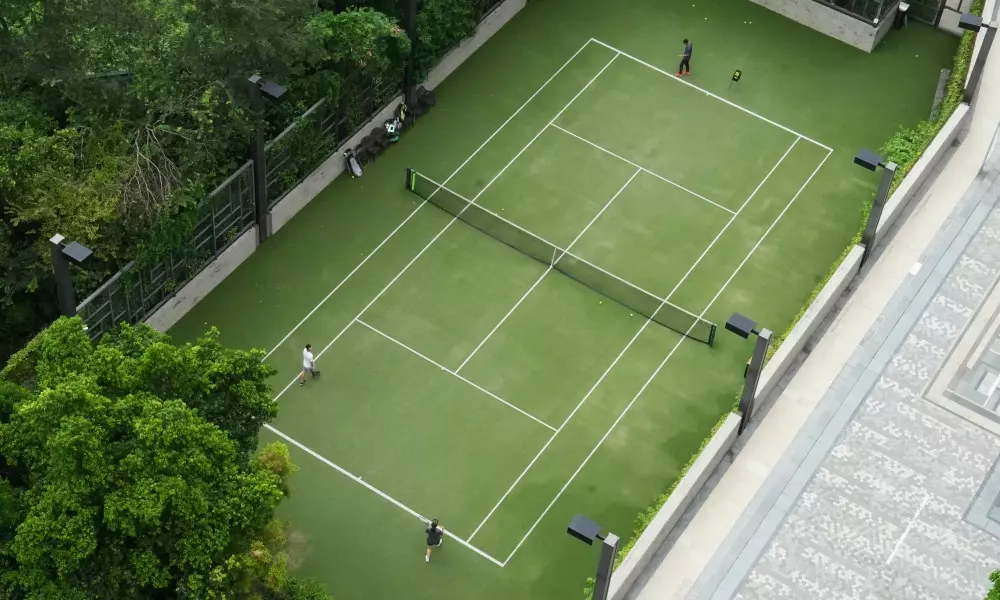
(1) Waterproof and Weather Resistance
Outdoor tennis courts face constant exposure to rain, dust, and temperature changes. Make sure your lights have a minimum IP65 rating, or ideally IP66, which protects against water jets and fine dust. This ensures your lights perform reliably in all weather conditions and reduces the risk of corrosion or short circuits over time.
(2) High Luminous Efficiency
Luminous efficiency tells you how much light is produced per watt of power. For tennis courts, aim for fixtures with 130–180 lm/W efficiency. High-efficiency LEDs provide strong illumination while saving energy, helping you cut down long-term electricity costs without sacrificing visibility.
(3) Adjustable Color Temperature
Different environments and match levels benefit from different lighting tones. A color temperature between 4000K and 5000K offers a clean, daylight-like appearance ideal for both players and spectators. Some advanced LED systems also allow adjustable color temperature, letting you switch between cool and warm tones depending on the time of day or event type.
(4) Anti-Glare and Visual Comfort
Чрезмерное бликование — одна из самых больших проблем в спортивном освещении. Ищите светильники с антибликовыми линзами или защитными козырьками, которые точно направляют свет на площадку. Правильный контроль бликов гарантирует, что игроки смогут легко отслеживать быстро движущиеся мячи, а зрители смогут наблюдать за игрой без дискомфорта — особенно во время трансляций матчей по телевидению.
(5) Рассеивание тепла и долговечность
Длительная работа требует от ваших светильников превосходного теплоотвода. Выбирайте светильники с литыми алюминиевыми корпусами и встроенными радиаторами для эффективного рассеивания тепла. Это предотвращает перегрев светодиодных чипов и драйверов, продлевая срок их службы и поддерживая стабильную яркость на протяжении многих лет эксплуатации.
(6) Равномерный световой поток
Равномерное освещение имеет решающее значение — темные пятна или слишком яркие зоны влияют как на игровой процесс, так и на безопасность. Отдавайте предпочтение светильникам с высокой равномерностью светового луча (U1 ≥ 0,7) и высокоточной оптикой, которая равномерно распределяет свет по всей площадке. Постоянное освещение помогает игрокам сохранять концентрацию и показывать лучшие результаты независимо от их положения на площадке.
(7) Простая установка и модульная конструкция
Современные светодиодные светильники для теннисных кортов часто имеют модульную конструкцию, что делает их легче, проще в установке и обслуживании. Такая конструкция позволяет при необходимости заменять отдельные модули, а не весь светильник целиком, экономя время и средства при техническом обслуживании или модернизации.
(8) Гарантия и послепродажная поддержка
Наконец, не стоит упускать из виду гарантию. Надежный производитель должен предлагать как минимум 5-летнюю гарантию, покрывающую светодиодные чипы, блоки питания и корпуса. Качественное послепродажное обслуживание гарантирует оперативную поддержку при замене или технической помощи, поддерживая ваше освещение корта в отличном состоянии на долгие годы.
Разработанное для многофункциональных спортивных площадок, покрытие CeramicLite Спортивные светильники имеют степень защиты IP66, прочность IK08/IK10 и отлично работают в условиях окружающей среды от -40°C до +45°C. На них распространяется гарантия 5/8/10 лет и срок службы 51 000/102 000 часов, что обеспечивает первоклассное освещение теннисных кортов, в том числе для пиклбола и тенниса.
Заключение
Современные светодиодные светильники для теннисных кортов отличаются высокой эффективностью, равномерной яркостью и длительным сроком службы, что делает их идеальным решением для кортов любого уровня — от частных до международных турниров.
При проектировании системы освещения помните о необходимости сбалансировать высоту опор, расположение и направление светового луча для обеспечения равномерного освещения и комфорта игроков. А при выборе светильников уделите особое внимание защите от непогоды, теплоотводу, антибликовому покрытию и надежной послепродажной поддержке — именно это гарантирует долгосрочную работу и безопасность.
Короче говоря, хорошо спланированная светодиодная система освещения превращает обычную площадку в профессиональное и приятное пространство как для игроков, так и для зрителей.
Готовы обновить освещение на теннисном корте?
Свяжитесь с нами сегодня, чтобы получить индивидуальное решение по спортивному освещению, разработанное с учетом размеров, стандартов и бюджета вашего объекта.

Продаются светильники для теннисных кортов.
(1) Светодиодный прожектор SL03 – высокоэффективный для теннисных кортов
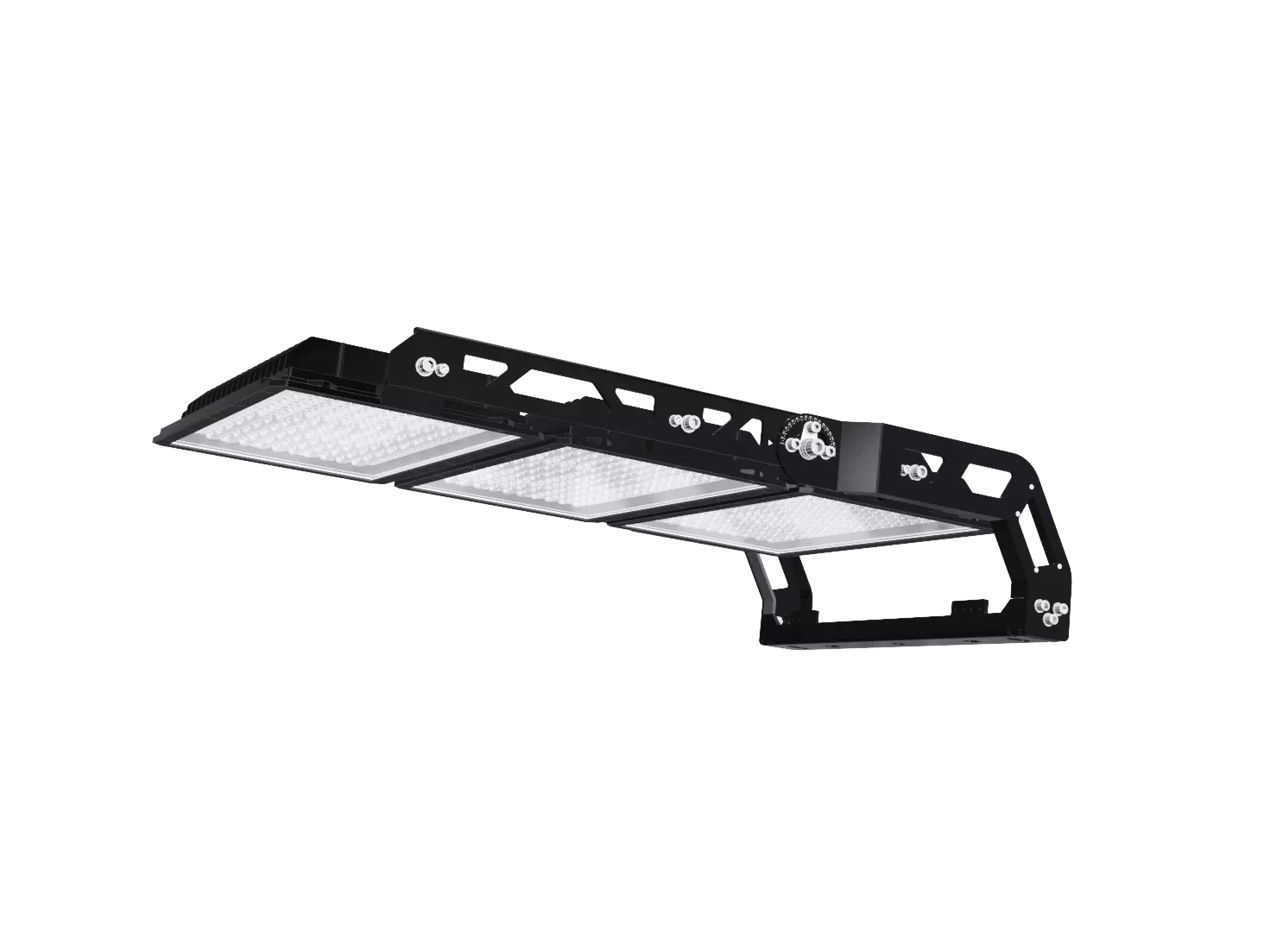
Длительный срок службы : L80B10 102 000 часов при 45°C, 10-летняя гарантия.
Чёткое изображение : TLCI 90/CRI 90, идеально подходит для трансляций теннисных матчей в формате HD.
Высокая прочность для использования на открытом воздухе : степень защиты IP66, класс IK08, коррозионная стойкость C4, защита от перенапряжения 20 кВ.
Умное и простое в использовании : управление по протоколу DALI 2.0, модульная конструкция, малый вес (простая установка).
Энергосбережение : потребление энергии до 60% ниже по сравнению с традиционным освещением для теннисных кортов.

(2) Светодиодный прожектор SL04 – идеальная замена ксеноновых ламп для теннисных клубов
.webp "sl04 светодиодный стадионный светильник") Для теннисных клубов, переходящих с газоразрядных/металлогалогенных систем.
Для теннисных клубов, переходящих с газоразрядных/металлогалогенных систем.
Подключение и использование : Простая замена ксеноновых фар, без существенной переделки проводки.
Долговечность : керамический светодиод + плоская конструкция для отвода тепла, степень защиты IP66/IK08, 10-летняя гарантия.
Удобное для тенниса управление : многопротокольное затемнение, антибликовые экраны (уменьшают блики на корте), низкий уровень рассеивания света.
Экономичность : снижение затрат на рабочую силу и материалы, регулируемая мощность 3 в 1 (подходит для кортов разных размеров).