_thumb.jpg)
Beleuchtungsleitfaden für Cricketstadien 2026: Standards, Layout & Kosten
Cricket ist eine Sportart, die sich durch extreme Geschwindigkeit, höchste Präzision und riesige, offene Flächen auszeichnet. Da der relativ kleine Ball Geschwindigkeiten von über 150 km/h erreicht, gilt die Beleuchtung von Cricketstadien als eine der anspruchsvollsten Anwendungen in der gesamten Sportbeleuchtungsbranche.
Bei einem Spiel, in dem blitzschnelle Reaktionen entscheidend sind, geht es bei der Beleuchtung weit mehr als nur darum, den Rasen auszuleuchten. Sie ist eine unverzichtbare Infrastruktur, die die Sicherheit der Schlagmänner und Feldspieler gewährleistet, Tausenden von Zuschauern vor Ort unvergleichlichen Sehkomfort bietet und flimmerfreie, fehlerfreie Zeitlupenwiederholungen für HD-Fernsehübertragungen sicherstellt.
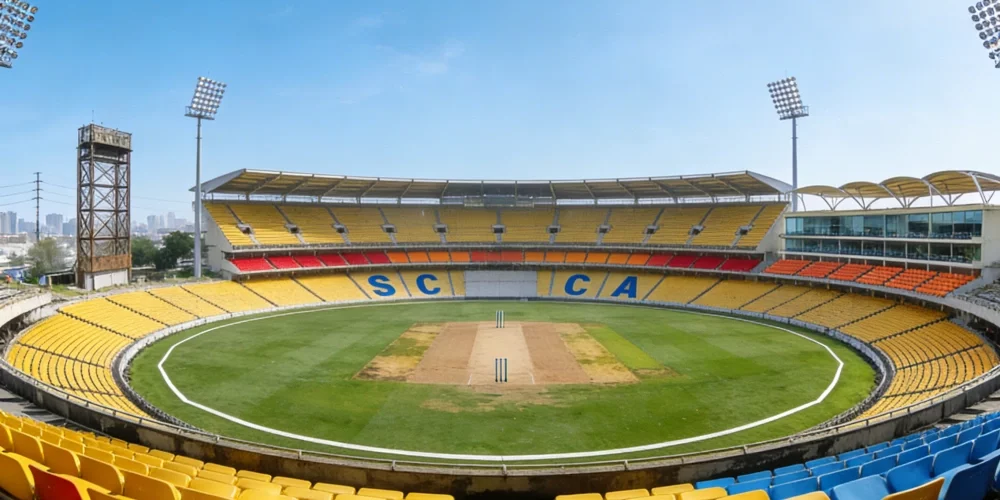
Ob Sie einen lokalen Cricketclub modernisieren oder eine internationale Weltklasse-Arena bauen – die richtige Lichtplanung ist von entscheidender Bedeutung. In diesem umfassenden Leitfaden führen wir Sie durch alle wichtigen Aspekte professioneller Cricket-Beleuchtung – von den Spielfeldabmessungen und den strengen ICC-Standards über die Mastaufstellung und Kostenkalkulation bis hin zur Auswahl der optimalen LED-Flutlichtstrahler für Ihr Projekt.
Inhaltsverzeichnis
Abmessungen des Cricketfelds und des Stadions
ICC Cricket Ground Lighting Standards
Beleuchtungskonzept für Cricketfelder & Mastdesign
Warum auf LED-Cricket-Flutlichter umsteigen?
Wie wählt man die besten LED-Leuchten für Cricketstadien aus?
Was kostet die Flutlichtanlage eines Cricketplatzes?
Ceramiclite: Ihr führender Anbieter von Beleuchtungslösungen für Cricketplätze
Abmessungen des Cricketfelds und des Stadions
Bevor die erforderlichen Lux-Werte berechnet oder die Standorte der Masten geplant werden können, muss ein professioneller Lichtplaner den exakten Beleuchtungsbereich definieren. Ohne das Verständnis der einzigartigen, nicht-rechteckigen Geometrie eines Cricketfelds lässt sich keine einwandfreie Beleuchtungslösung entwerfen.
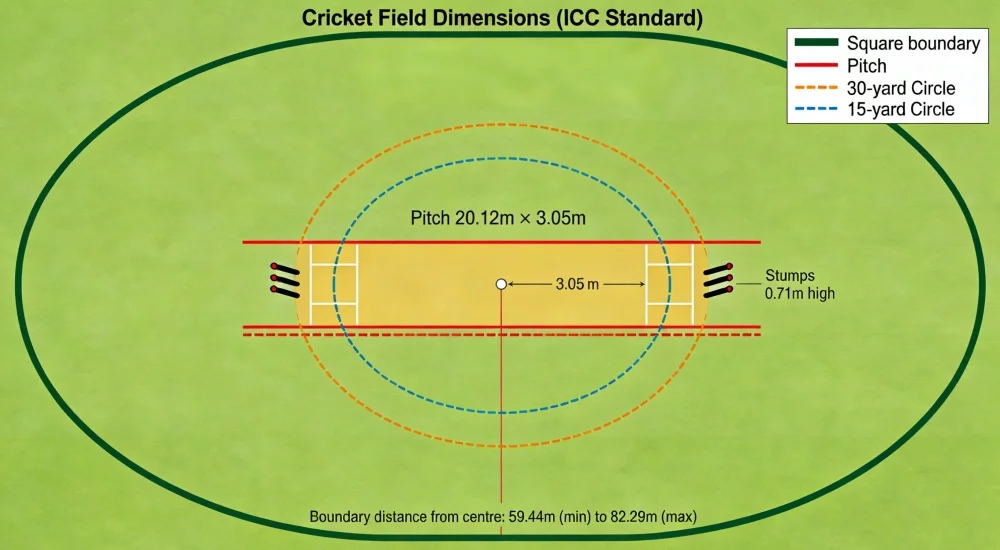
Zur schnellen Orientierung hier die offiziellen ICC-Abmessungen, die die Feldlayouts vorschreiben:
Abmessungen internationaler Cricketstadien (ICC-Standard, m/yd/ft)
Veranstaltungsortkategorie | Spezifischer Artikel | Meter (m) | Yard (yd) | Fuß (ft) |
Kernspiel | Steigungslänge | 20.12 | 22 | 66 |
Teilungsbreite | 3.05 | 3.33 | 10 | |
Baumstumpfhöhe | 0,71 | 0,78 | 28 (Zoll) | |
Baumstumpfbreite | 0,23 | 0,25 | 9 (Zoll) | |
Bowling-Winkelbreite | 2,64 | 2,89 | 8,67 | |
Internationales Spiel der Männer | Mindestquadratischer Rand ( Radius) | ≥59,44 | ≥65 | ≥195 |
Mindestens gerade Begrenzung (Radius) | ≥64,01 | ≥70 | ≥210 | |
Maximaler Abstand zur Grenze ( Radius) | ≤82,29 | ≤90 | ≤270 | |
Gesamtfelddurchmesser (ca.) | 137 - 164 | 150 - 180 | 450 - 540 | |
Sicherheitszone mit Begrenzungsseil | ≥2,74 | ≥3 | ≥9 | |
Internationales Frauenspiel | ||||
Mindestquadratischer Rand ( Radius) | ≥50,29 | ≥55 | ≥165 | |
Mindestens gerade Begrenzung (Radius) | ≥59,44 | ≥65 | ≥195 | |
Maximaler Abstand zur Grenze ( Radius) | ≤59,44 | ≤65 | ≤195 | |
Gesamtfelddurchmesser (ca.) | 100 - 118 | 110 - 130 | 330 - 390 | |
Veranstaltungskreise (Universal) | 30-Yard-Kreisradius | 27,43 | 30 | 90 |
15-Yard-Kreisradius | 13,72 | 15 | 45 |
Wie beeinflussen diese Abmessungen die Lichtplanung?
Die Zahlen zu haben, ist nur die halbe Miete. Bei der Beleuchtungsplanung von Cricketstadien erfordern unterschiedliche Zonen völlig unterschiedliche photometrische Ansätze.
So übersetzen Ingenieure die oben genannten Maße in eine umsetzbare Beleuchtungsstrategie:
Der Fokus (Spielfeld = Lux-Basislinie) : Auf dem 20,12 m großen zentralen Spielfeld finden die schnellsten und gefährlichsten Aktionen statt. Daher dient das Spielfeld als Basislinie für alle Berechnungen und erfordert die absolut höchste horizontale und vertikale Beleuchtungsstärke im Stadion, um eine reibungslose Projektilverfolgung zu gewährleisten.
Der Beleuchtungsbereich (Grenzen = Leistung & Höhe) : Der Abstand von der Mitte bis zum Begrenzungsseil (typischerweise bis zu 82,29 m) definiert den Beleuchtungsbereich. Diese große Fläche bestimmt direkt die erforderliche Höhe der Masten und die Gesamtleistung des Systems , um eine gleichmäßige Ausleuchtung bis an die äußersten Ränder zu gewährleisten.
Die Details (Falten = Blendungsbegrenzung) : Markierungen wie die Bowling- und Popping-Linien zeigen genau an, wohin die Spieler blicken. Dies sind die entscheidenden Bezugspunkte für eine präzise Lichtverteilung und strikte Blendungsbegrenzung . Die Strahlwinkel müssen hier sorgfältig eingestellt werden, um den Schlagmann oder Werfer nicht zu blenden.
Die Zoneneinteilung (Kreise = Einheitlichkeit) : Die Kreise im 30-Yard- und 15-Yard-Bereich sind für eine einheitliche Beleuchtung und gestaffelte Lichteffekte unerlässlich . Sie ermöglichen es den Ingenieuren, sanfte Helligkeitsverläufe zu erzeugen – von der intensiven Helligkeit des Spielfelds über den Übergang durch das Infield bis hin zum breiteren Outfield ohne dunkle Stellen.
Die Variablen (Indoor vs. Outdoor) : Designs sollten niemals einfach kopiert werden. Während Frauenspiele eine kompaktere Spielfeldplanung erfordern, ist die Art des Spielorts die größte Variable. Cricket-Hallenplätze (typischerweise 30 m x 12 m, mit Netzen umzäunt) verzichten vollständig auf Hochmastmasten. Stattdessen werden deckenmontierte LED-Leisten oder Hallenstrahler eingesetzt, wodurch sich der Fokus des Designs von der Fernprojektion auf die Reduzierung von Blendung im Nahbereich verlagert.
ICC Cricket Ground Lighting Standards
Da ein Cricketball klein und dunkel (rot oder weiß) ist und extrem hohe Geschwindigkeiten erreicht, hat der Internationale Cricket-Rat (ICC) äußerst strenge Beleuchtungsvorschriften festgelegt. Ob im Stadion im Freien oder in der Trainingshalle – die Einhaltung dieser Beleuchtungsstärken ist für die Sicherheit der Spieler und die Fairness des Spiels unerlässlich.
Beleuchtungsmasten für Cricketfelder im Freien
Für Freiluftarenen werden die Beleuchtungsanforderungen je nach Wettkampfniveau kategorisiert. Die wichtigsten Kennzahlen sind die horizontale Beleuchtungsstärke (Licht, das auf den Boden fällt), die vertikale Beleuchtungsstärke (Licht, das auf den Ball in der Luft/die Gesichter der Spieler trifft) und die Gleichmäßigkeit (U0) (wie gleichmäßig das Licht verteilt ist, um dunkle Bereiche zu vermeiden).
Hier ist eine Kurzübersichtstabelle für die Beleuchtungsstandards von Cricketstadien im Freien:
Spielniveau | Anwendungsszenario | Horizontale Beleuchtungsstärke (Lux) | Vertikale Beleuchtungsstärke (Lux) | Gleichmäßigkeit (U0) |
Klasse I | Internationale Spiele / HDTV-Übertragung | 1500 - 2500 Lux (Spielfeld) <br> 1000 - 1500 Lux (Außenfeld) | 1500 - 2500 Lux | > 0,8 |
Klasse II | Nationale / Top-Liga-Vereinsspiele | 500–750 Lux (Spielfeld) <br> 300–500 Lux (Außenfeld) | 500 - 750 Lux | > 0,7 |
Klasse III | Gemeinschaft / Freizeit / Training | 300–500 Lux (Spielfeld) <br> 200–300 Lux (Außenfeld) | Nicht zutreffend (Allgemeine Beleuchtung) | > 0,5 |
(Anmerkung: Bei HDTV-Übertragungen ist die vertikale Beleuchtungsstärke der entscheidendste Faktor.)
Kameras benötigen intensives, gleichmäßiges Licht, das die Spieler und den Ball aus allen Winkeln trifft, um 4K-HD-Aufnahmen ohne Schatten zu machen.
Beleuchtungsmasten für Indoor-Cricketnetze und Übungsplätze
Während Freiluftstadien mit weitem, dunklem Himmel zu kämpfen haben, stehen Indoor-Cricketanlagen vor einer anderen Herausforderung: beengten Räumen und stark reflektierenden Oberflächen.
Für die Beleuchtung von Cricket- Trainingsnetzen und -Plätzen in Hallen empfiehlt der ICC im Allgemeinen eine konstante horizontale Beleuchtungsstärke von 500 bis 750 Lux . Die reine Lux-Zahl allein reicht jedoch nicht aus. Da die Lampen in einem geschlossenen Raum nahe an den Spielern installiert sind, muss die Beleuchtung über eine herausragende Blendschutztechnologie verfügen . Wird das Licht von Wänden oder polierten Böden reflektiert, kann dies den Schlagmann, der im Training einem schnellen Bowler gegenübersteht, kurzzeitig blenden.
Beleuchtungskonzept für Cricketfelder & Mastdesign
Das Verständnis der Normen ist nur die halbe Miete. Die Art und Weise, wie Sie die Leuchten um das riesige Oval herum positionieren, entscheidet über den Erfolg des Projekts.
Höhe der Flutlichtmasten im Cricketstadion
Eine der am häufigsten gestellten Fragen von Bauunternehmern betrifft die Höhe der Flutlichtmasten in Cricketstadien .
Bei genauer Betrachtung fällt auf, dass die Flutlichtmasten bei Cricketstadien deutlich höher sind als die in Fußball- oder Tennisstadien – typischerweise zwischen 30 und 45 Metern (100 bis 150 Fuß) und manchmal sogar noch höher bei internationalen Arenen.
Warum müssen sie so hoch sein?
a. Vermeidung von „Verlorensein im Scheinwerferlicht“ : Im Cricket schlagen Schlagmänner oft hohe Bälle. Sind die Pfosten zu kurz, kreuzt die Flugbahn des Balls direkt vor der blendenden Lichtquelle, sodass die Feldspieler ihn nicht fangen können.
b. Reduzierung der direkten Blendung : Höhere Masten ermöglichen es, die Flutlichtstrahler in einem steileren Winkel nach unten auszurichten. Dadurch wird verhindert, dass das intensive Licht die direkte Sichtlinie des Schlagmanns beeinträchtigt, wenn er den Werfer über das Spielfeld hinweg ansieht.
Gängige Layoutkonfigurationen
Die Anordnung der Masten entlang der Begrenzung ist entscheidend für die Vermeidung von Schatten. (Tipp: Fragen Sie vor der Installation immer Ihren Leuchtenhersteller nach einer DIALux-Simulation.)
Ø 4-Mast-Anordnung : Die gängigste und kostengünstigste Bauweise für Sportplätze von Vereinen und Gemeinden. Vier hohe Masten werden diagonal außerhalb der Spielfeldbegrenzung aufgestellt, sodass die Sichtlinien hinter Bowler und Batsman vollständig frei von Masten bleiben.
Ø 6-Pfosten-Layout : Der Standard für Profi- und TV-Übertragungsstadien. Durch das Hinzufügen von zwei zusätzlichen Pfosten auf jeder Seite des Spielfelds wird eine optimale Gleichmäßigkeit erreicht und Spielerschatten aus verschiedenen Kamerawinkeln vollständig eliminiert.
Ringbeleuchtung : Wird in riesigen , geschlossenen Stadien (wie dem MCG) eingesetzt. Anstelle von Masten werden Hunderte von Flutlichtern durchgehend entlang des inneren Randes des Stadiondachs montiert, wodurch eine völlig schattenfreie, theatralische Lichtwirkung entsteht.
Wie viele Flutlichter werden in einem Cricketstadion verwendet?
Die genaue Anzahl hängt vollständig von der Größe des Stadions, der angestrebten Beleuchtungsstärke und der Lichtausbeute der Leuchten ab. Anstatt standardmäßige 1000-Watt-Modelle zu verwenden, setzen professionelle Lichtplaner auf präzise Wattstufen, um das Gewicht der Masten und den Stromverbrauch zu optimieren.
Anhand der hocheffizienten LED-Flutlichtserie von Ceramiclite als Vergleichsmaßstab ergibt sich folgende grobe Schätzung:
Für eine Gemeinschaftsbeleuchtung der Klasse III (300 Lux) : Sie benötigen keine großen Leuchten. Mit 30 bis 50 Leuchten des Typs Ceramiclite SL06 (680 W oder 900 W) oder SL03 (850 W), die in einer 4-Mast-Anordnung verteilt sind, erzielen Sie eine helle und gleichmäßige Ausleuchtung für lokale Spiele.
Für ein internationales TV-Übertragungsstadion der Klasse I (über 2000 Lux) : Die Anforderungen steigen drastisch. Um die vertikalen Lux-Standards für HD-Übertragungen zu erfüllen, benötigt eine 6-Mast- oder Ringanordnung möglicherweise 250 bis über 400 Hochleistungsscheinwerfer . In diesem Fall reduziert der Einsatz von Ultra-Hochleistungsmodulen wie dem Ceramiclite SL03 (1700 W, 2100 W oder sogar 2550 W) die Gesamtzahl der benötigten Scheinwerfer erheblich, verringert die Windlast auf die Masten und sorgt gleichzeitig für eine massive Ausleuchtung.
Warum auf LED-Cricket-Flutlichter umsteigen?
Jahrzehntelang waren Metallhalogenlampen (HID-Lampen) der Standard für Sportstadionbeleuchtung. Heute sind sie völlig überholt. Die Umrüstung Ihres Stadions auf LED-Beleuchtung ist nicht mehr nur eine umweltfreundliche Entscheidung, sondern ein unerlässlicher Technologiesprung für optimale Leistung, Fernsehübertragung und wirtschaftliches Überleben.
Leistungs- und Nutzungsvorteile
² Sofortiges Ein-/Ausschalten (keine Aufwärmzeit erforderlich) : Herkömmliche HID-Lampen benötigen 15 bis 30 Minuten, um ihre volle Helligkeit zu erreichen. Schlimmer noch: Bei einem kurzen Stromausfall benötigen sie eine lange Abkühlphase, bevor sie wieder leuchten – was unter Umständen zu Spielabbrüchen führen kann. LED-Fluter hingegen leuchten sofort mit 100 % Helligkeit.
² Flimmerfrei für HDTV : Moderne Sportübertragungen sind stark auf Ultra-Zeitlupenwiederholungen angewiesen. HID-Lampen flimmern naturgemäß und verursachen dadurch sichtbare Streifenbildung bei HD-Kameras. Hochwertige LEDs sind hingegen absolut flimmerfrei und ermöglichen so nahtlose 4K- und 8K-Übertragungen.
² Überragende Lichtqualität (Hoher CRI) : Mit einem Farbwiedergabeindex (CRI) von über 80 oder 90 geben die LED-Leuchten das wahre, lebendige Grün des Grases und die exakten Farben der Teamtrikots wieder und verbessern so das Seherlebnis erheblich.
² Intelligente Dimmung und Steuerung : LED-Systeme lassen sich problemlos in DALI- oder DMX-Steuerungssysteme integrieren. So können Stadionbetreiber die Beleuchtung während der Trainingseinheiten dimmen, um Energie zu sparen, oder spektakuläre Lichtshows vor dem Spiel programmieren, die mit HID-Lampen nicht möglich wären.
Wie viel können Sie durch den Umstieg auf LED sparen?
Neben der unübertroffenen Leistung ist der finanzielle ROI (Return on Investment) von LED enorm:
² 70 % Energieeinsparung : Ein hochwertiger 1000-W-LED-Fluter kann eine 2000- bis 2500-W-Metallhalogenlampe problemlos ersetzen und liefert dabei helleres Licht. In einem Stadion mit Hunderten von Scheinwerfern reduziert dies die Stromkosten um etwa 70 %.
² Keine Wartungskosten : HID-Lampen verlieren schnell an Leuchtkraft (Lichtstromverlust) und brennen typischerweise nach nur 10.000 Stunden durch. Für den Austausch müssen teure, schwere Kräne gemietet werden, um die 40 Meter hohen Masten zu erreichen. Moderne LED-Leuchten hingegen weisen eine Lebensdauer von 80.000 bis 100.000 Stunden auf . Nach der Installation müssen Sie die Lampe voraussichtlich 20 Jahre lang nicht mehr wechseln.
Wie wählt man die besten LED-Leuchten für Cricketstadien aus?
Bei der Auswahl der richtigen Flutlichtanlage für ein Cricketstadion geht es um weit mehr als nur um Wattzahl und Preis. Da diese Leuchten in 30 bis 45 Metern Höhe montiert sind und rauen Umgebungsbedingungen ausgesetzt sind, müssen sie anhand strenger technischer Kriterien bewertet werden.
Hier sind die wichtigsten Faktoren, die Sie vor dem Kauf berücksichtigen sollten:
² Fortschrittliches Blendschutzsystem : Wie bereits erwähnt, ist ein Cricketball klein und schnell. Wird der Schlagmann beim Blick nach oben von grellem LED-Licht geblendet, ist die Beleuchtungsanlage ungeeignet. Hochwertige Leuchten müssen daher über spezielle optische Linsen und Blenden (Streulichtschutz) verfügen , um den Lichtstrahl präzise auf das Spielfeld zu lenken und gleichzeitig die Augen der Spieler zu schützen.
² Überlegene Wärmeableitung : Hitze ist der größte Feind von LED-Chips. Für extrem leistungsstarke Leuchten (z. B. 1700 W oder über 2000 W) reichen herkömmliche Aluminium-Kühlkörper nicht aus. Achten Sie auf fortschrittliche aerodynamische Designs oder modulare Wärmeableitungssysteme, die die Wärme schnell vom Kern abführen und so die Lebensdauer der Leuchte von über 80.000 Stunden ohne nennenswerten Lichtstromverlust gewährleisten.
² Hurrikan- und Korrosionsbeständigkeit : Viele bekannte Cricketplätze liegen in offenen Gebieten oder in Küstennähe (z. B. in der Karibik, Großbritannien oder Australien). Ihre Beleuchtung muss wasserdicht gemäß IP66 oder IP67 sein , über ein aerodynamisches Design verfügen, um hohen Hurrikanwinden standzuhalten, und korrosionsbeständige Oberflächenbehandlungen besitzen, um Salznebel und Feuchtigkeit zu widerstehen.
² Robuster Überspannungsschutz : Hohe Metallmasten ziehen Blitzeinschläge magisch an. Hochwertige Stadionbeleuchtungen müssen mit integrierten 10-kV- oder 20-kV-Überspannungsschutzgeräten ausgestattet sein , um die empfindlichen LED-Treiber vor plötzlichen Spannungsspitzen bei Gewittern zu schützen.
² CRI und CCT : Um die ICC-Rundfunkstandards zu erfüllen und ein angenehmes Seherlebnis zu gewährleisten, sollte der Farbwiedergabeindex (CRI) > 80 (bzw. > 90 für 4K-Fernseher) betragen. Die Farbtemperatur (CCT) sollte idealerweise zwischen 5000 K und 5700 K liegen , um natürliches Tageslicht optimal nachzubilden.
Was kostet die Flutlichtanlage eines Cricketplatzes?
Für jeden Stadionbesitzer oder Bauunternehmer ist es entscheidend, das Budget zu verstehen. Bei der Kostenkalkulation für die Flutlichtanlage eines Cricketstadions muss das Budget in zwei Hauptkategorien unterteilt werden: die anfänglichen Anschaffungskosten der Leuchten und die langfristigen Installations- und Wartungskosten.
Kosten der Beleuchtungsanlage : Der Preis variiert je nach Stadionklasse erheblich.
Die Modernisierung eines kleinen Übungsplatzes in der Gemeinde könnte allein für die LED-Leuchten Kosten zwischen 8.000 und 20.000 US-Dollar verursachen.
Für einen Club der mittleren Kategorie, der eine 6-polige Beleuchtungsanordnung (ca. 500-750 Lux) benötigt, kann das Budget für die Beleuchtung je nach gewählter Wattzahl und Steuerungssystemen (DALI/DMX) zwischen 30.000 und 70.000 US-Dollar liegen.
Internationale Stadien der Klasse I erfordern Investitionen in Millionenhöhe für die komplette Modernisierung der Beleuchtung und der baulichen Anlagen.
Installations- und Mastkosten: Unterschätzen Sie niemals die Installationskosten. Das Mieten von riesigen Kränen, die Verstärkung der Betonfundamente für 40 Meter hohe Masten und die Beauftragung von spezialisierten Höhenelektrikern kosten oft genauso viel – oder sogar mehr – als die Leuchten selbst.
Genau deshalb sollten Sie in extrem langlebige und wartungsfreie LED-Leuchten investieren. Wenn Sie anfangs etwas mehr für hochwertige Leuchten ausgeben, sparen Sie später Zehntausende von Euro an Reparaturkosten.
Ceramiclite: Ihr führender Anbieter von Beleuchtungslösungen für Cricketplätze
Bei CeramicliteWir stellen nicht nur Leuchten her, sondern liefern komplette Beleuchtungslösungen für Cricketfelder aus einer Hand. Wir wissen, dass jedes Spielfeld einzigartig ist, und unser Ingenieurteam begleitet Sie engagiert vom ersten Entwurf bis zur finalen Inbetriebnahme.
Unsere umfassende Beleuchtungslösung
1. Analyse der Stellfläche und des Layouts : Wir bewerten Ihre Grundstücksabmessungen und die vorhandene Mastinfrastruktur.
2. Anpassung an die Beleuchtungsstandards : Wir passen das Design an Ihre spezifischen ICC- oder lokalen Club-Lux-Anforderungen an.
3. Kostenlose DIALux-Simulation & -Optimierung : Unsere Optikexperten bieten Ihnen eine kostenlose, hochpräzise 3D-DIALux-Lichtsimulation . Sie sehen die exakten Lux-Werte, die Gleichmäßigkeit (U0) und die Falschfarbendarstellung, bevor Sie auch nur einen Cent ausgeben.
4. Erstklassiger Kundendienst : Wir stehen mit umfassenden Garantien und technischem Support hinter unseren Produkten.
Ceramiclite LED-Flutlichtserie für Cricket
Unsere Produktpalette ist speziell darauf ausgelegt, jede Herausforderung im Bereich der Cricket-Beleuchtung zu meistern und zeichnet sich durch modulare Designs, hervorragende Wärmeableitung und robuste, korrosionsbeständige Oberflächen aus.
l SL03-Serie (Hochleistungs-Stadionbeleuchtung) : Die ultimative Lösung für große Arenen und HDTV-Übertragungen. Erhältlich in leistungsstarken Konfigurationen von 600 W bis hin zu beeindruckenden 2550 W (600 W/700 W/850 W; 1200 W/1400 W/1700 W; 1800 W/2100 W/2550 W).
l SL05-Serie (Übungs- und Innenbeleuchtung) : Kompakt und hocheffizient (Erhältlich in 200W, 400W und 600W ), wodurch sie sich ideal für die Beleuchtung von Cricketnetzen in Innenräumen oder kleinen Übungsplätzen im Freien eignen.
SL06 -Serie (Professionelle Clubbeleuchtung) : Die perfekte Balance aus Leistung und Effizienz für Standard-Cricketplätze. Erhältlich in 680 W, 900 W und 1200 W.
Professionelles Zubehör im Lieferumfang enthalten:
Um eine präzise Installation und maximale Sicherheit zu gewährleisten, können unsere Stadionflutlichter mit professionellem Zubehör ausgestattet werden, darunter:
ü Laserpointer : Zum punktgenauen Ausrichten des Lichtstrahls aus 40 Metern Höhe.
ü Visier : Um Streulicht zu unterbinden und die Blendung für den Schlagmann drastisch zu reduzieren.
Sicherheitskette : Eine obligatorische Sicherheitsvorrichtung für Hochmastinstallationen, die verhindert, dass die Anlage bei extremen Wetterbedingungen herunterfällt .
Bereit für die Modernisierung Ihres Stadions? Kontaktieren Sie Ceramiclite noch heute für eine kostenlose DIALux-Simulation und ein individuelles Angebot!
Häufig gestellte Fragen
F: Welche Beleuchtung wird in einem Cricketstadion verwendet?
A: Moderne Cricketstadien verwenden heutzutage ausschließlich Hochleistungs-LED-Flutlichtstrahler. Diese Leuchten bieten sofortige Ausleuchtung, eine hohe Farbwiedergabe (CRI > 80/90), flimmerfreies Bild für HDTV-Übertragungen und bis zu 70 % Energieeinsparung im Vergleich zu veralteten Metallhalogenidlampen (HID).
F: Warum heißen die Flutlichtanlagen in Cricketstadien Flutlicht?
A: Sie heißen „Flutlicht“, weil ihre optischen Linsen so konstruiert sind, dass sie eine riesige Fläche mit breitem, intensivem und gleichmäßigem Licht ausleuchten. Dadurch werden dunkle Stellen und Schatten vermieden, sodass die Spieler den Ball überall auf dem weitläufigen Cricketfeld klar sehen können.
F: Worin besteht der Unterschied zwischen der Beleuchtung eines Cricketplatzes und eines Stadions?
A: Ein „Cricketplatz“ bezeichnet üblicherweise kleinere Sportstätten von Vereinen oder Gemeinden, die mit geringeren Beleuchtungsstärken (300–750 Lux) und einer Standardbeleuchtung mit vier Masten auskommen. Ein „Cricketstadion“ hingegen ist typischerweise Austragungsort internationaler, im Fernsehen übertragener Spiele und benötigt daher massive, geschlossene Ringbeleuchtungen oder Beleuchtungen mit sechs Masten, die eine extrem hohe vertikale Beleuchtungsstärke (1500–2500+ Lux) für 4K-Übertragungen gewährleisten.