_thumb.jpg)
Horse Arena Lights for Indoor & Outdoor: A Buyer's Guide
Table of Contents
Why "Shadowless" Matters: Understanding Equine Vision
What Are the Lighting Standards for Horse Arenas?
Indoor vs. Outdoor Equestrian Arena Lighting
Design & Layout: How Many Poles Do You Need?
Buyer's Cheat Sheet: Specs for Horse Arena Lights
Commercial Benefits of Equine Arena Lighting
Introduction
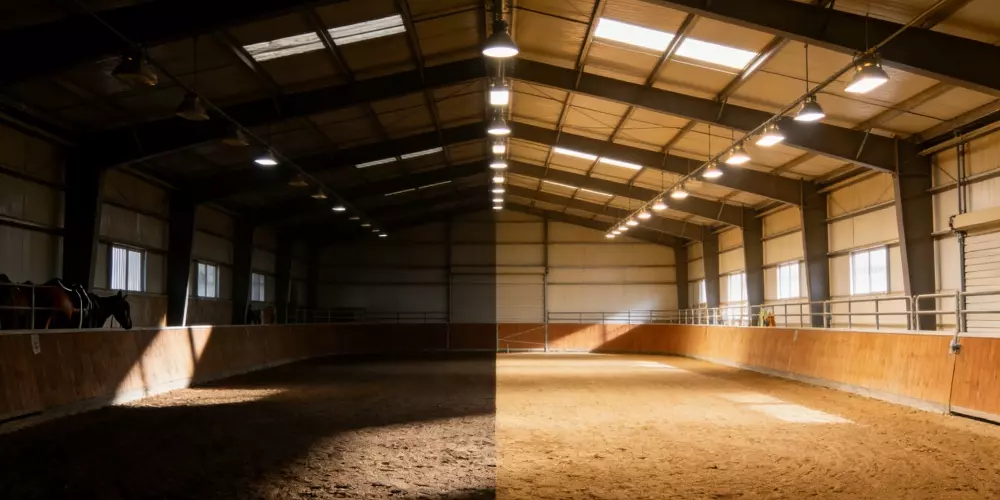
In the equestrian world, shadows are more than just an annoyance—they are a safety hazard.
For a horse, a flickering light or a dark patch on the ground isn’t just poor visibility; it looks like a predator or a deep hole. If you have ever felt your horse hesitate or "spook" at a corner for no apparent reason, you know that lighting can make or break a training session.
While generic floodlights might work for a parking lot, professional horse arena lights are engineered for a very specific purpose: to create a shadowless, glare-free environment that keeps horses calm and focused.
Whether you are upgrading a dusty indoor barn or planning a brand-new outdoor jumping course, this guide will walk you through everything you need to know. From the latest IESNA lighting standards to choosing the right LED fixtures that can cut your energy bill by 67%, we have you covered.
Let’s turn the lights on.
Why "Shadowless" Matters: Understanding Equine Vision
To choose the right sports lighting solution, you first need to understand how your horse sees the world. You aren't just lighting a patch of dirt; you are lighting an environment for a prey animal with a unique visual system.
The Challenge of Depth Perception
Horses possess a unique dual-vision system. While they use monocular vision to scan their surroundings with a wide field of view, they rely on a narrow field of binocular vision directly in front to judge depth and distance.
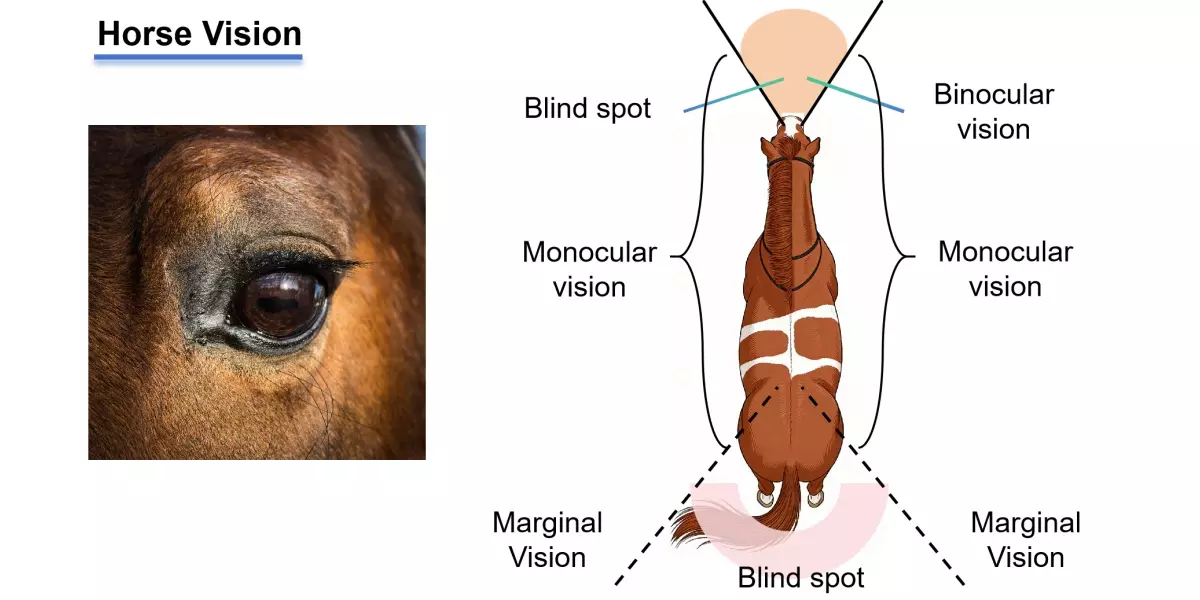
This system makes them highly sensitive to contrast. When standard floodlights create harsh, black shadows on the arena floor, it confuses this visual processing.
The "Hole" Effect: To a horse scanning with monocular vision, a dark, flat shadow often looks indistinguishable from a physical hole or a drop-off.
Transition Lag: It takes time for a horse’s eyes to adjust between bright pools of light and dark corners. This hesitation can break the rhythm of a ride.
The Result of Poor Lighting:
This visual confusion triggers the horse's flight instinct, leading to:
Ø Spooking: Sudden shying away from "monsters" in dark corners.
Ø Hesitation: Refusal to move forward into shadowy areas.
Ø Jump Refusals: Inability to accurately judge the ground line or takeoff point due to shadows at the base of the jump.
The "Strobe Light" Effect (Flicker)
Have you ever been under old fluorescent lights that hum and flicker? It’s annoying for humans, but it’s stressful for horses.
Equines have a higher "Critical Flicker Fusion" rate than humans. This means they can detect rapid flickering in old Metal Halide or Sodium bulbs that looks like a steady light to us. This constant, strobe-like motion can cause low-level anxiety in sensitive horses.
The Solution: High Uniformity
The goal of modern equestrian arena lights is not just brightness—it is uniformity.
By using LED technology with specialized optics, we aim to eliminate "hot spots" (areas that are too bright) and dark zones. A shadowless environment allows the horse to relax, trusting their footing and focusing entirely on the rider’s commands.
What Are the Lighting Standards for Horse Arenas?
"How bright does my arena need to be?"
This is the most common question we get. Fortunately, you don't have to guess. The IESNA (Illuminating Engineering Society of North America) has established specific standards (RP-6-20) for sports and recreational areas.
We measure this brightness in Foot-Candles (fc). Here is the breakdown based on how you use your arena:
1. Recreational & Training (Flatwork)
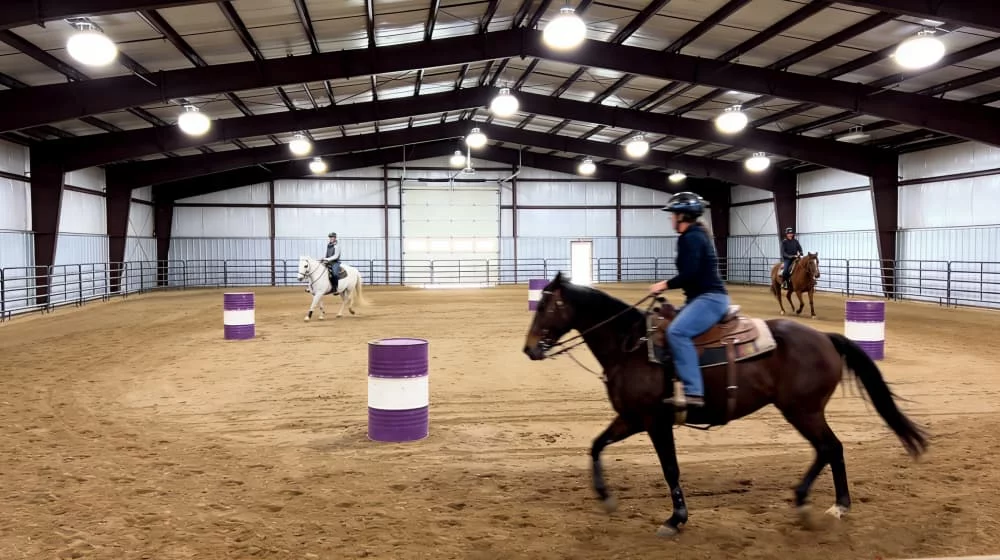
Requirement: 20 - 30 Foot-Candles
Best For: Private barns, boarding facilities, and general flatwork.
The Goal: At this level, the priority is basic safety. You need enough light to see the horse's movement clearly and ensure safe footing, but you don't need TV-quality brightness.
2. Club Competition & Jumping (Hunter/Jumper/Dressage)
Requirement: 40 - 50 Foot-Candles
Best For: Professional training facilities, hunter/jumper courses, and local show venues.
The Goal: Speed and precision.
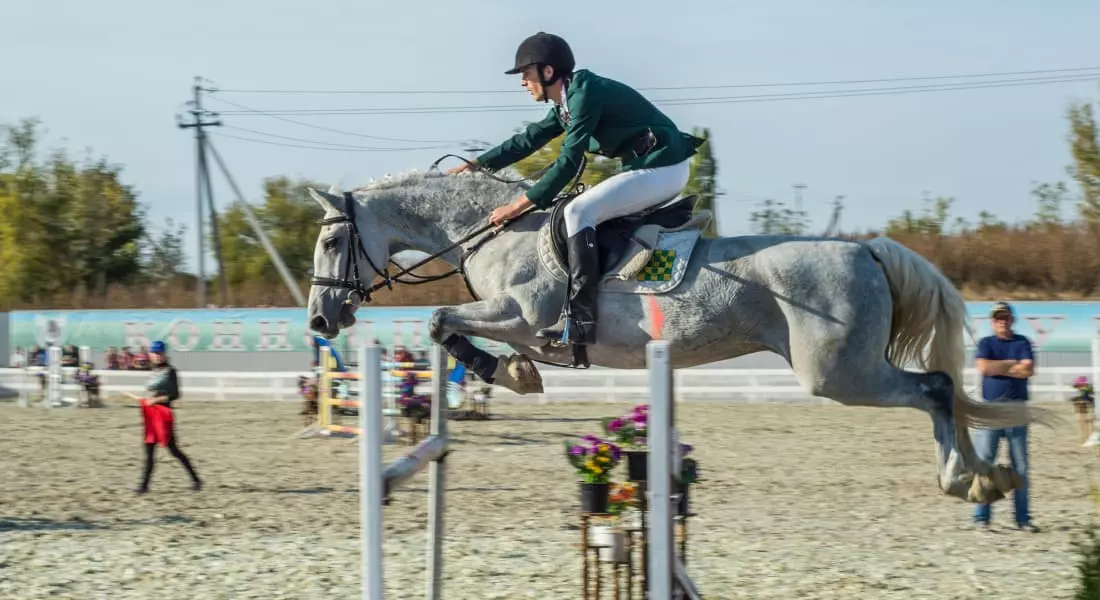
For Jumpers: High vertical illuminance is critical so the horse can clearly see the top rail and the ground line of a jump while moving at speed.
For Dressage: Higher light levels (High CRI) help judges and spectators see the definition of the horse's muscle and movement.
3. Professional & Broadcast
Requirement: 70+ Foot-Candles
Best For: Regional/National events, rodeos, and televised competitions.
The Goal: These levels are required for high-definition cameras to capture slow-motion footage without graininess.
The "3:1 Rule" for Uniformity
Brightness isn't the only metric. A professional lighting design must adhere to the 3:1 Uniformity Ratio.
This means the brightest spot in your arena should not be more than three times brighter than the darkest spot. If your ratio is too high (e.g., bright circles under the poles and pitch black in the middle), your horse will struggle to adjust their eyes as they move between light and dark, creating safety hazards.
Pro Tip: Don't rely on guesswork. High-quality equine arena lights should always come with a Photometric Analysis—a computer simulation that proves your layout meets these foot-candle and uniformity standards before you buy.
Indoor vs. Outdoor Equestrian Arena Lighting
Lighting a contained, dusty barn requires a completely different strategy than lighting a windswept outdoor course. Here is how we tailor equine-friendly arena lights for specific environments.
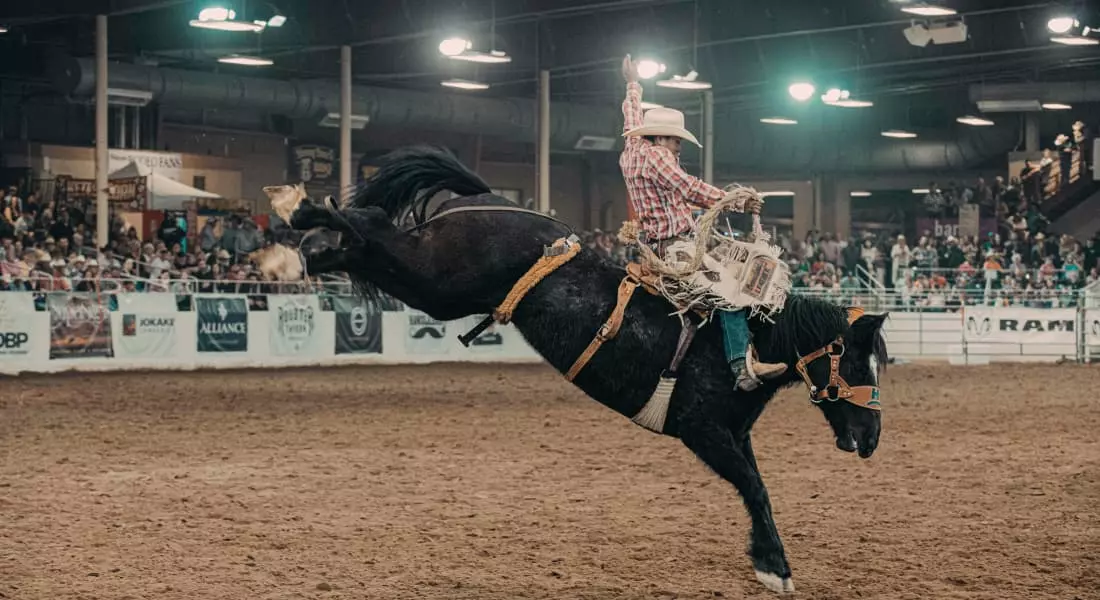
Indoor Arena Lighting: Beating Dust and Glare
Indoor arenas present two major challenges: low mounting heights and "arena dust."
The Glare Problem: In many indoor arenas, lights are mounted relatively low (16ft - 20ft). If you use standard high-intensity LEDs, riders will be blinded every time they look up during a jump or a dressage movement.
The Solution: We recommend Linear LED High Bays with Frosted Lenses. Unlike round "UFO" style lights that create a concentrated hot spot, linear lights spread the beam across a wider surface area. The frosted lens diffuses the light, ensuring it is soft on the rider’s eyes while eliminating harsh shadows on the footing.
The Dust Factor: Footing additives and sand create a fine dust that coats everything. If your fixtures aren't sealed, dust gets inside and kills the electronics.
The Fix: Always specify IP66 rated fixtures. This rating means the fixture is dust-tight and water-resistant. You can take a high-pressure hose and wash down your rafters and lights without worrying about electrical damage.
Outdoor Arena Lighting: Handling Weather and Neighbors
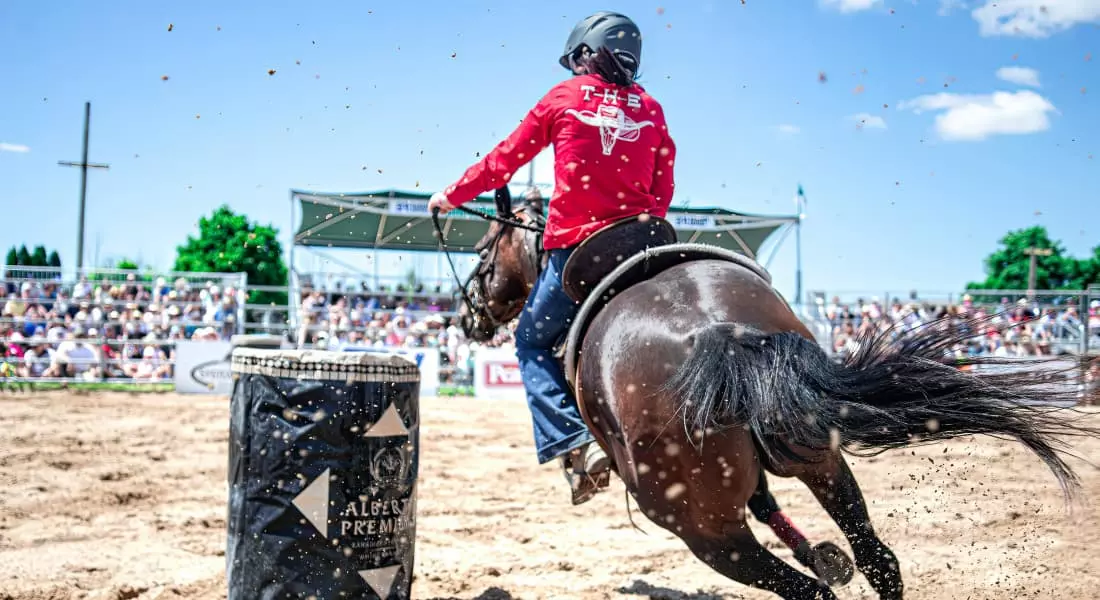
For outdoor rings, the battle is against the elements—and sometimes, the people living next door.
Weather Resistance (Wind & Rain): Outdoor fixtures must withstand driving rain, snow, and high winds. We focus on the EPA (Effective Projected Area) rating. A fixture with a low EPA is aerodynamic, putting less stress on your poles during a storm, which is critical for safety.
Light Spill Control (The Neighbor Factor): The biggest complaint with outdoor lighting is "light trespass"—when your arena lights shine into a neighbor’s bedroom.
The Fix: Modern horse arena lights can be equipped with Backlight Shields or Visors. These precision optics cut off the light beam at the edge of your fence line. This technology ensures you "light the dirt, not the neighbor's house," keeping you compliant with local dark-sky ordinances.
Design & Layout: How Many Poles Do You Need?
A common mistake is buying lights first and figuring out where to put them later. This leads to dark spots and wasted money. Here are the professional rules of thumb for layout design.
The Golden Rule for Pole Height
For outdoor poles or new high-ceiling indoor builds, the ideal mounting height is 25ft to 30ft.
(Note: If you have an existing indoor barn with lower ceilings (16-20ft), don't worry—our linear fixtures are designed specifically to minimize glare at lower heights.)
Ø Too Low (<20ft): The light angle becomes too horizontal, shining directly into the rider's eyes and creating long, distracting shadows behind the horse.
Ø Too High (>40ft): While great for uniformity, this requires expensive bucket trucks or cranes for installation and maintenance. 25-30ft offers the perfect balance of performance and accessibility.
Strategic Pole Placement
Indoor Layouts: Never hang lights directly over the centerline (A-C line). If a light is directly above, it casts a shadow of the rider onto the horse, and the horse onto the ground.
Ø Best Practice: Install two rows of Linear High Bays spaced evenly between the centerline and the wall. This pushes light from the sides, filling in shadows.
Outdoor Layouts: For a standard US arena (e.g., 100' x 200' or 150' x 250'), we typically use a 4-Pole or 6-Pole system.
Ø 4-Pole: One pole near each corner (offset slightly). Good for recreational use.
Ø 6-Pole: Adds two poles at the center line. Essential for jumping and competition to ensure high uniformity across the entire course.
The Importance of Photometrics
Every arena is unique. Don't guess.
Before you buy, ask for a Photometric Plan — a 3D computer simulation tailored to your specific arena. It not only precisely calculates the required number of fixtures, their technical specifications (e.g., power, beam angle) and optical parameters, but also simulates the most cost-effective layout.
By identifying potential dark spots upfront and optimizing the lighting design, this plan helps you save costs while ensuring your arena’s lighting needs are fully met at the most reasonable price.
Buyer’s Cheat Sheet: Specs for Horse Arena Lights
Ready to shop? Don't get overwhelmed by technical jargon. Save this checklist to your phone. These are the non-negotiable specifications you need for a safe, commercial-grade equestrian facility.
Specification | Recommended Value | Why It Matters |
Color Temperature | 5000K (Daylight) | Best for alertness and contrast. It mimics high-noon sunlight, helping horses perceive depth accurately. |
CRI (Color Rendering) | Ra > 80 | Critical for Dressage and conformation. It shows the true sheen of the coat and muscle definition without color distortion. |
IP Rating | IP66 | "Washdown Ready." Completely sealed against dust and powerful water jets. Essential for barn environments. |
Surge Protection | 10kV SPD | Many barns are in rural areas with unstable power grids. This protects your investment from lightning strikes or grid surges. |
Warranty | 5 - 10 Years | Changing a light 30ft in the air is expensive. A long warranty guarantees reliability and low maintenance costs. |
Voltage | 120-277V or 480V | Ensure the fixture accepts a wide input voltage to handle potential fluctuations in rural electrical supply. |
Commercial Benefits of Equine Arena Lighting
Upgrading to LED lighting for horse arena isn’t just about better visibility—it’s a strategic financial move and a critical safety upgrade for your property.
Slash Energy Costs by 67%
Let’s look at the math. A traditional 400W Metal Halide fixture actually draws about 455W when you account for the ballast. By replacing it with a high-efficiency 150W LED fixture, you get better light quality while consuming 67% less electricity.
(The same efficiency logic applies if you are replacing powerful 1000W outdoor stadium lights with our 400-600W LED Sports Lights—the savings scale with the size of the project.)
For a commercial barn running lights 4-5 hours a night, this translates to thousands of dollars in savings annually. The lights essentially pay for themselves in energy savings alone within 2-3 years.
Fire Safety: The Invisible Danger
Barns are high-risk environments filled with flammable hay, dry shavings, and dust. Old-school bulbs operate at dangerously high temperatures and can shatter, sending hot glass into bedding. LEDs run significantly cooler and are constructed from shatterproof materials. Switching to LED reduces the heat load in your rafters, drastically lowering the risk of accidental fire. It’s peace of mind you can’t put a price on.
Instant-On Performance
Winter riding is hard enough without waiting 15 minutes for your Metal Halide lights to warm up. LED lights are Instant-On/Instant-Off. Whether it’s a cold morning training session or a late-night emergency check, you get full brightness the second you flip the switch.
Conclusion
Lighting is one of the most significant infrastructure investments you will make for your facility. But unlike a tractor or a new fence, the right lighting directly influences the confidence of every horse and rider that steps into your ring.
Don't settle for dark corners or blinding glare. Upgrading to professional horse arena lights is an investment in safety, performance, and the long-term value of your property.
Ready to see your arena in a whole new light?
Every arena is unique. Don't guess with your horses' safety.
Contact us today for a Free Lighting Design & Photometric Study. Tell us your arena size (e.g., 100x200) and discipline, and we will engineer the perfect horse arena lighting solution tailored specifically for you.
