_thumb.jpg)
Sports Field Lighting: Costs, Standards & Smart LED Choices
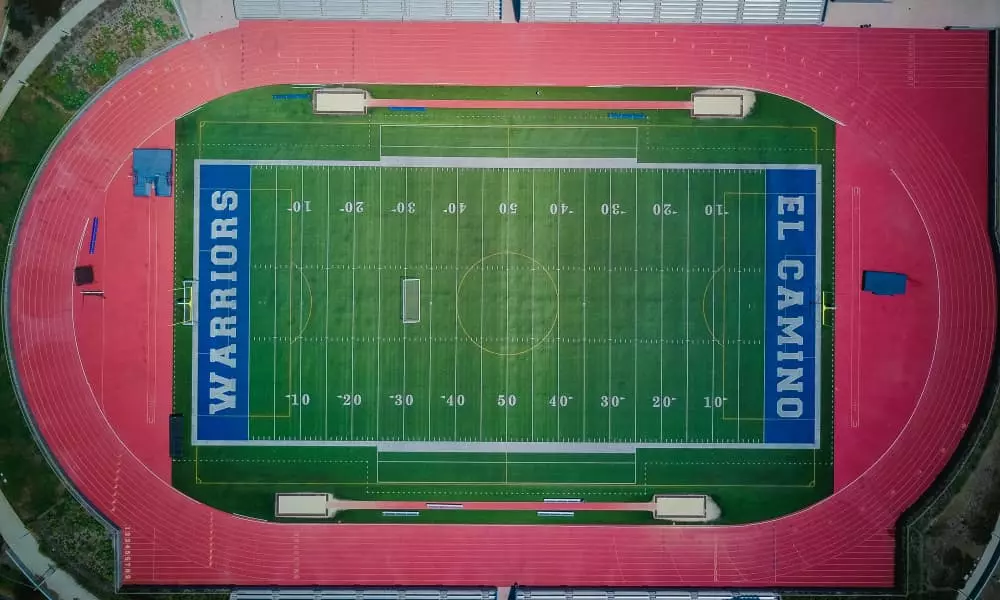
Table of Contents
What Is Sports Field Lighting?
Why Sports Field Lighting Matters?
Lighting Standards & Key Considerations
Key Technical Specs When Choosing Sports Field Lighting
Types of Sports Field Lighting (LED vs Traditional)
Lighting Requirements by Common Sports Types
How Much Does Sports Field Lighting Cost?
How to Choose a Sports Field Lighting Supplier?
What Is Sports Field Lighting?
Sports field lighting refers to a controlled illumination system designed to provide clear, consistent visibility for athletes and spectators during evening or low-light conditions. In simple terms, it ensures every part of the playing surface is evenly lit, safe, and visually comfortable.
Sports field lighting is engineered around key performance indicators such as lux levels, uniformity ratio, glare control, and beam angle precision. These factors determine how well players can track fast-moving objects, how evenly shadows are distributed, and how comfortable the lighting feels to the human eye.
With the rise of advanced LED systems, today’s fields achieve higher visibility, lower energy use, and far more stable performance than traditional lamps.
Why Sports Field Lighting Matters?
Quality lighting is more than just brightness—it directly affects game quality, safety, and field utilization. Clear visibility ensures players, coaches, and spectators all experience the sport the way it was meant to be played. Key reasons include:
l Sharper visual performance for athletes — players react faster and track the ball more accurately.
l Improved safety — better illumination reduces trip hazards, collisions, and misjudged plays.
l Reduced shadows and glare — essential for sports like baseball and softball where the ball travels fast and high.
l Higher field usage and ROI — communities, schools, and clubs can hold more evening practices and games, maximizing facility revenue and accessibility.
Good lighting doesn’t just brighten the field; it elevates the entire sporting experience.
Lighting Standards & Key Considerations
Meeting proper lighting standards for sports field ensures fairness, safety, and compliance with regional regulations. Most sports follow recommended illuminance levels depending on activity type—training, competition, or professional broadcasting.
Required Lux Levels by Sport
Sport Type | Training (Lux) | Competition (Lux) | Broadcast (Lux) |
Soccer | 200 | 500 | 1000+ |
Football | 200 | 300–500 | 1000+ |
Baseball | 300 | 700 | 1500+ |
Softball | 200 | 500 | 1000+ |
These values help ensure that players can read movement accurately and that cameras capture fast action with clarity during televised events.
Uniformity, Glare & Beam Control
Lux levels alone don’t make a well-lit field—light quality matters just as much. Three important technical factors define professional-grade sports lighting:
l Uniformity Ratio (0.4–0.7)
Uniformity measures how evenly light is distributed across the field. A higher ratio means fewer dark spots and more predictable ball trajectories. For most fields, a 0.6–0.7 uniformity ratio is ideal.
l Glare Rating (GR)
Uncontrolled glare can blind players and reduce visual comfort. Proper aiming, optics, and shielding help maintain a low glare rating, especially important for baseball and softball.
l Vertical vs. Horizontal Illuminance
Horizontal lighting ensures the ground and field markings are clear.
Vertical lighting ensures players can see the ball at high trajectories—critical for baseball and football.
Spill Light Control
Communities increasingly regulate spill light to prevent disturbances to neighbors. Modern LED optics keep light on the field and minimize pollution.
Color Temperature & Color Rendering
CCT: 5000K is the standard for outdoor sports fields—clean, neutral white.
CRI: 70–80+ ensures colors and uniforms remain accurate for both players and spectators.
Together, these factors create a professional, comfortable, and competition-ready lighting environment.
Key Technical Specs When Choosing Sports Field Lighting
When selecting lighting fixtures for sports venues, it is essential to not only focus on their lighting performance indicators but also make a comprehensive assessment based on the environmental characteristics and actual needs of different venues.
In addition to prioritizing the fixtures' safety and protection performance such as waterproofing and impact resistance, their power specifications, operating temperature range, service life, and whether they are equipped with intelligent control capabilities are also key considerations during the selection process.
Key Spec 1: Ingress Protection (IP Rating)
Sports field lighting fixtures must withstand rain, snow, dust, and constant outdoor exposure. A reliable system should provide sealed protection to keep moisture and debris out of the housing. For most sports fields, IP65–IP67 is the recommended range. Coastal regions in North America may also benefit from corrosion-resistant finishes due to salt exposure.
A lower IP rating often leads to faster deterioration, water intrusion, and higher maintenance costs over the years — especially for schools and community parks with limited budgets.
Read more: Want to know which IP protection rating is best for your lighting fixtures? Here is our complete guide on how to choose an IP rating.
Key Spec 2: Impact Protection (IK Rating)
Sports fields face physical shocks from wind vibration, transportation, ball impact and routine handling. This is where the IK rating matters.
For long-term stability, IK08–IK10 is preferred — especially for baseball and softball fields where high-speed balls can hit the fixtures directly. A higher IK rating means the luminaire can withstand impact without cracking, shifting, or losing alignment, ensuring consistent lighting throughout the season.
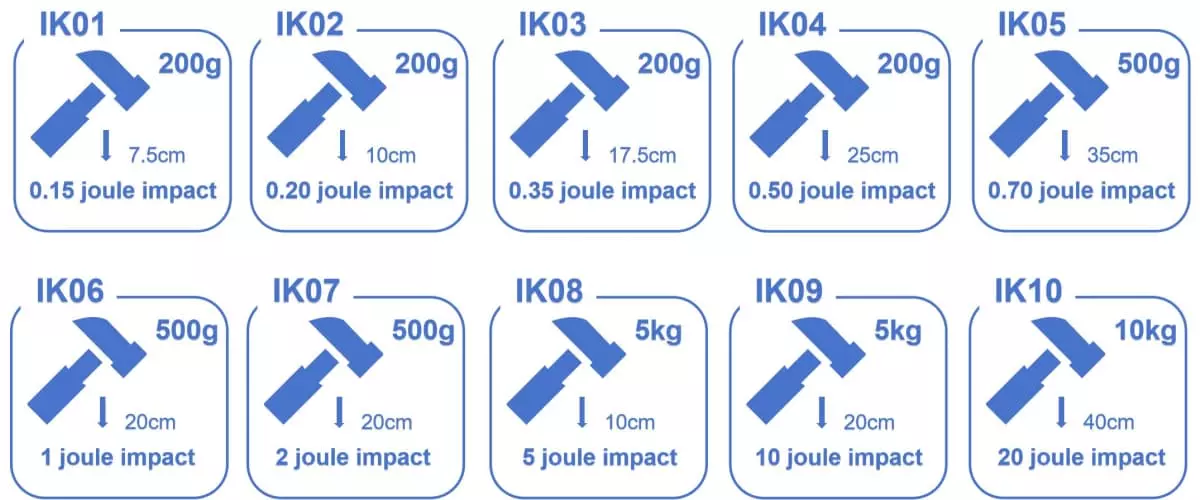
Read more: Not sure which IK protection rating fits your lighting fixtures’ operating environment? This full guide breaks down how to pick the perfect IK rating for your specific use case.
Key Spec 3: Wattage & Light Output
Most sports field lighting systems fall between 400W and 1500W, depending on pole height, beam angle, and sport type. Wattage affects both the initial installation cost and how many poles or fixtures are required.
However, wattage alone is not enough — it must be evaluated together with efficacy (lumens per watt). Modern LED sports lights typically deliver 140–170 lm/W, allowing them to replace older high-wattage metal halide fixtures with fewer units while producing higher-quality illumination and better beam control.
Key Spec 4: Efficacy (Lumens per Watt)
Efficacy directly impacts long-term energy bills. High-performance LED systems can reduce energy consumption by 60–70% compared to metal halide fixtures.
For sports field lighting, anything above 150 lm/W is considered high quality and ensures both bright performance and strong ROI — an important factor for schools, parks, and city-managed facilities working with limited annual budgets.
Key Spec 5: Operating Temperature Range
Cold climates in northern U.S. states and Canada require luminaires that can perform reliably through winter. A recommended operating range is –40°C to +50°C, ensuring consistent output during freezing nights and hot summer tournaments.
Poor temperature tolerance can lead to difficult startups, reduced brightness, or degraded lifetime — all problems that impact gameplay quality and safety.
Key Spec 6: Lifetime (L70/B50 Rating)
Most LED sports lights offer 50,000–100,000 hours of usable life, measured using the L70 metric (the point where brightness drops to 70%).
A longer lifetime means fewer lift-truck rentals, fewer lamp replacements, and fewer disruptions to scheduled games. For schools, municipalities, and community fields, LED lifetime directly affects year-to-year budget planning and maintenance staffing.
Read more: Wondering how long LED lighting fixtures can last, and what the calculation method entails? Check out this article for a comprehensive guide to the service life of LED fixtures and how to calculate it.
Key Spec 7: Intelligent Controls
Modern sports field lighting increasingly includes smart control options that make daily operation easier and more energy-efficient.
Key functions include:
l Dimming for training, recreational use, or after-hours events
l Scheduling & presets (match mode, training mode, broadcast mode)
l Remote control via app or web platform
l Real-time monitoring to reduce maintenance downtime
These features help schools, parks, and sports clubs lower operational costs while maintaining consistent lighting quality. Ceramiclite also supports integrated smart-control solutions for facilities that need flexible scene settings or long-term energy management.
Sports Lighting Key Specs Summary Table
Spec | Why It Matters | Recommended Value |
IP Rating | Outdoor weather protection | IP65–IP67 |
IK Rating | Resistance to impact & vibration | IK08–IK10 |
Wattage | Determines brightness & pole design | 400–1500W |
Efficacy | Energy savings & ROI | >140 lm/W |
Operating Temp | Stability in hot/cold climates | –40°C to +50°C |
Lifetime | Maintenance cost reduction | 50,000–100,000 hrs |
Smart Control | Better flexibility & management | Dimming / Scheduling / DMX |
Types of Sports Field Lighting (LED vs Traditional)
Modern sports fields now overwhelmingly choose LED — and for good reason. LED systems deliver higher efficiency, faster startup, better beam control, and dramatically lower long-term costs.
Traditional metal halide fixtures still exist in older fields, but they struggle with warm-up time, energy consumption, and frequent maintenance.
LED vs Metal Halide Comparison
Feature | LED | Metal Halide |
Energy Use | 60–70% lower | Very high |
Lifespan | 50,000–100,000 hrs | 8,000–10,000 hrs |
Warm-up Time | Instant | 10–20 minutes |
Maintenance | Low | High |
CRI | High | Medium |
Dimming | Yes | No |
LED lighting offers better color performance for players and spectators, and its instant on/off capability makes it ideal for modern scheduling and smart-control systems. Over the lifetime of a sports field, LED lighting usually becomes the most cost-effective and performance-stable option.
Who Uses Each Type?
Different sports facilities have different lighting needs, but nearly all benefit from moving to LED systems.
l Schools & Colleges
Need budget-friendly, low-maintenance lighting with preset modes for PE classes, training, and competitions.
l Community Parks
Prioritize energy efficiency, safety, and reduced spill light toward nearby residential areas.
l Amateur Clubs & Local Leagues
Require consistent illumination and good uniformity for gameplay quality.
l Semi-Pro & Professional Stadiums
Demand high-lux, high-CRI, broadcast-ready LED systems with advanced control and precision optics.
l Recreation & Multi-Sport Facilities
Look for flexible dimming and scheduling to suit mixed activities.
Lighting Requirements by Common Sport Types
Here are some of the lighting requirements for the most common sports venues (including basketball, baseball, tennis, and softball) as a reference.
(1) Soccer Field Lighting (4- or 6-Pole Layout)
Soccer fields demand wide coverage and long-throw illumination. Because players often make fast passes over large distances, lighting for soccer field must deliver strong horizontal illuminance with minimal shadows. Typical pole heights range from 12–25 meters, depending on field class and surrounding space.
A 4-pole layout is common for training or community fields, offering solid performance and lower installation cost. Professional and tournament-level fields often move to a 6-pole layout to reduce dark zones, improve uniformity, and increase vertical illuminance for televised play.
(2) American Football Field Lighting
American football requires strong vertical and horizontal visibility due to constant player motion and fast directional changes. Mid-field glare control is essential—poor aiming can blind receivers looking up for passes. Uniformity along sidelines must stay consistent so referees, players, and cameras see clearly across the full width of the field.
For high schools, typical lighting levels fall in the 50–75 foot-candle range, with higher levels required for televised games. Vertical illuminance matters just as much as horizontal, helping athletes track long throws and high punts at all angles.
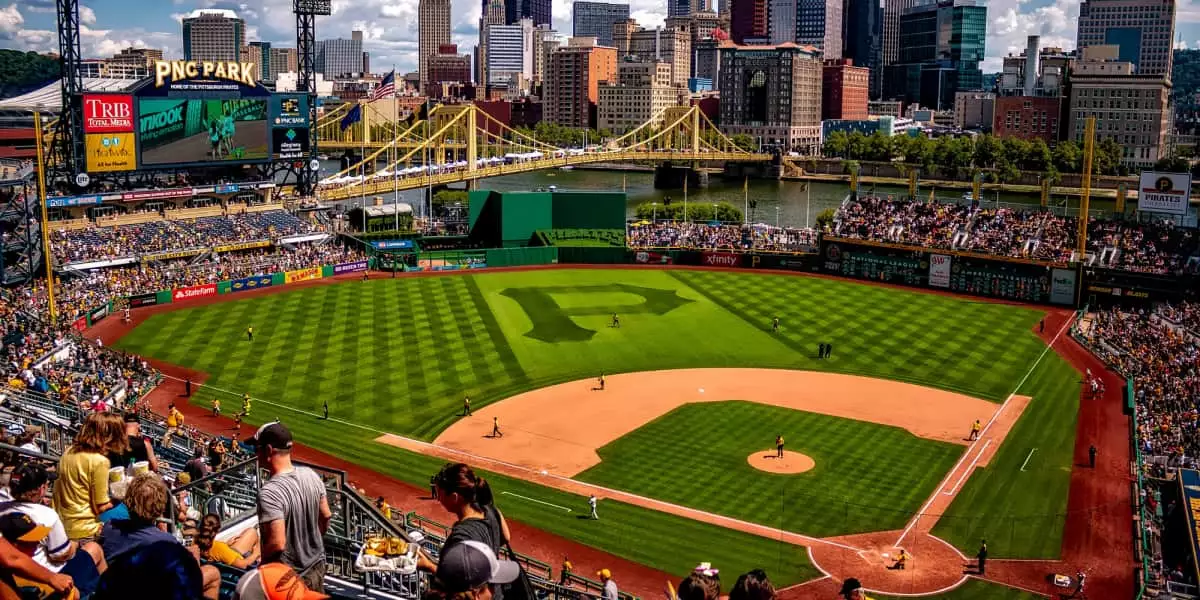
(3) Baseball Field Lighting (Vertical Illuminance Priority)
Baseball is one of the most demanding sports for lighting design. Because the ball moves at high speed and often travels high above the field, vertical illuminance becomes the primary parameter—much more critical than in soccer or football.
Infield areas need significantly higher light levels than the outfield due to the speed of play and reaction time required. A typical design uses 6 or 8 poles, with taller poles positioned behind the foul lines to minimize glare in the batter’s line of sight.
LED lighting for baseball field with precise beam angles (narrow beams for pitching zones, wider beams for outfield spread) ensure consistent visibility without creating bright spots. Uniformity and shadow control are essential for tracking fly balls and line drives.
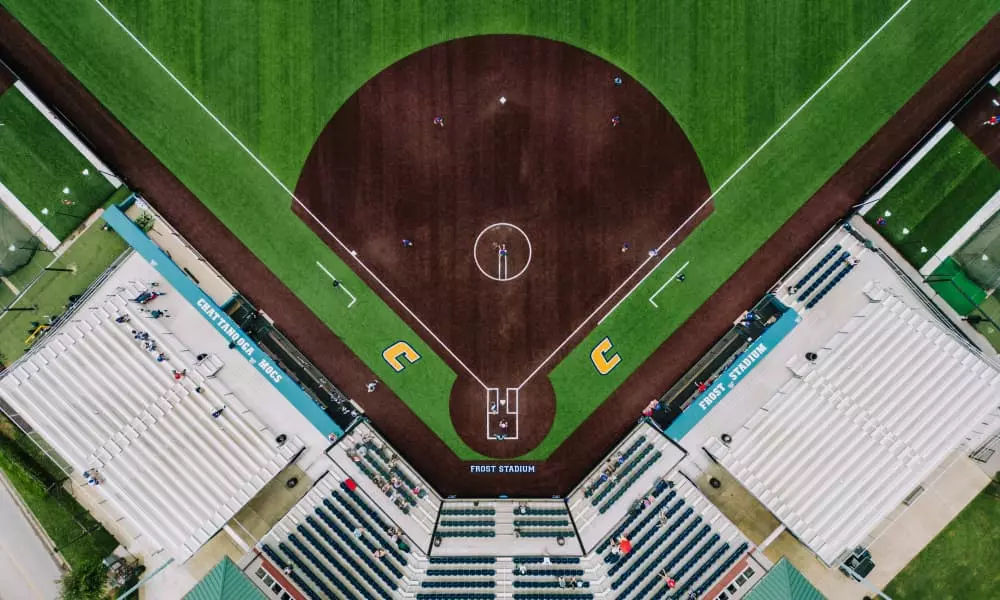
(4) Softball Field Lighting
Softball fields are smaller, but lighting still must balance uniformity and vertical visibility for high pop-fly balls. Pole heights are usually lower than baseball, and layouts are more flexible to fit available space.
Even with fewer poles, consistent light distribution remains critical, especially around the infield and pitcher’s mound. A well-aimed LED system for softball field helps maintain visibility without overwhelming nearby neighborhoods with spill light.
How Much Does Sports Field Lighting Cost?
Sports field lighting costs vary significantly based on field size, pole height, and lighting performance requirements.
The cost composition of a stadium lighting system mainly covers the following items:
1. Procurement costs for lamps and supporting accessories;
2. System installation and commissioning costs;
3. Daily operational electricity costs;
4. Long-term maintenance and upkeep costs
1. Equipment Cost
Lighting equipment usually falls within:
$20,000 – $60,000+ for a standard field
Higher wattage, taller poles, or sports with higher vertical illuminance (e.g., baseball) push costs upward
Optics, controls, and fixture quality also affect the final price
2. Installation Cost
Installation often exceeds the cost of the fixtures themselves because it includes:
Poles and anchor bases
Underground wiring and trenching
Concrete foundations
Lift or crane rental
Labor (a major cost in North America and Europe)
3. Operating Cost
LED systems reduce energy use by 60–70%, helping fields save $5,000–$20,000 per year, depending on usage hours and electricity rates. Intelligent control systems (scheduling, dimming) further improve efficiency.
4. Maintenance Cost
LED: Very low; long lifespans and minimal relamping
Metal halide: Frequent bulb replacements, color shifting, and higher overall operational expense
Overall, LED remains the most cost-effective long-term solution for schools, community parks, and competitive facilities seeking lower operational costs and stable lighting quality.
How to Choose a Sports Lighting Supplier?
Selecting the right supplier determines whether your project stays on budget, meets code, and performs reliably for the next decade. Look for the following:
UL / CE / DLC certifications to ensure electrical safety and verified performance
5–10 year warranties that cover drivers, LEDs, and structure
Photometric design capability using DIALux or AGi32, including beam-angle optimization
Engineering and installation support, not just fixture sales
Proven stadium or field case studies, with real installation videos, reports, and aiming diagrams
A reliable supplier should provide transparent data, real testing documents, and clear communication.
Ceramiclite follows these standards by offering certified products, long-term warranties, and professional photometric design support—helping schools, municipalities, and clubs build lighting systems that perform consistently for years.
Frequently Asked Questions
1. What is the best lighting for a sports field?
LED is the industry standard in 2025. It offers higher efficiency, instant start, better uniformity, and far lower maintenance compared with metal halide systems.
2. How much do sports field lights cost?
Most fields fall in the $20,000–$60,000+ range for equipment, with installation varying based on pole height, wiring, foundations, and labor rates.
3. What are the regulations for sports lighting?
Requirements generally follow IES sports lighting standards, including specific lux/foot-candle levels, uniformity ratios, glare limits, and in some regions, spill-light and community light-trespass rules.
4. How many lumens are needed to light a football field?
A typical high-school football field requires 50–75 fc, which usually translates into several hundred thousand lumens delivered with proper aiming and vertical illuminance.
5. How much do football pitch floodlights cost?
A full soccer pitch with LED lighting typically ranges from $30,000–$120,000+, depending on pole height, number of poles, and required vertical light levels.
6. How tall should sports light poles be?
Most outdoor fields use 12–25 m (40–80 ft) poles. Taller poles improve uniformity and reduce glare but increase installation and foundation cost.
7. How long does installation usually take?
A standard field installation takes 1–3 weeks, depending on weather, foundation curing time, wiring complexity, and lift/crane availability.
If you need exact numbers, our engineering team can provide a free photometric plan and cost breakdown based on your field size.
Conclusion
LED sports field lighting delivers long-term value for schools, clubs, and community parks by improving visibility, reducing maintenance, and lowering energy use by up to 70%. A well-designed system enhances player performance and spectator safety while keeping light spill and glare under control.
Whether you’re upgrading an older metal-halide system or planning a new field, ceramiclite can support you with certified fixtures, professional photometric design, and long-term warranties.
Contact our team to get a tailored lighting layout and a clear cost estimate for your project.