_thumb.jpg)
Sports Field Lighting Standards – The Complete Guide
Table of Contents
What Are Sports Field Lighting Standards?
IES vs EN Sports Lighting Standards
Sports Field Types & Required Lux Levels
Lighting Layouts & Pole Configurations
Key Technical Features Required by Standards
How to Choose a Reliable Sports Lighting Supplier?
What Are Sports Field Lighting Standards?
Sports field lighting standards are technical guidelines that specify the illuminance levels, uniformity ratios, glare limits, color quality, and overall lighting layout needed to ensure safe, clear, and consistent visibility across sports fields.
These standards—primarily defined by IES RP-6-20 in the US and EN 12193 in Europe—help designers create fields that meet safety requirements and maintain fair play for athletes and spectators.
Why These Standards Matter?
Sports lighting standards exist to protect players, officials, and the surrounding community. These standards provide guidance for the construction of sports stadiums and the design of their lighting solutions.
Well-designed systems eliminate harsh shadows and glare, reduce injury risks, and give athletes a clear view of the ball and the field. They also help schools, communities, and clubs meet local lighting codes and avoid complaints about light spilling into nearby homes.
For competitive play, consistent light levels ensure fair decisions. Referees must see boundary lines, fast-moving balls, and player contact without visual strain. Even amateur fields benefit from this clarity.
Key reasons these standards matter:
Player safety: Stable illuminance and controlled glare reduce accidents and visibility gaps.
Fair play: Uniform lighting helps maintain judging accuracy and consistent gameplay conditions.
Broadcast clarity: Higher uniformity and color quality prevent flicker and allow clean high-frame-rate video when events are recorded or streamed.
Community compliance: Proper aiming and shielding reduce light trespass, an increasing concern in residential neighborhoods (IES RP-6-20 provides guidance).
IES vs EN Sports Lighting Standards
Sports lighting projects often reference either IES RP-6-20 (United States) or EN 12193 (Europe). These two systems are frequently compared because they define brightness, uniformity, glare limits, and performance levels differently—and these differences directly affect design decisions, budgets, and compliance.
1. IES RP-6-20 (United States)
The IES RP-6-20 guideline is the primary reference for outdoor sports lighting across the U.S. It covers football, soccer, baseball, softball, tennis, multi-purpose fields, school and community complexes, university facilities, and some professional venues. In practice, most outdoor sports lighting designs in the U.S. follow IES values, especially for municipal and educational projects.
IES uses a recommendation-based structure, giving designers flexibility. The core performance areas include:
Horizontal illuminance for overall field visibility
Vertical illuminance for tracking fast-moving objects and player faces—critical for soccer and football
Glare control (UGR/VEI suggestions rather than mandatory limits)
Uniformity ratios between 0.4–0.6, depending on sport and competition level
For televised or high-level events, RP-6-20 includes additional broadcast requirements such as flicker-free performance, defined vertical target zones, and camera-oriented lighting levels. These are essential for slow-motion capture and high-frame-rate broadcast systems.
Design philosophy:
IES prioritizes playability and project flexibility. It offers wide ranges suited for school and community budgets, while also supporting higher specifications for semi-professional and professional users. The system adapts well to varying field sizes, pole constraints, and retrofit conditions.
2. EN 12193 (Europe)
EN 12193 governs sports lighting across Europe for both indoor and outdoor facilities. It applies to football, rugby, athletics, basketball, volleyball, tennis, and other federation-recognized sports. Many national associations, municipalities, and clubs require strict compliance with EN values.
Compared to IES, EN places stronger emphasis on visual consistency and objective limits. Its main focus areas include:
Higher uniformity requirements (0.5–0.7)
Mandatory glare limits (GR) instead of recommended values
Defined illuminance classes (Class I, II, III)
Requirements for both horizontal and vertical illuminance
Strong consideration for player safety, spectator visibility, and long-range recognition
EN’s classification structure is one of its most important features:
Class I – International / professional competition
Highest brightness, strict uniformity, and strict GR. Used for top-level matches and major audience events.
Class II – Competitive / club level
For regional leagues and organized club competitions. Requires medium-high illuminance and stable uniformity.
Class III – Training / recreational
For community fields and school training areas.
Even at this level, EN’s uniformity requirements remain higher than typical IES recommendations.
Design philosophy:
EN is more prescriptive and is often mandatory for public tenders, club facilities, or sites that host sanctioned competitions. The system prioritizes visual fairness, predictability, and consistent lighting across the entire playing area.
3. Quick Comparison Table
Item | IES RP-6-20 (US) | EN 12193 (EU) |
Standard Structure | Flexible, recommendation-based | Mandatory Class I/II/III |
Typical Lux Range | 75–1500 lx | 75–2000 lx |
Uniformity | 0.4–0.6 | 0.5–0.7 |
Glare Control | Suggested UGR/VEI | Strict GR limits |
Main Sports | Football, soccer, baseball, softball, tennis | Football, rugby, athletics, indoor sports |
Design Focus | Budget flexibility, TV broadcast adaptability | Strict consistency and fairness |
Common Applications | U.S. schools, colleges, community stadiums | European clubs, municipalities, federations |
Sports Field Types & Required Lux Levels
Different sports demand different lighting levels because ball speed, viewing distance, and athlete reaction time vary significantly. Below is a unified reference table comparing IES RP-6-20 (U.S.) and EN 12193 (Europe). It covers outdoor and indoor sports, from recreational fields to televised matches.
Use this table as a quick benchmark during planning, budgeting, and compliance checks.
1. Unified Illuminance Requirements Table (IES vs EN)
(Values represent typical ranges for Training / Match / TV Class performance. Uniformity uses U (Emin/Avg).)
Outdoor Sports – Recommended Lux Levels
Sport | Class / Level | IES Lux (USA) | EN Lux (EU) | Uniformity (Min/Avg) | Notes |
American Football | Training | 100–200 | 100 | 0.4–0.5 | Community / school fields |
Competition | 200–500 | 200–300 | 0.5–0.6 | Standard club play | |
TV / Broadcast | 750–1500 | 1000+ | 0.6–0.7 | HD/4K broadcasting | |
Soccer | Training | 75–150 | 75 | 0.4–0.5 | Community fields |
Match | 200–500 | 200–500 | 0.5–0.6 | School/club competitions | |
TV / Elite | 800–1500 | 500–750+ | 0.6–0.7 | Pro stadiums / HD broadcast | |
Baseball / Softball | Recreational | 200–300 | 200 | 0.4–0.5 | Outfields require lower levels than infields |
Competition | 500–1000 | 300–500 | 0.5–0.6 | Higher infield lux needed | |
TV / Pro | 1500–2000+ | 750–1000+ | 0.6–0.7 | MLB-style lighting | |
Tennis | Recreation | 200–300 | 200 | 0.5 | General community use |
Competition | 500–750 | 500 | 0.6 | Standard match play | |
TV / Elite | 1000–2000 | 750–1000+ | 0.6–0.7 | High-speed ball visibility | |
Pickleball (Outdoor) | Recreation | 200–300 | 200 | 0.4–0.5 | Similar to tennis rec level |
Competition | 300–500 | 300–500 | 0.5–0.6 | Tournament-level | |
Basketball (Outdoor) | Recreation | 150–200 | 150 | 0.4–0.5 | Community courts |
Competition | 300–500 | 300 | 0.5–0.6 | School-level | |
Field Hockey | Training | 200 | 200 | 0.5 | Large field size requires even coverage |
Competition | 250–500 | 250–500 | 0.5–0.6 | ||
Rugby | Training | 100–200 | 100–200 | 0.4–0.5 | |
Match | 300–500 | 200–500 | 0.5–0.6 | ||
TV / Elite | 750–1000+ | 500–750 | 0.6–0.7 | ||
Lacrosse | Training/Match | 200–500 | 200–500 | 0.5–0.6 | Similar to soccer |
Track & Field | Training | 100–150 | 100 | 0.4–0.5 | |
Competition | 200–300 | 200 | 0.5–0.6 | ||
Multi-Purpose Fields | General Use | 100–300 | 100–200 | 0.4–0.5 | For mixed school/community sports |
Indoor Sports – Recommended Lux Levels
Sport | Class / Level | IES Lux (USA) | EN Lux (EU) | Uniformity | Notes |
Pickleball (Indoor) | Recreation | 300–400 | 300 | 0.5 | Avoid glare from low ceilings |
Competition | 500–750 | 500 | 0.6 | ||
Basketball (Indoor) | Recreation | 300–500 | 300 | 0.5 | Most school gyms |
Competition | 750–1200 | 500–750 | 0.6 | ||
TV | 1500–2000 | 1000+ | 0.6–0.7 | ||
Ice Hockey | Training | 300–500 | 300 | 0.5 | Ice increases glare; careful aiming needed |
Competition | 750–1200 | 500–750 | 0.6 | ||
TV / Pro | 1500–2000+ | 1000+ | 0.7 | White ice requires higher lux | |
Padel (Indoor) | Recreation | 300–400 | 300 | 0.5 | |
Competition | 500–750 | 500 | 0.6 | Glass walls require controlled glare | |
Fitness Centers / Gyms | General Use | 300–500 | 300 | 0.4–0.5 | Functional training areas |
Natatorium (Indoor Pool) | Recreation | 200–300 | 200 | 0.4–0.5 | Reflective water requires precise aiming |
Competition | 500–750 | 500 | 0.6 |
2. Notes on Accuracy & Sources
Values are referenced from:
IES RP-6-20: Sports and Recreational Area Lighting
EN 12193:2018 – Lighting of Sports Facilities
Supplementary federation guidelines (FIFA, FIH, World Athletics, ITF, IIHF, etc.)
Ranges represent widely accepted design targets based on training, competition, and broadcast levels.
Lighting Layouts & Pole Configurations
A good sports lighting system is built on two essentials: balanced pole placement and precise aiming angles. The layout determines uniformity, glare control, and whether the venue meets IES RP-6 or EN 12193 requirements—especially for competition and broadcast use.
1. Common Layouts
1) 4-Pole Layout – Community & School Fields
A 4-pole layout is the simplest and most cost-efficient option for small football, soccer, softball, or multi-purpose fields.
Poles are placed outside the corners, aiming inward to keep spill light low.
Best for: recreational play, K–12 schools, municipal parks.
Pros: Low cost, fast installation
Cons: Lower uniformity (0.4–0.5), not ideal for televised games
2) 6-Pole Layout – Medium-Size Competition Fields
Six poles are arranged along the sidelines, improving cross-lighting and reducing shadowing.
This configuration is common for club-level soccer, football, rugby, and baseball outfields.
Pros: Stronger uniformity (0.5–0.6), better glare control
Cons: Higher project cost, requires precise aiming
3) 8-Pole Layout – Professional or TV-Ready Venues
Eight poles allow for fine-tuned light distribution with minimal spill and excellent vertical illuminance—critical for cameras and fast-moving sports.
Common for stadiums hosting televised matches, baseball infields, lacrosse, and track & field complexes.
Pros: Highest uniformity (0.6–0.7), meets HD/4K broadcast angles, ideal for full cut-off optics
Cons: Higher engineering and electrical cost
Full Cut-Off Optics for Spill Control
Modern LED sports fixtures use full cut-off or shielded optics to reduce light trespass into nearby homes—an important requirement in U.S. communities where local ordinances limit uplight and glare.
Camera-Friendly Angles for TV
For HD or 4K broadcast, fixtures must provide:
Adequate vertical illuminance for player faces
Balanced cross-lighting to avoid shadows
Reduced glare into camera positions
This typically requires 6–8 pole designs with uprated aiming precision.
To avoid camera banding and stroboscopic issues, sports facilities should prioritize flicker-free LED lighting that meets IEEE 1789 and SVM standards.
2. Quick Selection Guide
Field Size / Use | Recommended Layout | Benefits |
Small school or community field | 4 poles | Lowest cost, simple installation |
Club-level training field | 6 poles | Better uniformity, less glare, improved visibility |
Tournament / TV-ready venue | 8 poles | Highest uniformity, broadcast-quality lighting |
Read more: If you're still unsure which layout to choose for your pickleball court, please read our comprehensive guide on Pickleball Court Lighting Layout: 2-Pole vs 4-Pole Guide.
Key Technical Features Required by Standards
Both IES RP-6 (U.S.) and EN 12193 (EU) define specific lighting performance metrics to ensure safe play, fair competition, and—when needed—camera-ready visibility. The features below are the core criteria designers, contractors, and facility owners must check before approving any sports lighting system.
Standards differ in strictness, but they share the same priorities: the field must be bright enough, evenly lit, low-glare, weather-resistant, and flicker-free for high-speed action.
Most professional and broadcast-level venues must additionally meet vertical illuminance, glare rating (GR) limits, and near-zero flicker for HD/4K high-frame-rate cameras.
1. What the Standards Emphasize
Lux (Illuminance)
Both IES and EN define recommended ranges for training (≈75–200 lx), competition (≈300–750 lx), and televised matches (≈1000–1500+ lx).
Higher lux improves player reaction time and ball tracking.
Uniformity (U₁ & U₂)
EN requires stricter ratios (0.5–0.7), while IES is slightly more flexible (0.4–0.6).
Uniformity ensures consistent visibility across the entire field without dark patches.
Glare Control (UGR / GR)
EN uses GR as a mandatory limit (typically ≤40 for outdoor fields).
IES provides recommended glare metrics (e.g., UGR, Veiling Luminance) but is less prescriptive.
Proper optics reduce discomfort and avoid blinding players and referees.
CCT / CRI
Most sports fields use 4000K–5700K with a CRI of 70–90+.
Higher CRI improves visibility of uniforms, balls, and line markings—especially important for TV.
Weather Protection (IP Rating)
Outdoor fixtures must be IP65 or higher to withstand rain, dust, and long operating hours.
Flicker Control
Professional venues require <1% flicker for slow-motion and replay cameras (per IES RP-6-20 broadcast notes).
This is essential for American football, soccer, baseball, and any sport filmed in 240–1000 fps.
Beam Angle & Optical Control
Narrow, medium, and asymmetric beam angles help designers meet uniformity and reduce light spill into nearby neighborhoods—especially important in U.S. community fields.
2. Key Features Table
Feature | Requirement (Typical) | Why It Matters |
Lux | 75–1500 lx (training → TV) | Player visibility & reaction time |
Uniformity | 0.4–0.7 | Avoids dark spots; consistent playability |
CCT | 4000K–5700K | Natural, high-contrast field appearance |
CRI | 70–90+ | Clear ball tracking; better colors for TV |
UGR / GR | GR ≤ 40 (EN) | Lower glare for players, refs, cameras |
IP Rating | IP65+ outdoor | Weatherproof & long-term reliability |
Flicker | <1% for broadcast | Required for HD/4K slow-motion filming |
Beam Angle / Optics | Asymmetric cut-off optics | Better uniformity; reduced light trespass |
Who Needs These Standards?
Sports lighting standards apply to anyone responsible for building, upgrading, or approving athletic facilities. They ensure safety, fair competition, and compliance with local regulations.
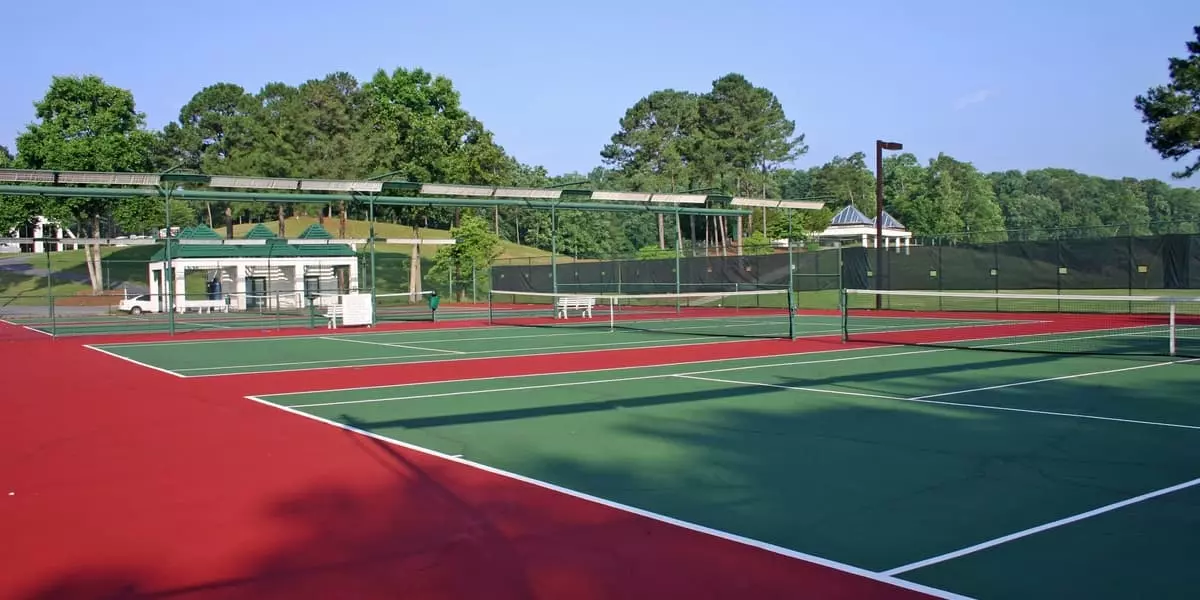
The groups most affected include:
Schools & Universities
For safe training fields, competitive matches, and uniform lighting across multiple sports.
Community Parks & Recreation Centers
To control glare, reduce light spill, and meet neighborhood requirements.
Sports Clubs & Federations
For meeting EN Class I/II/III or IES match-level specifications.
City Recreation Departments
Needed for municipal compliance, public safety, and budget planning.
Lighting Contractors & Installers
To design layouts that meet lux, uniformity, and glare limits.
Architects & Engineers
For integrating compliant lighting into new facilities or renovations.
How to Choose a Reliable Sports Lighting Supplier?
Selecting the right supplier determines whether your field actually meets IES or EN requirements—not just on paper, but in real-world performance. A trustworthy partner should offer the following:
Proven experience with IES RP-6-20 and EN 12193 compliance
The supplier should understand annual revisions, uniformity targets, glare limits, and sport-specific lux levels.
Professional lighting simulations (DIALux or AGi32)
These photometric models show expected lux, uniformity, pole positions, glare levels, and light spill before any installation begins.
Verified project references
Completed football, soccer, baseball, or tennis fields demonstrate real-world capability—not just catalog specs.
Advanced optics & glare control
Look for full cut-off optics, asymmetric beams, spill shields, and UGR/GR-managed designs to improve player comfort and spectator visibility.
Light spill management for community projects
Especially in city or residential areas, the supplier must be able to limit trespass and meet local ordinances.
A supplier who checks these boxes will deliver safer, compliant, and cost-effective sports lighting results.
Final Thoughts
IES and EN sports field lighting standards exist for one purpose: to ensure every field delivers safe, clear, and compliant lighting for players, officials, and spectators. Whether you manage a school field, a community park, or a competitive venue, meeting the right requirements protects visibility, reduces glare, and improves overall game quality.
If you need help choosing the correct standard or want a DIALux/AGi32 lighting simulation for your project, you can request a design recommendation anytime Ceramiclite. Our professional team is always available for your service.