_thumb.jpg)
Why Choose Ceramiclite High-power LED Lighting Solution?
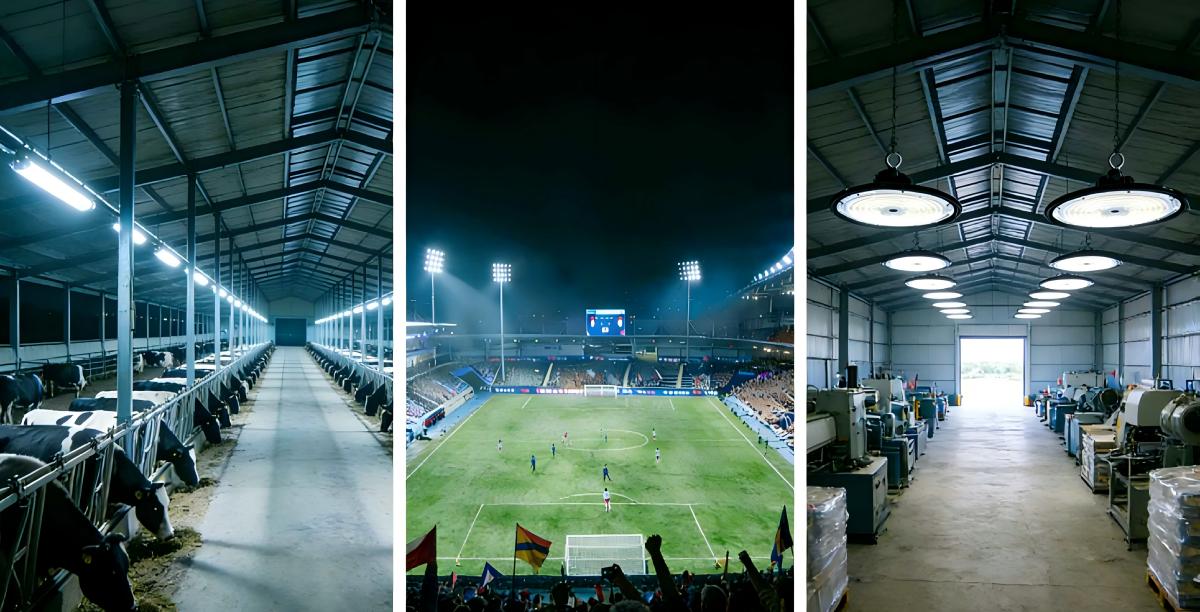
In extreme livestock, sports and industrial environments, lighting is not a commodity, it is infrastructure.
Ceramiclite develops advanced high-power LED lighting systems with fluorescent transparent ceramic LED material engineered to operate reliably under high temperature, high corrosion, and chemically aggressive conditions where conventional LED technologies degrade, drift, or fail prematurely.
Our high-power LED lights' advantage is not a single component or feature. It is a materials-first engineering approach that transforms ceramic science into long-term, deployable lighting reliability.
Advanced High-power LED Lighting Technology
In sulfur-rich, ammonia-heavy, high-heat, or corrosive environments, traditional LED packages — typically based on silicone encapsulation and organic phosphors — often suffer from rapid degradation.
These limitations commonly lead to:
Rapid lumen depreciation
Color shift and optical instability
Accelerated corrosion and packaging degradation
Shortened service life and frequent maintenance
Ceramiclite high-power LED lighting solutions address these failures at the material level, not through incremental product tuning.
By integrating fluorescent transparent ceramics LED technologies into the LED core, we achieve a fundamentally different performance profile:
Superior thermal management:
Ultra-low thermal resistance enables efficient heat dissipation under continuous high-power operation.Exceptional lumen stability:
Minimal light decay and color drift, even under elevated ambient temperatures.Chemical and corrosion resistance:
Proven durability against sulfur, ammonia, acidic vapors, and harsh industrial atmospheres.
.jpg)
In real-world operating environments, Ceramiclite high-power LED lighting systems with fluorescent transparent ceramic LED material deliver a significantly extended service life in conditions where standard LED solutions typically fail prematurely. Performance remains stable and predictable over time, not merely at the point of installation, with consistent lumen output and optical reliability throughout the system's lifecycle. As a result, maintenance cycles are substantially reduced, operational interruptions are minimized, and long-term operating costs are better controlled.
Ceramiclite high-power LED lights are designed not only to perform at installation but to maintain stable performance throughout years of operation.
From Materials & Optics to Practical LED Solutions
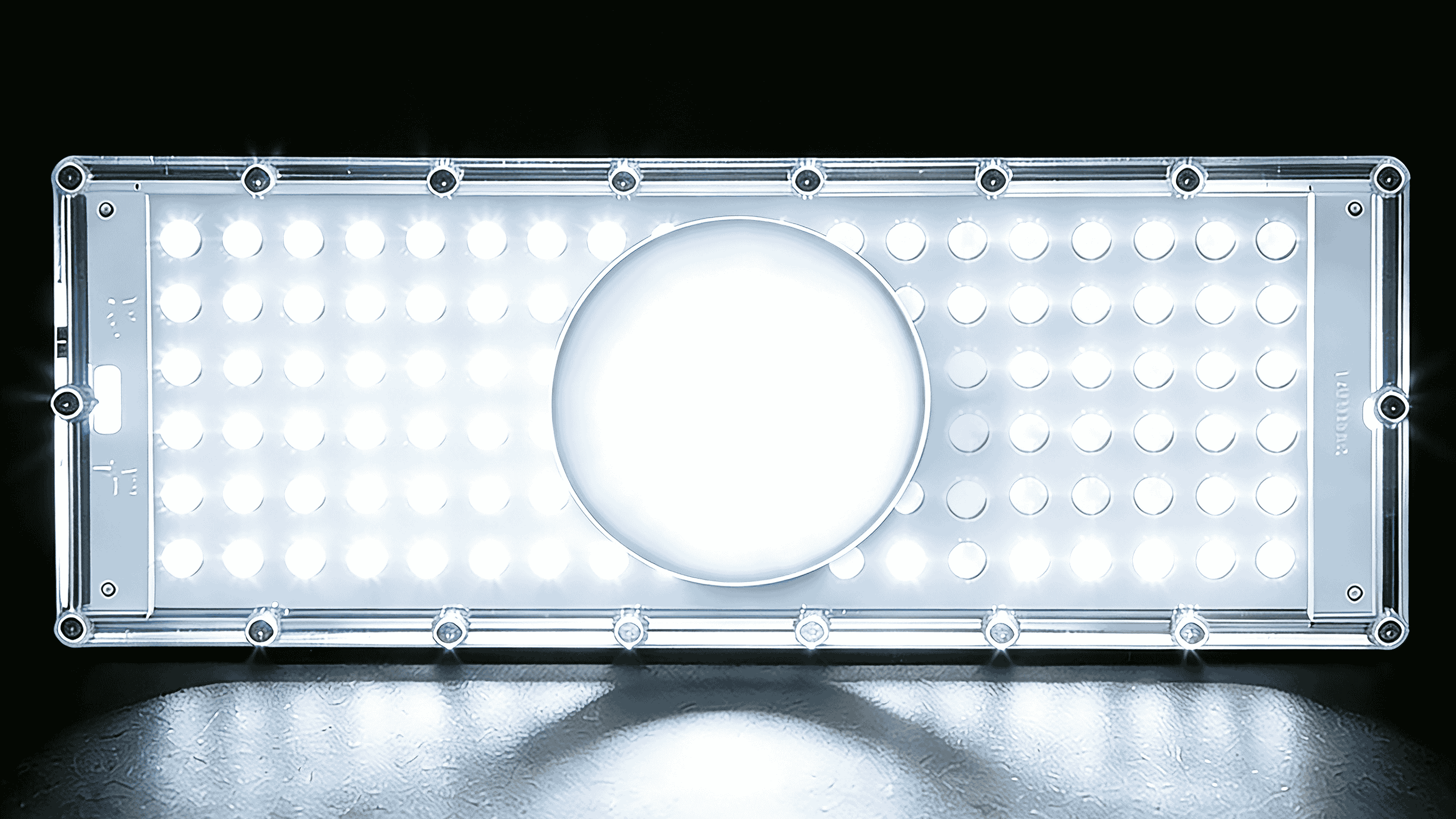
Product Level: Engineering the LED Light
At the product level, Ceramiclite starts with the luminaire as a complete working unit, not just a light engine.
Each Ceramiclite high-power LED light integrates ceramic LED cores, precision optics, advanced thermal structures, and durable housings into a single engineered unit. Optical distributions are selected based on real application needs, such as wide-area uniformity, glare limitation, or long-throw illumination, rather than generic beam angles. At the same time, thermal structures are engineered to sustain stable output under continuous operation, ensuring that heat dissipation, light decay, and component stress remain within controlled limits over time.
This approach ensures that every LED light leaving production is already optimized for its intended operating environment, rather than relying on field adjustments to compensate for design limitations.
System Level: Designing How High-power LED Lighting Works in the Space
Beyond individual fixtures, Ceramiclite high-power LED lighting systems are engineered as complete lighting solutions.
Photometric calculations and layout simulations are carried out to ensure required illuminance levels, uniformity ratios, and glare limits are met under real installation conditions. Control compatibility, including dimming, scheduling and intelligent regulation is considered at the design stage, allowing lighting behavior to match operational routines instead of remaining static.
Energy efficiency is evaluated not only by fixture efficacy, but by how the entire system performs over time, balancing output stability, control strategy, and maintenance frequency to reduce long-term operating costs.
Project Level: Adapting Engineering to the Environment
At the project level, Ceramiclite translates system design into site-specific execution.
Different environments such as ports, livestock facilities, chemical plants, or sports venues impose very different constraints related to corrosion, temperature, cleaning methods, and operating schedules. Fixtures, optics, controls, and installation methods are adjusted accordingly. Performance assumptions are verified against site conditions, and deployment support is provided to ensure correct installation, aiming, and commissioning. Therefore, Ceramiclite high-power LED lighting reduces the gap between design intent and on-site performance.
In summary, Ceramiclite does not treat products, systems, and projects as separate stages. By engineering across all three levels, we ensure that ceramic LED technology delivers consistent, predictable performance once it is installed and put into operation.
Ceramic High-power LED Lights for Multiple Applications
Across livestock, sports, and industrial applications, Ceramiclite high-power LED lights deliver reliable lighting performance where conventional lighting systems often fail.
Livestock Barn Lighting
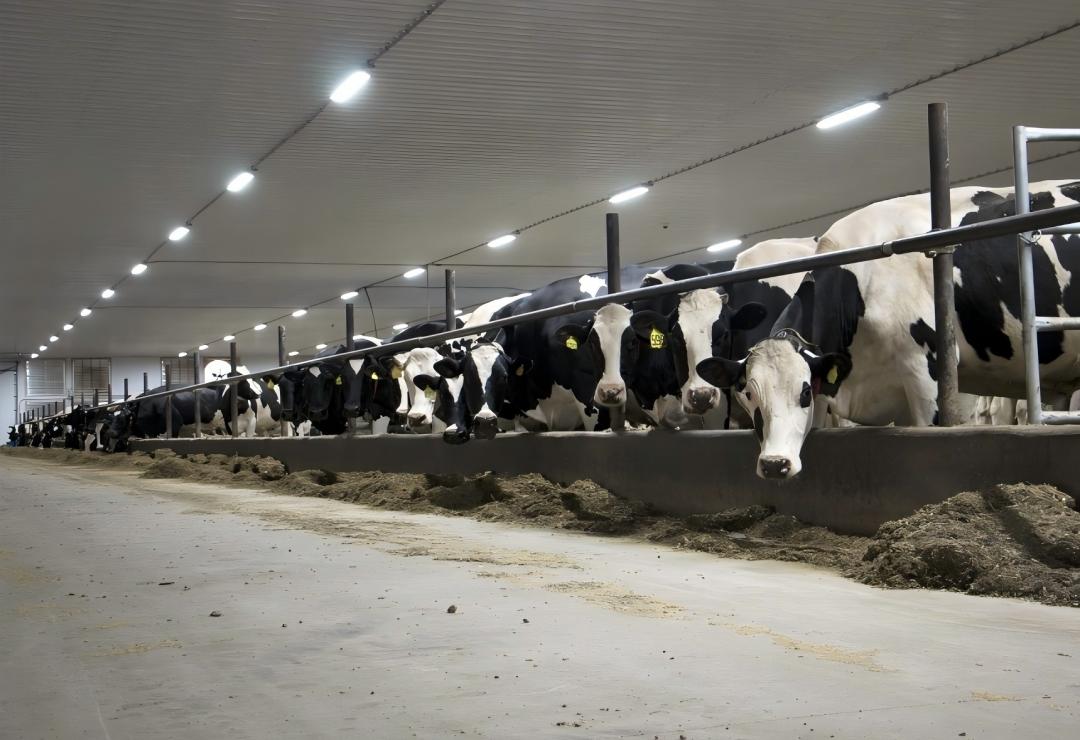
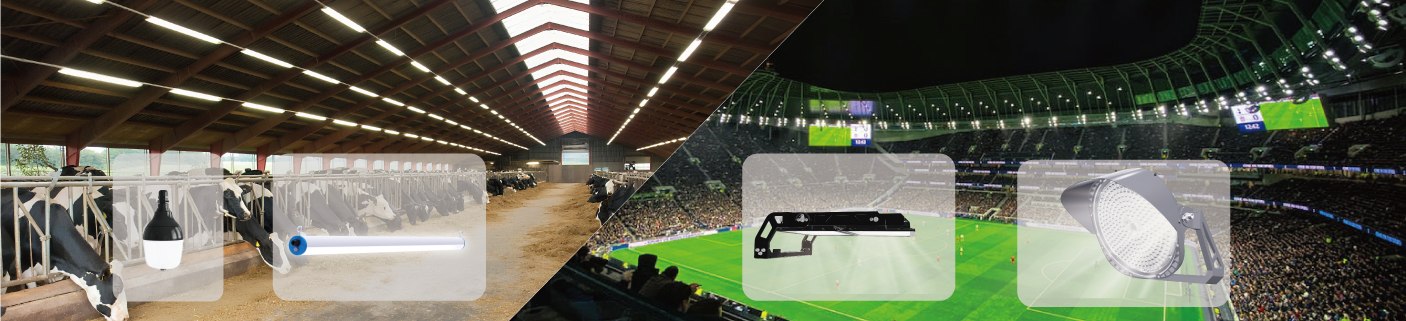
Livestock barns expose lighting to ammonia, humidity, dust, and frequent wash-downs. Ceramiclite LED barn lighting solution uses ceramic LED technology that resists chemical corrosion and maintains stable output under long operating hours. Professionally tuned spectra support animal growth, behavior, and circadian rhythms, while uniform, low-glare distribution reduces stress. In addition, intelligent dimming and lighting control of Ceramiclite high-power LED light for barns enable gradual transitions and precise light management, improving animal welfare while reducing maintenance in hard-to-access facilities. The result is reliable lighting with fewer failures and reduced maintenance in hard-to-access facilities.
Sports Lighting
Ceramiclite sports lighting solution delivers sustained high-power LED lighting with minimal lumen depreciation under continuous operation. Precision optical systems ensure high uniformity and effective glare control for athletes, spectators, and cameras. Stable color temperature, high color consistency, and flicker-free performance meet broadcast-grade requirements for high-speed and ultra-slow-motion filming. Intelligent dimming and control enable flexible operation for training, competition, and televised events across professional and multi-purpose sports venues.
Industrial Lighting
Ceramiclite industrial LED high bay lighting is engineered for factories, warehouses, ports, and other high-bay environments with long operating hours and harsh conditions. The high-power LED Lighting systems ensures stable lumen output and thermal reliability, while optimized optics provide uniform, glare-controlled illumination for large work areas. Rugged construction resists dust, moisture, and mechanical stress, and flicker-free operation with intelligent dimming support improves energy efficiency and operational flexibility over the full service life.
Sustained Reliability Across the Full Lifecycle
In industrial and infrastructure applications, ceramic LED lighting performance is judged over years of operation, not at the moment of installation.Ceramiclite high-power LED lighting systems are therefore engineered for full lifecycle performance, from initial installation to long-term operation.
Technical Reliability: Designed Into the Core
Reliability begins at the light source itself. Ceramiclite ceramic high-power LED core are engineered with ultra-low thermal resistance, allowing heat to be dissipated efficiently even under high power density. This directly supports stable lumen output at elevated ambient temperatures and reduces the rate of long-term degradation.
At the same time, fluorescent transparent ceramic LED materials provide inherent resistance to sulfur, ammonia, and corrosive chemicals, preventing the packaging failures, lumen loss, and color shift commonly observed in conventional LED solutions.
Engineering & Project Support: Reducing Risk Over Time
Reliability is not only a materials issue, but also an engineering and execution issue. Ceramiclite supports projects from the design stage through commissioning, helping ensure that lighting layouts, control strategies, and installation methods match real operating conditions. Where necessary, performance parameters can be adjusted after commissioning to better align with site usage patterns.
As operational requirements change over time, ongoing technical guidance helps maintain system performance without unnecessary replacement or redesign.
Lifecycle Value: Performance That Holds Up Economically
By combining durable materials with system-level and project-level engineering, Ceramiclite high-power LED lighting solution achieve a lower Total Cost of Ownership.
Longer service life reduces replacement frequency, stable output reduces corrective maintenance, and system scalability allows future expansion without reworking the entire installation. For customers operating multiple sites, this consistency simplifies maintenance planning and standardization across deployments.
Ultimately, Ceramiclite's responsibility does not end when the lights are turned on. It extends throughout the entire service life of the system, ensuring that performance, reliability, and cost expectations remain aligned year after year.
Trust & Proof
Ceramiclite lighting systems are validated not by marketing claims, but by science, standards, and long-cycle field performance.
Verified by Engineering, Backed by Science
Ceramiclite's professional LED lighting solutions are not validated by claims or short-term testing, but by long-cycle engineering deployment and scientific rigor. Every technology we deliver is grounded in measurable performance, repeatable results, and real operating conditions.
Proven in Long-Term Field Operation
Ceramiclite products operate continuously across demanding environments, including:
Industrial manufacturing facilities
Agricultural and livestock operations
Institutional and infrastructure projects
These deployments provide real-world performance data on thermal stability, lumen maintenance, and environmental resistance — far beyond laboratory testing conditions.
Materials & Performance Validated by Standards
Our ceramic materials and LED systems are designed and tested in alignment with stringent international and industry standards.
Key performance metrics — including thermal resistance, luminous stability, and environmental durability — are verified through structured testing protocols, ensuring consistency, compliance, and engineering predictability.
Scientific Foundation & R&D Depth
Ceramiclite's fluorescent transparent ceramic LED technology platform is built on deep scientific research:
Academic-level scientific advisors specializing in ceramic materials and optoelectronics
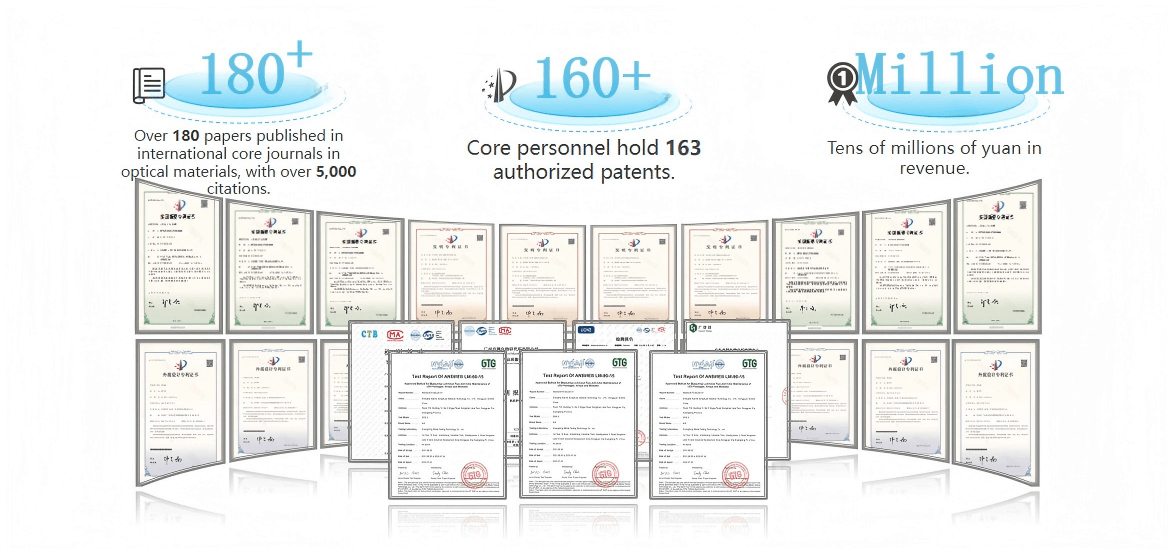
180+ peer-reviewed research publications
160+ granted and pending patents covering materials, LED packaging, and system-level innovation
This foundation enables continuous technological advancement not incremental product iteration.
Trusted by Engineering Partners
Ceramiclite collaborates closely with system integrators, engineering consultants, and project contractors to ensure seamless system integration and dependable performance.
Our approach supports consistent quality across installations and long-term confidence for multi-phase and repeat deployments.
What This Means for Our Customers
In demanding environments where lighting reliability is essential, Ceramiclite high-power LED Lighting systems provide stable, long-term performance that conventional LED technologies cannot match.
Through advanced ceramic materials, integrated engineering, and real-world deployment experience, Ceramiclite High-power LED Lights help customers reduce operational risk, improve efficiency, and maintain consistent lighting performance across the full lifecycle of their facilities.
Product Series Recommendations: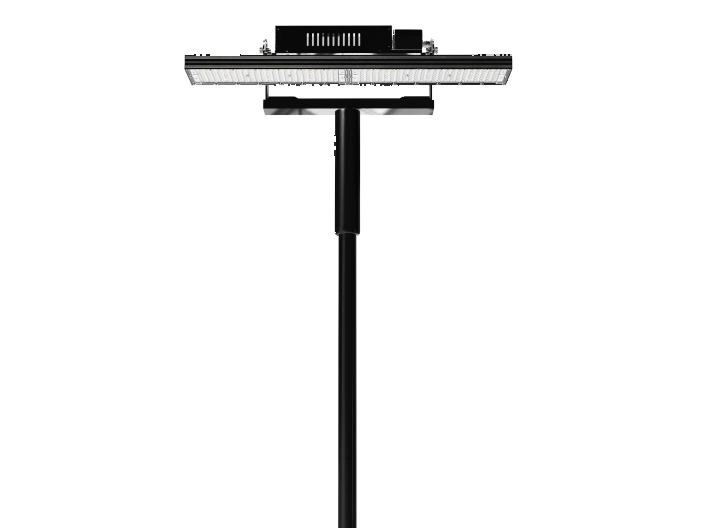
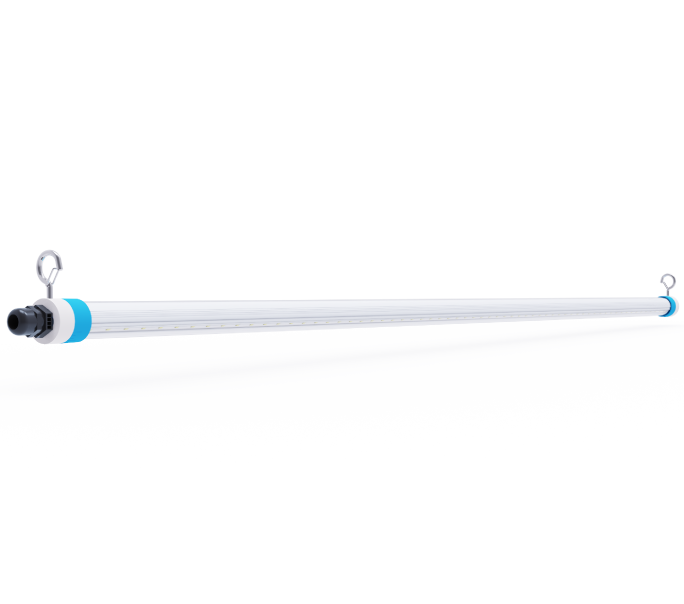
T8 LED Lights for Livestock Farms