_thumb.jpg)
Comment augmenter naturellement la production de lait chez les vaches ?
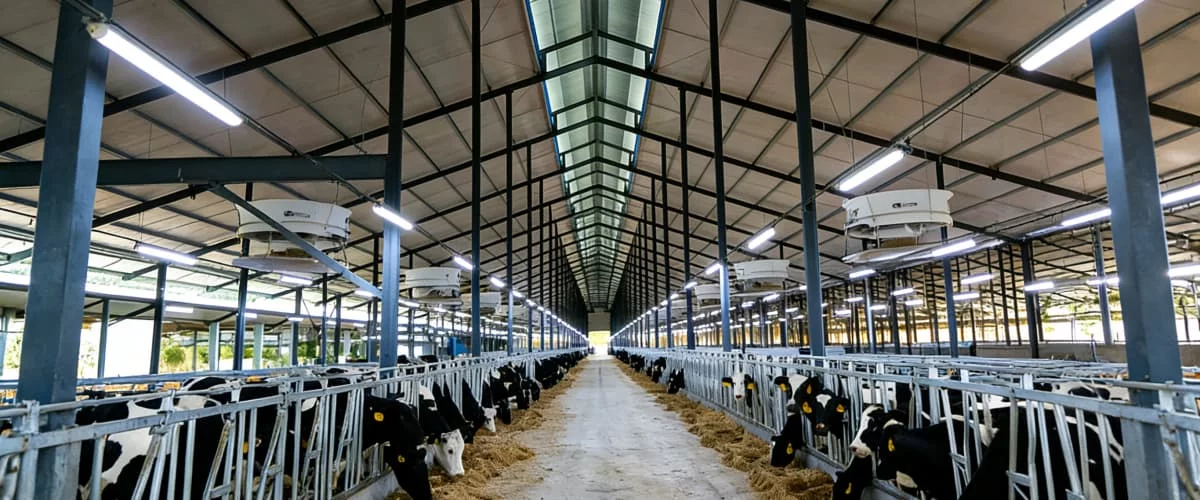
Soyons honnêtes : au final, c'est le niveau dans la cuve qui détermine le résultat net.
Pour la plupart des éleveurs laitiers, la recherche d'une production laitière accrue est un combat quotidien. Vous vous chargez probablement déjà des tâches les plus ardues : ajuster la ration totale mélangée (RTM), surveiller le taux de cellules somatiques et veiller à ce que votre troupeau dispose d'eau propre et en abondance.
Mais c'est extrêmement frustrant de constater que, malgré tous vos efforts pour optimiser la nutrition, la génétique et la santé, votre production stagne. Vous savez que votre troupeau a le potentiel génétique pour progresser, mais un facteur invisible semble le freiner.
Dans ce guide, nous n'allons pas simplement vous dire de « les nourrir davantage ». Vous le savez déjà. Nous allons plutôt examiner la gestion moderne des élevages laitiers dans son ensemble. Nous détaillerons les objectifs réalistes pour différentes races, analyserons l'impact réel des saisons sur la production (spoiler : l'hiver n'est pas aussi difficile qu'on le pense) et révélerons le facteur naturel essentiel – la photopériode – qui est souvent la pièce manquante du puzzle pour dépasser le plafond de production.
Table des matières
Indicateurs de rendement laitier : Votre troupeau est-il sous-performant ?
Principaux facteurs influençant la production de lait de vache
Lutter contre le stress thermique et les baisses de rendement saisonnières
Comment augmenter naturellement sa production de lait ?
Gestion de la photopériode : Augmentez le rendement de 8 à 15 %
Stratégies d'éclairage : Vaches en lactation vs. Vaches taries
Contrôle de précision : Pourquoi avez-vous besoin d’un système IDS ?
Liste de contrôle pour la production de lait naturel
Indicateurs de rendement laitier : Votre troupeau est-il sous-performant ?
Avant de parler d'augmentation de la production, nous devons définir ce que signifie réellement une « bonne » performance en 2026.
Il est facile de se laisser prendre au jeu de la comparaison entre son élevage et celui du voisin, ou avec les gros titres nationaux relatant des records de production laitière. Pourtant, le rendement laitier dépend fortement de la composition raciale de votre troupeau . Une vache Jersey ne produira jamais le même volume de lait qu'une Holstein, mais c'est sa teneur en matière grasse qui contribue au prix du lait et qui lui donne toute sa valeur.
Si vous cherchez à résoudre un problème de faible production, la première étape consiste à vérifier si votre troupeau atteint le potentiel génétique standard de sa race.
Tableau 1 : Rendement laitier moyen par race (estimations annuelles et journalières)
Remarque : Les chiffres ci-dessous sont basés sur des cycles de lactation typiques (305 jours) pour des troupeaux sains et bien gérés. Les troupeaux de haute qualité génétique peuvent présenter des durées de lactation supérieures à ces moyennes.
Race bovine laitière | Rendement annuel moyen (livres) | Rendement quotidien moyen (livres) | % moyen de matière grasse du beurre | Caractéristique principale |
Holstein | 25 000 - 28 000+ | 75 - 90+ | 3,7 % - 4,0 % | La reine du volume. Production de lait liquide maximale. |
Jersey | 18 000 - 20 000 | 50 - 65 | 4,7 % - 5,0 %+ | L'expert en efficacité. Teneur maximale en matières grasses et en protéines. |
Brun suisse | 22 000 - 24 000 | 60 - 75 | 4,0 % - 4,2 % | Rapport protéines/matières grasses élevé ; excellent pour la production de fromage. |
Guernesey | 17 000 - 19 000 | 45 - 60 | 4,5 % - 4,8 % | Célèbre pour son « lait d'or », riche en bêta-carotène et en protéine A2. |
Que nous apprennent ces données ?
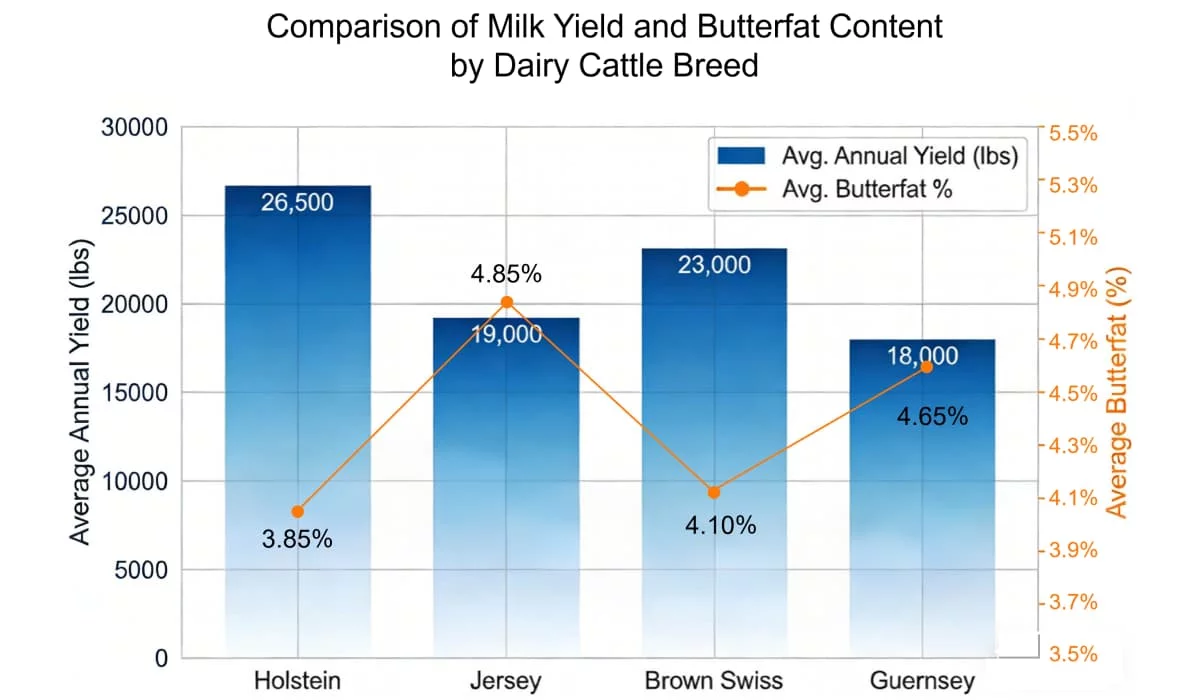
1. Volume vs. Composantes : Si vous élevez un troupeau mixte, ne vous basez pas sur les normes de volume des Holstein pour évaluer vos Jerseys. Si vos Holsteins produisent en moyenne moins de 34 kg/jour en période de lactation maximale, il est probable que vous ayez un problème nutritionnel ou environnemental.
2. Le « fossé » : Si votre troupeau possède le potentiel génétique pour atteindre les performances les plus élevées de ces fourchettes, mais stagne dans la partie inférieure, une formidable opportunité s’offre à vous. Ce fossé ne se comble généralement pas par l’achat de semence de meilleure qualité, mais par des changements de pratiques d’élevage.
Alors, si votre patrimoine génétique est solide et votre alimentation équilibrée, quelle est la variable qui explique l'écart ? Souvent, cela tient à la façon dont vos vaches perçoivent leur environnement, et plus précisément la saisonnalité .
Principaux facteurs influençant la production laitière des vaches laitières
Au-delà des critères de race, tout éleveur sait qu'une vache est un système biologique, et non une machine. Sa production résulte d'une interaction complexe entre la génétique, le stade de vie et les soins quotidiens. Pour résoudre les problèmes de production, il est essentiel d'examiner ces éléments fondamentaux.
1. Génétique et potentiel de race
Si les Holstein sont incontestablement les reines en volume, l'élevage moderne va plus loin.
l Sélection génétique : Les meilleurs troupeaux d'aujourd'hui sont souvent sélectionnés pour des marqueurs génétiques spécifiques comme DGAT1 et GHR , qui sont directement liés au rendement et à la composition du lait.
La leçon : Si votre nutrition est parfaite mais que votre rendement est faible, il est peut-être temps de réévaluer l’orientation génétique de votre programme de sélection.
2. Stade physiologique
Les attentes doivent être en phase avec l'horloge biologique de la vache.
Parité (cycle de lactation) : Une vache n’atteint pas son pic de production laitière durant sa première année. La production laitière augmente généralement à chaque lactation, atteignant un maximum entre la 3e et la 5e lactation avant de diminuer progressivement.
Jours de lactation (JDL) : Au cours d’un cycle, la production laitière atteint naturellement son maximum entre 31 et 100 jours après le vêlage . Si vous comparez une moyenne à l’échelle d’un troupeau, assurez-vous de ne pas comparer un groupe de vaches en début de lactation à un groupe en fin de lactation.
3. Nutrition et environnement
Équilibre alimentaire : Il s’agit d’une équation délicate entre l’énergie, les protéines et les fibres. Par exemple, les aliments riches en énergie comme le maïs doivent être distribués en plus grande quantité en automne et en hiver pour alimenter le métabolisme.
Zone de température : Les vaches sont des animaux naturellement adaptés aux climats froids, mais elles ont une zone de confort optimale. Cette zone se situe entre 10 °C et 20 °C (50 °F et 68 °F) . Tout écart par rapport à cette plage de température leur cause du stress, qu'il s'agisse de stress thermique en juillet ou de stress dû au froid en janvier.
État sanitaire : Les maladies sont un fléau silencieux pour la production. La mammite à elle seule peut anéantir les rendements. Le respect d’un protocole d’hygiène rigoureux est aussi important que la ration alimentaire.
Lutter contre le stress thermique et les baisses de rendement saisonnières
Vous ne pouvez pas contrôler la météo, mais comprendre son impact spécifique sur votre troupeau est la clé d'une production constante.
D'après des recherches menées dans différentes zones climatiques (y compris les régions subtropicales et tempérées), voici comment les quatre saisons influencent généralement la production laitière. On constate que le printemps offre souvent les conditions optimales, tandis que l'été et l'hiver présentent des défis opposés.
Tableau 2 : Impact saisonnier sur la production laitière
Saison | Caractéristiques clés | Tendances de production | Facteurs d'influence critiques |
Printemps | Climat doux ; ensoleillement croissant ; croissance optimale des pâturages. | Rendement maximal. Idéalement, les vaches qui vêlent au printemps présentent également les meilleures courbes de lactation. | Des températures optimales, associées à un fourrage de haute qualité et à des journées plus longues, stimulent le métabolisme. |
Été | Forte chaleur et humidité. | Rendement le plus faible. Les vaches à haut rendement peuvent subir des baisses allant jusqu'à 29,3 %. | Le stress thermique est mortel. Il réduit la consommation d'aliments (ingestion de matière sèche) et détourne l'énergie vers le refroidissement de l'organisme. Le risque de mammite augmente. |
Automne | Températures plus fraîches ; ressources fourragères abondantes. | Rétablissement et stabilité. Les rendements retrouvent des niveaux élevés ; excellent pour améliorer la condition physique. | Une « période idéale » pour la récupération. Un fourrage nutritif aide à reconstituer les réserves énergétiques épuisées pendant l'été. |
Hiver | Températures basses ; refroidissement éolien ; journées courtes. | Rendement modéré/faible. Inférieures à celles du printemps/automne. Une mauvaise gestion (par exemple, le gel de l'eau) peut entraîner des baisses de plus de 8,7 %. | Le stress dû au froid augmente les besoins énergétiques de base. La consommation d'eau glacée réduit l'efficacité de la digestion. |
Liste de contrôle de gestion saisonnière
Pour contrer ces baisses naturelles, votre stratégie de gestion doit évoluer en fonction du calendrier :
² Printemps : Privilégiez les soins post-partum et optimisez les bienfaits du fourrage frais. Attention aux variations de température entre le jour et la nuit.
² Été : La lutte contre la chaleur est la priorité absolue . Assurez-vous que les ventilateurs et les arroseurs fonctionnent. Nourrissez les animaux aux heures les plus fraîches (tôt le matin/tard le soir) et augmentez la densité énergétique de leur ration pour compenser la diminution de leur consommation.
² Automne : Profitez-en pour renforcer l’état de santé de vos animaux. Augmentez la ration d’aliments énergétiques (comme le maïs) de 20 à 50 % afin de les préparer au froid à venir. Le vermifuge et les examens sanitaires sont essentiels dès maintenant.
² Hiver : Chaleur et eau . Assurez-vous que les étables soient sèches, à l’abri des courants d’air et bien garnies de litière. Il est essentiel de fournir de l’eau chaude (9 °C à 15 °C) . Augmentez la ration énergétique (maïs) de 20 à 30 % pour alimenter le système thermique.
Attendez, regardez de plus près ce tableau.
Nous savons pourquoi l'été est pénible (à cause de la chaleur). Nous savons pourquoi l'hiver est rude (à cause du froid). Mais avez-vous remarqué l'autre différence majeure entre le printemps, « à haut rendement », et l'hiver, « à plus faible rendement » ?
C'est la lumière .
Au printemps, les jours rallongent . En hiver, ce sont les jours les plus courts de l'année. Pendant que vous vous occupez de régler la température et de nourrir vos animaux, vous risquez d'ignorer un signal naturel important.
Comment augmenter naturellement sa production de lait ?
Maintenant que nous comprenons les facteurs et les défis saisonniers, la question demeure : comment augmenter la production sans utiliser d’hormones de synthèse ni compromettre la santé des vaches ?
L'augmentation naturelle du rendement provient de l'optimisation de l'environnement de la vache afin qu'elle puisse exprimer pleinement son potentiel génétique. Il s'agit d'éliminer les obstacles qui la freinent.
Voici les piliers fondamentaux de la gestion à haut rendement que chaque exploitation agricole devrait maîtriser en premier lieu :
1. Optimiser l'ingestion de matière sèche (IMS)
On ne peut pas obtenir de lait si on n'y met pas de nutriments.
Remontez fréquemment la mangeoire : les vaches sont des brouteuses curieuses. Remonter la mangeoire toutes les quelques heures les encourage à retourner à l’auge.
Équilibrer la ration : s'assurer que la ration totale mélangée (RTM) résiste au tri. Si les vaches trient les céréales et laissent le fourrage, elles risquent une acidose, ce qui nuit à la production.
2. L'eau est du lait
Le lait est composé à 87 % d'eau. Une baisse de la consommation d'eau entraîne une baisse immédiate de la production laitière.
l Accessibilité : Prévoir au moins 3 à 4 pouces d'espace linéaire d'auge par vache.
Contrôle de la température : Comme indiqué dans la section consacrée à l’hiver, la température de l’eau est importante . Les vaches préfèrent une eau entre 15 °C et 18 °C. En hiver, chauffer l’eau pour éviter qu’elle ne gèle ne suffit pas ; la réchauffer légèrement peut augmenter significativement leur consommation.
3. Le confort des vaches = de l'argent
Une vache stressée libère du cortisol, ce qui inhibe l'ocytocine (l'hormone responsable de la montée de lait). Si elle n'est pas à l'aise, elle ne produit pas de lait.
Litière : Une couche épaisse de sable ou de paille améliore le temps de couchage. Rappelons que les vaches ont besoin de 12 à 14 heures de couchage par jour pour une irrigation sanguine optimale de la mamelle.
l Ventilation et qualité de l'air : C'est essentiel, surtout dans les granges fermées en hiver.
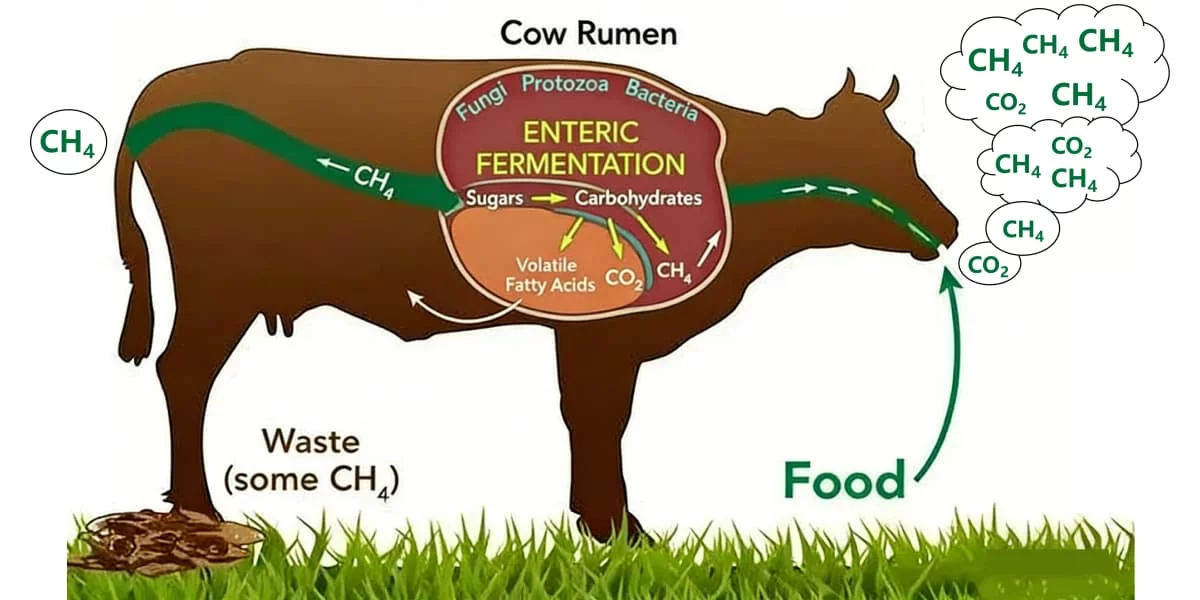
Menace biologique : Par la respiration, la rumination et les déjections, le troupeau génère un flux constant de gaz, notamment de l’ammoniac, du sulfure d’hydrogène, du méthane et du dioxyde de carbone . L’accumulation de ces gaz toxiques nuit directement au système respiratoire et à la santé générale des vaches. Par conséquent, un système de ventilation efficace est absolument essentiel pour éliminer ces contaminants et garantir le bien-être animal.
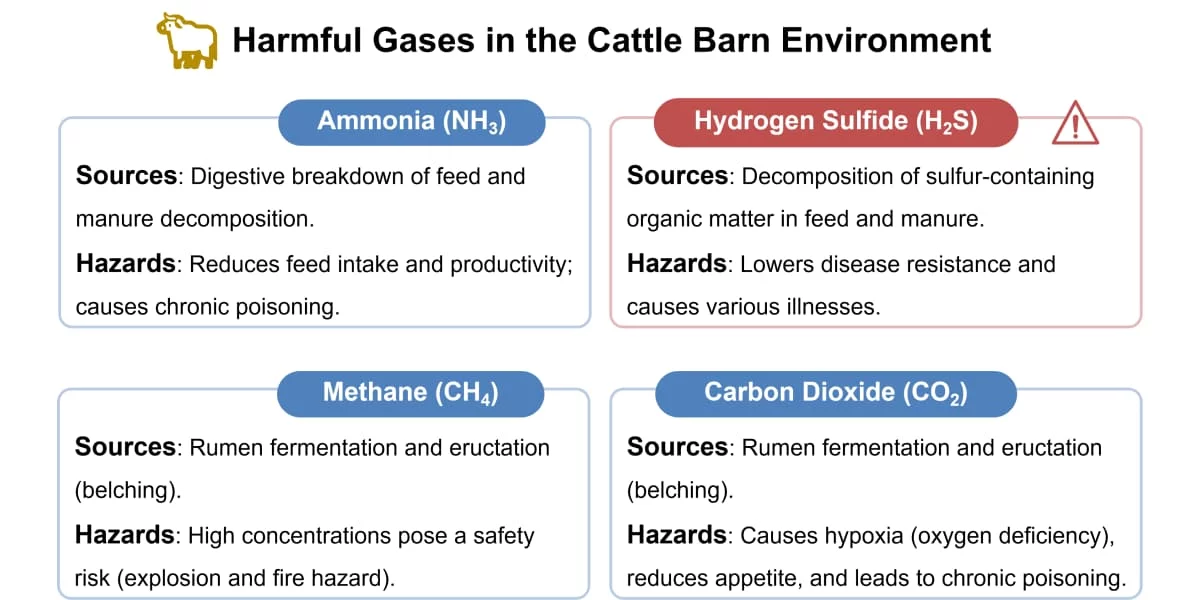
La réalité du matériel : Cependant, ces mêmes gaz qui nuisent à vos vaches sont également agressifs pour les infrastructures de votre étable. Ils corrodent rapidement les composants électriques et les luminaires standard. Par conséquent, il est essentiel de choisir un éclairage spécialement conçu pour résister à cet environnement corrosif.est tout aussi important que la ventilation elle-même — pour garantir la durabilité et la sécurité de votre système.
4. Suppléments ciblés
Une fois votre ration de base bien établie, envisagez des compléments comme des matières grasses protégées pour le rumen (pour l'énergie en début de lactation) ou des cultures de levures (pour stabiliser le pH du rumen). Cependant, les compléments alimentaires ne sont que des outils, pas des solutions miracles : ils ne peuvent pas compenser une mauvaise alimentation.
Gestion de la photopériode : Augmentez le rendement de 8 à 15 %
Vous avez équilibré l'alimentation, chauffé l'eau et préparé la litière. Pourtant, votre production hivernale reste inférieure à celle du printemps. Pourquoi ?
C’est là que la plupart des agriculteurs négligent un déclencheur biologique essentiel : la durée de la lumière .
La science de la photopériode de « jour long » (LDPP)
Les vaches sont des mammifères saisonniers. Leur biologie est programmée pour réagir à la durée du jour.
Jours courts (mode hivernal) : Lorsque les jours sont courts (moins de 12 heures de lumière), la glande pinéale de la vache sécrète de grandes quantités de mélatonine . La mélatonine met l’organisme en « mode de conservation », réduisant ainsi l’activité et la synthèse du lait.
l Journées longues (mode printemps) : Lorsqu’elle est exposée à 16 à 18 heures de lumière , la production de mélatonine est inhibée. Cela signale au foie d’augmenter la production d’ IGF-1 (facteur de croissance analogue à l’insuline 1) .
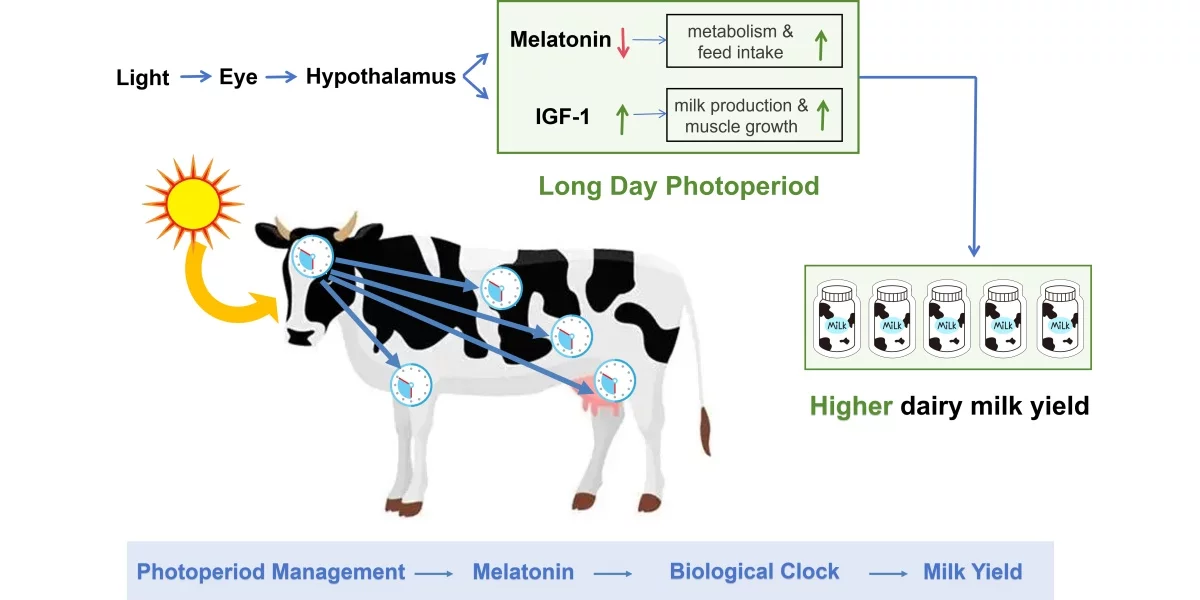
Pourquoi l'IGF-1 est-il important ?
L'IGF-1 est une hormone naturelle qui stimule la glande mammaire à produire davantage de lait. Des études menées par des universités comme Cornell et Michigan State ont démontré de façon constante que la mise en place d'une photopériode longue (16 heures de lumière / 8 heures d'obscurité) peut augmenter la production laitière de 8 à 15 % , sans modifier la ration alimentaire.
Pourquoi l'hiver est le moment idéal pour le LDPP
Vous vous souvenez de notre tableau saisonnier ?
l Printemps : Rendement élevé (Jours naturellement longs + Températures douces).
l Été : Faible rendement (Jours longs, mais le stress thermique l'annule).
l Hiver : Rendement modéré (pas de stress thermique, mais les jours courts le freinent).
L'opportunité : En recréant artificiellement un « éclairage printanier » (16 heures) dans votre étable d'hiver, vous combinez les avantages du froid (taux élevé de matières grasses, absence de stress thermique) avec la stimulation hormonale induite par un taux élevé d'IGF-1. C'est ainsi que vous surmontez le goulot d'étranglement saisonnier.
Il ne s'agit pas seulement de « plus de lumière ».
La mise en œuvre du LDPP ne se résume pas à laisser les lumières de l'étable allumées 24h/24 et 7j/7. En réalité, un éclairage continu est néfaste.
1. L'obscurité est cruciale : les vaches ont besoin de 8 heures d'obscurité ininterrompue pour réinitialiser leur rythme circadien et maintenir leur fonction immunitaire.
2. Seuil d'intensité : La lumière doit être d'au moins 150 à 200 lux au niveau des yeux de la vache pour déclencher la réponse hormonale. Une ampoule jaune faiblement éclairée ne fonctionnera pas.
3. Spectre et vision : Les vaches perçoivent la lumière différemment des humains. Elles ont besoin d’un spectre spécifique pour se sentir à l’aise et actives sans être stressées.
Ensuite, voyons quels sont la photopériode , l'intensité et le spectre adaptés à votre bétail laitier.
Stratégies d'éclairage : Vaches en lactation vs. Vaches taries
L'éclairage n'est pas une solution universelle. De même qu'on donne des rations différentes aux veaux, aux génisses et aux vaches laitières, l'éclairage des étables doit être adapté à chaque individu.Les besoins diffèrent également. La mise en œuvre d'un programme de gestion de la photopériode (PMP) adapté à chaque groupe est essentielle pour maximiser le retour sur investissement.
Voici la répartition professionnelle pour 2026 :
1. Les vaches laitières (les sources de profit)
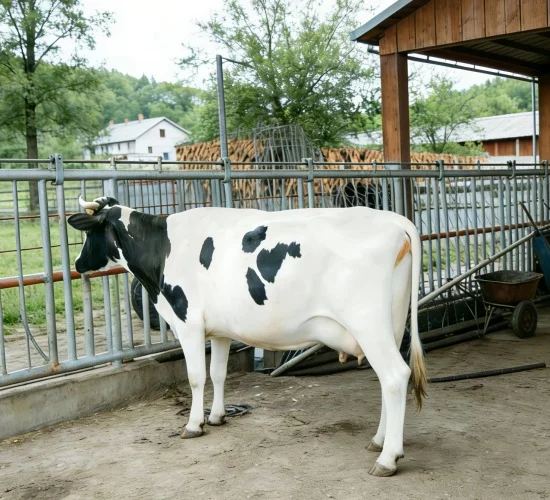 ² Objectif : Maximiser l'IGF-1 pour augmenter la production de lait.
² Recommandation : Photopériode de jour long (LDPP)
² Programme : 16 heures de lumière / 8 heures d'obscurité
² Intensité : 150 - 200 Lux (au niveau des yeux).
² Spectre : Blanc froid (correspondant à la lumière du jour) pour stimuler l'activité et la prise alimentaire.
² Résultat attendu : augmentation de 8 à 15 % du rendement laitier ; augmentation de l'IMC.
2. Vaches taries (Le groupe de rétablissement)
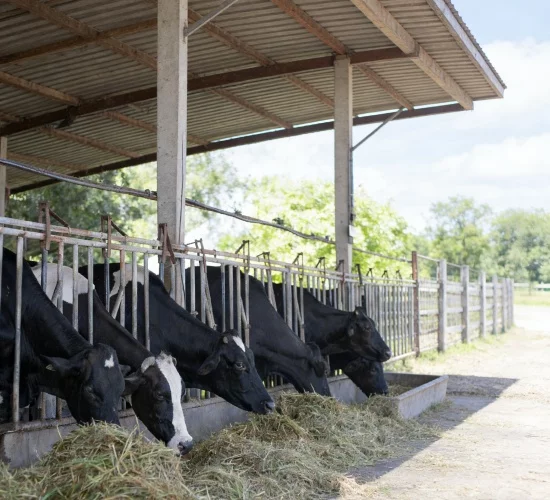 ² Objectif : Réinitialiser la glande pinéale pour la préparer à la prochaine lactation.
² Recommandation : Photopériode de jour court (SDPP)
² Programme : 8 heures de lumière / 16 heures d'obscurité
² Intensité : Une intensité inférieure à 50 lux pendant la phase « sombre » est acceptable, mais il est généralement conseillé de limiter l’exposition à la lumière vive.
² Explication scientifique : Les journées courtes pendant la période de tarissement sensibilisent l’organisme de la vache. Lorsqu’elle vêle et est transférée dans l’étable à journées longues (LDPP), le signal « ressortissant » déclenche une libération explosive d’hormones, ce qui se traduit par une courbe de lactation maximale nettement supérieure.
² Avertissement : Ne pas maintenir les vaches taries sous LDPP ; cela peut les rendre réfractaires (immunisées) au signal lumineux lorsqu'elles recommencent à traire.
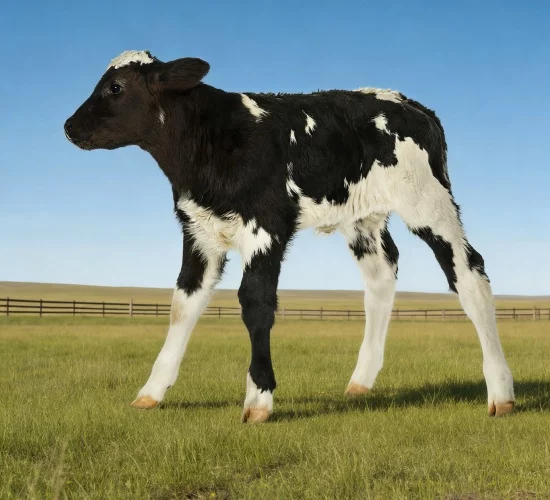 3. Veaux et génisses (L'avenir)
² Objectif : Favoriser une croissance musculaire maigre et une maturité sexuelle plus précoce.
² Recommandation : Photopériode de jour long (LDPP)
² Programme : 16 heures de lumière / 8 heures d'obscurité
² Résultat : La recherche montre que les génisses élevées sous LDPP grandissent structurellement plus grandes (croissance maigre, pas grasse) et atteignent la puberté environ 1 mois plus tôt, permettant une reproduction plus précoce sans compromettre la taille.
Contrôle de précision : Pourquoi avez-vous besoin d’un système IDS ?
Comprendre la règle 16:8 est facile ; l'appliquer de manière constante dans une écurie très fréquentée est difficile.
 On ne peut pas se fier aux interrupteurs manuels. Si un employé oublie d'éteindre les lumières, les vaches perdent leur période de réinitialisation de 8 heures. S'il les allume brusquement à 4 heures du matin, le troupeau subit un stress soudain .
Pour mettre en œuvre une stratégie d'éclairage naturel et respectueuse du bien-être animal, la précision est essentielle. C'est là que le système de gradation intelligent Ceramiclite (IDS) devient un atout majeur pour votre exploitation.
Il s'agit du bien-être animal, et pas seulement de l'automatisation.
Le contrôleur IDS n'est pas qu'une simple minuterie ; c'est un simulateur d'environnement conçu pour le confort des vaches.
Simulation du lever et du coucher du soleil : Dans
la nature, le soleil ne se lève pas d’un coup. Le contrôleur IDS fait varier progressivement l’intensité lumineuse sur une période de 30 à 45 minutes. Cela permet aux pupilles et au niveau hormonal de la vache de s’adapter naturellement, réduisant ainsi son anxiété et facilitant son passage à l’auge.
Technologie anti-scintillement : Les
vaches ont une fréquence critique de fusion du scintillement plus élevée que les humains. Une lumière qui vous paraît stable peut être perçue comme un scintillement par elles, provoquant un stress chronique. Le système IDS garantit un éclairage régulier et constant, préservant ainsi le calme du troupeau.
Cycles automatisés 16 :8 :
Programmez-les et n’y pensez plus. Le processeur numérique intégré garantit à vos vaches laitières exactement 16 heures de lumière, tandis que la batterie de secours assure le maintien du cycle même en cas de coupures de courant hivernales.
Fiabilité dans la grange en plein hiver rigoureux
Enfin, n'oublions pas l'environnement dans lequel nous travaillons. Les étables d'hiver sont fermées, ce qui entraîne des niveaux élevés d'humidité et d'ammoniac .
Les luminaires LED standard se corrodent et jaunissent souvent en moins d'un an, perdant ainsi l'intensité lumineuse de 150 lux requise pour l'effet LDPP. La technologie FTC (Fluorescent Transparent Ceramic) de Ceramiclite permet de remédier à ce problème. Elle est conçue pour résister à cette atmosphère corrosive, garantissant ainsi que votre investissement en éclairage — et votre production laitière — durent des années, et non des mois.
Liste de contrôle pour la production de lait naturel
Augmenter naturellement la production laitière est un défi, mais vous avez les clés en main. Cela implique de ne pas se limiter à l'auge et de prendre en compte l'ensemble du cycle de vie de la vache.
Plan d’action recommandé pour l’hiver 2026 :
1. Vérifiez les points de référence : Connaissez le potentiel de votre race.
2. Gérer la saisonnalité : réchauffer l'eau, approfondir le couchage et augmenter les rations énergétiques pour la saison froide.
3. Moderniser l'éclairage : Installer un système capable de fournir plus de 150 lux.
4. Mettre en œuvre le LDPP : Utiliser un contrôleur intelligent pour exécuter un programme 16:8 pour les vaches laitières (et 8:16 pour les vaches taries).
Ne laissez pas les journées d'hiver réduire vos profits. En faisant entrer la lumière du printemps dans votre étable, vous pouvez assurer le bien-être, la santé et la productivité de vos vaches tout au long de l'année.
Prêt à optimiser le potentiel de votre troupeau ?
Découvrez comment CeramicliteLes systèmes d'éclairage FTC et les contrôleurs IDS de [Nom de la marque] peuvent transformer la gestion de votre étable dès aujourd'hui.