_thumb.jpg)
Leitfaden zur Beleuchtung von Padelplätzen: Standards und Lösungen
Inhaltsverzeichnis
Welche offiziellen Beleuchtungsanforderungen gelten für Padelplätze?
Die wichtigsten Vorteile der Umrüstung auf LED-Padelplatzbeleuchtung
Wichtige Beleuchtungsaspekte speziell für Padelplätze
Beleuchtung von Padelplätzen im Innen- und Außenbereich: Die wichtigsten Unterschiede
Wie wählt man einen qualifizierten Hersteller von Padelplatzbeleuchtung aus?
Padel ist derzeit die am schnellsten wachsende Sportart der Welt. Die Ausstattung dieser Anlagen bringt jedoch eine besondere technische Herausforderung mit sich: die Beleuchtung .
Anders als bei traditionellen Sportarten im Freien ist ein Padelcourt vollständig von Glaswänden und einem Metallgitterzaun umschlossen. Ist die Beleuchtung des Padelcourts mangelhaft, können starke Spiegelungen im Glas und direkte Blendung die Spieler blenden – insbesondere bei kritischen Lobschlägen.
Ob Sie einen neuen Sportverein gründen oder eine veraltete Anlage modernisieren – die richtige Beleuchtung ist entscheidend für die Zufriedenheit der Spieler und die Rentabilität Ihrer Anlage. In diesem umfassenden Leitfaden erfahren Sie:
l Die offiziellen europäischen Lux-Standards für Padelplätze.
l Der tatsächliche Stromverbrauch in kW pro Spielfeld (und wie viel Sie sparen können).
l Wie man technische Probleme wie Spiegelungen und Flimmern auf dem Bildschirm vermeidet.
l Expertentipps zur Auswahl der besten LED-Leuchten für Ihre spezifische Innen- oder Außeninstallation.
Welche offiziellen Beleuchtungsanforderungen gelten für Padelplätze?
Bei den Beleuchtungsanforderungen für Padelplätze ist kein Rätselraten möglich. Professionelle und kommerzielle Plätze müssen der europäischen Beleuchtungsnorm für Sportanlagen entsprechen: UNE-EN 12193 .
Dieser Standard kategorisiert Beleuchtungen anhand des Spielniveaus in drei verschiedene Klassen.
Tabelle: Beleuchtungsstandards für Padelplätze (Lux & Gleichmäßigkeit)
Spielniveau | Anwendung | Horizontale Beleuchtungsstärke (Lux) | Gleichmäßigkeit (U0) |
Klasse I | Nationale und internationale Wettbewerbe und Fernsehveranstaltungen auf höchstem Niveau. | 500 Lux | > 0,70 |
Klasse II | Regionale Wettbewerbe, exklusive kommerzielle Clubs und Turniere. | 300 Lux | > 0,70 |
Klasse III | Lokale, Freizeit-, Schulsportarten und allgemeines Training. | 200 Lux | > 0,50 |
Hinweis: Wird das Spiel im Fernsehen oder per Rundfunk übertragen, gelten zusätzlich Anforderungen an die vertikale Beleuchtungsstärke (oft über 1000 Lux), um eine optimale Bildqualität der Kamera zu gewährleisten.
Wichtiger Expertentipp: Lux vs. Gleichmäßigkeit
Die erforderliche Helligkeit ( Lux ) zu erreichen, ist nur die halbe Miete. Die Gleichmäßigkeit (U0) ist ebenso entscheidend. Ein hoher Gleichmäßigkeitswert sorgt dafür, dass das Licht gleichmäßig über die gesamte Spielfläche verteilt ist. Eine mangelhafte Gleichmäßigkeit erzeugt gefährliche „Zebrastreifen“ (helle und dunkle Flecken) auf dem Spielfeld, wodurch es den Spielern unmöglich wird, den schnellen Ball präzise zu verfolgen.
Weitere Lösungen für die Hofbeleuchtung
l LED-Pickleballplatzbeleuchtung
Die wichtigsten Vorteile der Umrüstung auf LED-Padelplatzbeleuchtung
Um diese strengen Standards kosteneffektiv zu erfüllen, ist die Umstellung auf LED nicht mehr optional – sie ist unerlässlich.
Wenn Ihre Anlage noch herkömmliche Metallhalogenid- (MH) oder Halogenlampen verwendet , verlieren Sie jede Stunde Geld, in der diese eingeschaltet sind. Hier erfahren Sie, warum der Umstieg auf spezielle LED-Padelleuchten die klügste Geschäftsentscheidung für Platzbetreiber ist:
1. Enorme Energieeinsparungen (Berechnung der kW pro Spielfeld)
Anlagenbetreiber achten stets auf die Kosten. Bei der Berechnung des Stromverbrauchs der LED-Beleuchtung eines Padelplatzes zeigt sich anhand der Kilowattstunden pro Platz ein enormer Unterschied bei den Energiekosten.
Rechnen wir die Zahlen für ein Standard -Gericht der Klasse II (300 Lux) durch :
l Traditionelle Metallhalogenid-Anlage : Benötigt etwa 8 Leuchten à 400 W. Gesamtstromverbrauch = 3,2 kW pro Spielfeld .
l Hocheffiziente LED-Beleuchtung : Erreicht die gleiche (oder eine höhere) Helligkeit mit nur 4 x 200-W- oder 8 x 150-W-Leuchten. Gesamtstromverbrauch = 1,2 kW bis 1,6 kW pro Spielfeld .
Das Ergebnis : Sie senken Ihre Stromkosten pro Court sofort um 50 bis 60 Prozent und erzielen so eine schnelle Kapitalrendite (ROI) in der Regel innerhalb von 12 bis 18 Monaten.
2. Wartungsfrei und längere Lebensdauer
Herkömmliche Sportlampen verschleißen schnell und brennen durch, sodass man teure Hubarbeitsbühnen mieten und Fachkräfte einstellen muss, nur um eine einzige Lampe zu wechseln.
Hochwertige LED-Leuchten zeichnen sich durch eine Lebensdauer von 50.000 bis 100.000 Stunden aus . Einmal installiert, bieten sie eine wartungsfreie Lösung, die über ein Jahrzehnt hinweg praktisch keine Wartung erfordert.
3. Sofortiges Ein-/Ausschalten für intelligente Spielfelder
Alte Metallhalogenidlampen benötigen eine ärgerliche Aufwärmzeit von 10 bis 15 Minuten, um ihre volle Helligkeit zu erreichen, und eine ähnliche Abkühlzeit, bevor sie wieder in Betrieb genommen werden können.
LED-Leuchten bieten sofortige 100%ige Helligkeit . Diese Funktion ist absolut unerlässlich für moderne, automatisierte Smart Courts mit Pay-to-Play-System , bei denen die Beleuchtung exakt zum Beginn und Ende der gebuchten Spielzeit ein- und ausgeschaltet werden muss.
Wichtige Beleuchtungsaspekte speziell für Padelplätze
Die Energieeinsparungen durch LEDs liegen zwar auf der Hand, Padelplätze erfordern jedoch hochspezialisierte optische Konstruktionen. Standard-Flutlichtstrahler sind dafür nicht geeignet.
Ein Padelcourt ist im Grunde ein riesiger Glaskasten. Installiert man einfach herkömmliche Stadionflutlichter, wären die Folgen für die Spieler katastrophal. Bei der Auswahl der Beleuchtung für Padelcourts muss man daher auf Funktionen achten, die speziell für diese schnelle, geschlossene Sportart entwickelt wurden.
1. Blendungsreduzierung und Spiegelungen auf Glas (Das Hauptproblem)
Die größte Herausforderung bei der Beleuchtung des Padel-Tennisplatzes ist der 10 mal 20 Meter große Umfang, der größtenteils aus gehärtetem Glas besteht.
Wenn ein Spieler zum Schlag eines hohen Lobs (Bandeja oder Smash) aufblickt, erzeugen herkömmliche symmetrische Scheinwerfer blendendes, direktes Licht. Schlimmer noch: Dieses Licht reflektiert von den umliegenden Glaswänden und erzeugt einen störenden Spiegeleffekt, der die Ballverfolgung unmöglich macht.
Die Lösung : Professionelle Padel-Beleuchtung muss mit asymmetrischer Optik ausgestattet sein . Diese spezielle Linsenkonstruktion lenkt den Lichtstrahl in einem präzisen Winkel (z. B. 60°/130°) scharf nach unten auf die Spielfläche und reduziert so die Streulichtmenge auf dem Glas drastisch. Hochwertige Leuchten weisen zudem einen UGR-Wert (Unified Glare Rating) von unter 19 auf und gewährleisten damit maximalen Sehkomfort für Spieler und Zuschauer.
2. Flimmerfreie Darstellung
Padel ist ein sehr schnelles Spiel. Sind die LED-Treiber von minderer Qualität, flackern die Lampen hochfrequent. Dieses Flackern ist zwar manchmal mit bloßem Auge nicht sichtbar, führt aber zu Augenbelastung und lässt den schnell fliegenden Ball verschwommen oder wie eine Reihe von Stroboskopblitzen erscheinen.
Wenn Ihr Verein darüber hinaus plant, Spiele aufzuzeichnen, Turniere live zu streamen oder wenn Spieler hochauflösende Zeitlupenvideos für soziale Medien aufnehmen möchten, ist flimmerfreie Technologie (typischerweise <1% Flimmerrate) absolut unerlässlich.
3. Hohe Schlagfestigkeit (IK-Wert)
Beim Padel prallt der Ball regelmäßig mit hoher Geschwindigkeit von den Wänden und dem Drahtgitter ab. Gelegentlich kann ein verfehlter Smash oder ein abgelenkter Schläger auch direkt die Lampen treffen.
Zerbrechliche Lampen können zerbrechen und gefährliche Glas- oder Kunststoffteile auf den Platz fallen lassen. Daher müssen Ihre Lampengehäuse und Linsen eine hohe Schlagfestigkeit aufweisen – idealerweise IK08 oder IK10 –, um direkten Treffern standzuhalten, ohne zu brechen.
Beleuchtung von Padelplätzen im Innen- und Außenbereich: Die wichtigsten Unterschiede
Obwohl die erforderlichen Lux-Werte (Klasse I, II, III) gleich bleiben, unterscheiden sich die technischen und Installationsmethoden für die LED-Beleuchtung von Padelplätzen in Innenräumen und im Freien erheblich. Ein und dasselbe Verfahren kann nicht für beide Umgebungen angewendet werden.
LED-Außenbeleuchtung für Padelplätze
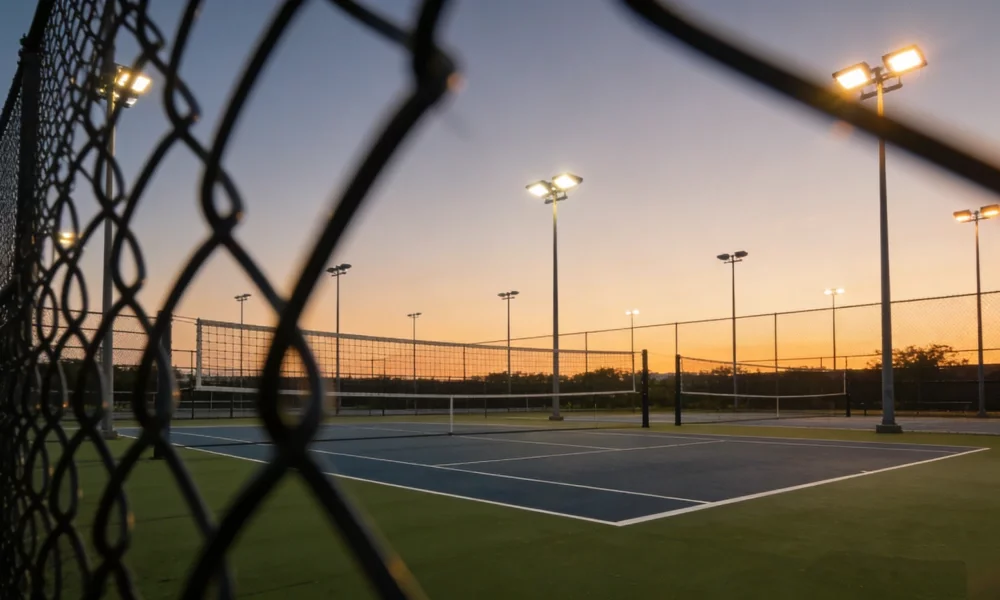
Bei der Planung einer Außenanlage müssen die Installationen den Witterungseinflüssen und strengen Bauvorschriften standhalten.
Beleuchtungsmasten für Padelplätze : Die Standardausstattung eines Outdoor-Padelplatzes umfasst vier Beleuchtungsmasten , die üblicherweise an den Außenseiten der Längsseiten des Platzes positioniert sind. Diese Masten sind in der Regel sechs bis acht Meter hoch . Eine klassische Konfiguration verwendet zwei LED-Leuchten pro Mast, insgesamt also acht Leuchten pro Platz .
l Wetterschutz : Außenleuchten müssen die Schutzart IP66 aufweisen , um einen vollständigen Schutz gegen Starkregen, Staubstürme und hohe Luftfeuchtigkeit zu gewährleisten.
l Windlast & Aerodynamik : Die Leuchten und die Masten müssen aerodynamisch gestaltet und sicher montiert sein, um hohen Windlasten standzuhalten und ein Schwanken der Masten sowie eine Verschiebung der Lichtverteilung zu verhindern.
l Lichtverschmutzung (Null Licht nach oben) : Befinden sich Ihre Sportplätze in der Nähe von Wohngebieten, müssen Ihre Leuchten über eine scharfe Abgrenzung (0 % Lichtanteil nach oben) verfügen, um zu verhindern, dass Lichtverschmutzung in die Fenster der Nachbarn oder in den Nachthimmel scheint.
LED-Beleuchtung für Padel-Hallenplätze
Indoor-Padelzentren stehen vor ganz anderen räumlichen Herausforderungen, vor allem in Bezug auf die Deckenhöhe und die Installationsmethoden.
Anforderungen an die Deckenhöhe : Wie hoch muss die Decke für einen Padel-Innenplatz sein? Um professionelle Lob-Schläge zu ermöglichen, ohne dass der Ball ständig gegen das Dach prallt, wird eine Mindesthöhe von 8 Metern (idealerweise 9 bis 10+ Meter) dringend empfohlen.
l Installationsstrategie : Anstatt 4 separate Masten zu verwenden, werden die Leuchten in Innenräumen üblicherweise direkt an den Deckenträgern montiert oder mittels Kabeln aufgehängt.
l. Beleuchtungsarten : In Hallenplätzen werden häufig spezielle LED-Hallenstrahler oder durchgehende LED-Leuchten eingesetzt. Diese müssen sorgfältig positioniert werden (typischerweise an den Seiten des Spielfelds und nicht direkt über dem Netz in der Mitte), um zu verhindern, dass Spieler, die zum Smash nach oben schauen, durch direktes Licht von oben geblendet werden.
Wie man einen qualifizierten Hersteller von Padelplatzbeleuchtung auswählt
Bei der Auswahl eines Beleuchtungslieferanten für Ihre Padelanlage geht es um weit mehr als nur um den Preis. Ein qualifizierter Hersteller muss strenge Produktqualität, fundierte Zertifizierungen und zuverlässigen technischen Support nachweisen.
Bei der Bewertung potenzieller Lieferanten sollten Sie diese branchenüblichen Benchmarks als Entscheidungshilfe nutzen:
1. Harte Produktqualitätsindikatoren (Das Datenblatt)
Akzeptieren Sie keine vagen Aussagen zur „hohen Helligkeit“. Verlangen Sie das technische Datenblatt und achten Sie auf diese soliden Leistungskennzahlen:
Ø Hohe Effizienz : Eine hochwertige LED-Leuchte sollte eine Lichtausbeute von ≥150 lm/W aufweisen , um erhebliche Energieeinsparungen zu gewährleisten.
Ø Optische Stabilität : Bei schnellen Sportarten und Fernsehübertragungen sollte der Flimmerprozentsatz ≤1% und die gesamte harmonische Verzerrung (THD) ≤10% betragen .
Ø Langlebigkeit und Korrosionsbeständigkeit : Bei Außenplätzen muss das Gehäuse mindestens die Korrosionsschutzklasse C4 aufweisen . Es muss außerdem wasserdicht gemäß IP66 , stoßfest gemäß IK08/IK10 und mit einem robusten Überspannungsschutz von 10 kV/20 kV ausgestattet sein .
Ø Lebensdauerkennzahlen : Achten Sie auf die Standard-Testdaten L70B50, was bedeutet, dass die Leuchte nach 50.000 Betriebsstunden mindestens 70 % ihrer anfänglichen Helligkeit beibehält.
2. Obligatorische Zertifizierungen und Prüfberichte
Ein vertrauenswürdiger Hersteller arbeitet mit voller Transparenz. Er muss offizielle Dokumente vorlegen, darunter:
Ø Globale Sicherheitsstandards : Autorisierte Zertifizierungen, die für Ihre Region relevant sind, wie z. B. ENEC, CB, CE, SAA oder ETL .
Ø Leistungsnachweis : Fordern Sie die Prüfberichte LM-79 (photometrische Leistung) und TM-21 (Lichtstromerhaltung) an, um nachzuweisen, dass die Angaben zur Lebensdauer wissenschaftlich fundiert sind.
3. Erfahrener technischer Support
Sportbeleuchtung ist technisch hochentwickelt. Ein gewöhnliches Handelsunternehmen kann die notwendige optische Unterstützung nicht bieten. Stellen Sie sicher, dass der Hersteller über ein spezialisiertes Team aus erfahrenen Lichttechnikern und technischem Support verfügt . Diese müssen in der Lage sein, professionelle DIALux-Simulationen durchzuführen, die Abstrahlwinkel für Padelplätze individuell anzupassen und bei der Installation schnelle Hilfe bei Problemen zu leisten.
4. Zuverlässige Garantiebedingungen (Vorsicht vor der Falle!)
Eine Standardgarantie von 1 bis 3 Jahren ist bei kommerzieller Sportinfrastruktur ein Warnsignal. Vorsicht ist auch bei „Teilgarantien“ geboten, bei denen ein Anbieter mit 5 Jahren Garantie wirbt, diese aber im Kleingedruckten lediglich das Aluminiumgehäuse abdeckt, während LED-Treiber oder Kabel nur für 1 Jahr abgedeckt sind. Ein qualifizierter Anbieter sollte eine umfassende und transparente Garantie bieten.
Der Ceramiclite-Vorteil: Über die Industriestandards hinaus
Während die meisten Anbieter Schwierigkeiten haben, die Mindestanforderungen zu erfüllen, ist Ceramiclite darauf ausgelegt, diese zu übertreffen. Unterstützt von einem Ingenieur- und Technikteam mit über 10 Jahren Erfahrung im Bereich LED-Sportbeleuchtung , verkaufen wir nicht nur Leuchten, sondern bieten Ihnen absolute Sicherheit.
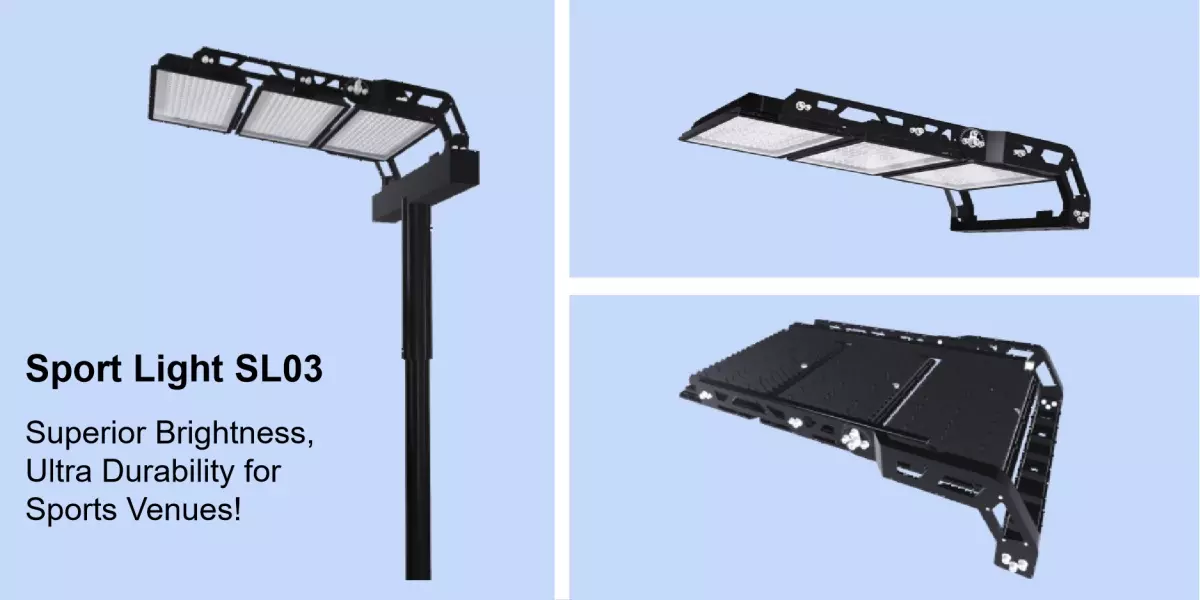
Nehmen Sie unsere Flaggschiffserie SL03. als Beispiel:
Ø Überlegene Effizienz und Lebensdauer : Mit einer Lichtausbeute von ≥160 lm/W weisen unsere Leuchten eine außergewöhnliche L90B30-Bewertung bei 51.000 Stunden auf und übertreffen damit den Branchenstandard bei Weitem.
Ø Extreme Haltbarkeit : Aufgerüstet mit einer seewasserbeständigen C5-Beschichtung (die 1.500 Stunden Salzsprühnebel standhält), wodurch Korrosion auch in rauen Küstenumgebungen ausgeschlossen ist.
Ø Die ultimative Garantie : Anders als branchenüblich bietet Ceramiclite je nach Material und Spezifikationen 5-, 8- und die äußerst seltene 10-jährige Komplettgarantie . Wir decken die gesamte Leuchte ab – nicht nur Teile oder Gehäuse.
(Wenn Sie für Ihre Tennisplätze nur das Beste verlangen, kontaktieren Sie Ceramiclite noch heute.)(Für Ihr individuelles DIALux-Design und Projektangebot.)
Häufig gestellte Fragen (FAQ)
Um Ihnen bei der Fertigstellung Ihres Padelplatzprojekts zu helfen, finden Sie hier kurze Antworten auf die häufigsten Fragen von Platzbesitzern:
Wie viele Lichter hat ein Padelplatz?
Ein professioneller Padelplatz ist standardmäßig mit acht LED-Leuchten ausgestattet . Bei Außenplätzen sind diese üblicherweise an vier Lichtmasten (zwei Leuchten pro Mast) entlang der Seiten des Platzes montiert, in der Regel in einer Höhe von sechs bis acht Metern. Bei Hallenplätzen werden die acht Leuchten direkt an der Decke oder den Dachstühlen befestigt.
Sind die Beleuchtungsanforderungen für Padel, Squash und Racquetball gleich?
Obwohl es sich bei allen drei Sportarten um geschlossene Rückschlagspiele handelt, ist die Beleuchtung beim Padel deutlich komplexer. Squash- und Racquetballplätze verfügen über geschlossene, undurchsichtige Wände. Padelplätze hingegen zeichnen sich durch transparente Glaswände und Drahtgitter aus, wodurch die Blendungsbegrenzung und die asymmetrische Lichtverteilung beim Padel viel wichtiger sind, um blendende Reflexionen zu vermeiden.
Was besagt die 40-40-Regel im Padel?
Wie beim Tennis wird auch beim Padel ein ähnliches Punktesystem verwendet (15, 30, 40). Steht es 40:40, spricht man von „Einstand“. Je nach Turnier- oder Vereinsregeln wird das Spiel dann entweder durch zwei aufeinanderfolgende Punkte (Vorteil) oder durch einen einzigen, entscheidenden „Goldenen Punkt“ (Punto de Oro) entschieden.